
 NepalTravel
Nepal travel disrupted: roads and bridges lost in five border districts after 26 Aug flood
A glacial ice, rock and debris collapse in the Himalayas triggered flash floods on 26 August 2026 that destroyed roads and bridges in five Nepal border districts. At least 1,287 people died and 84,270 were affected.
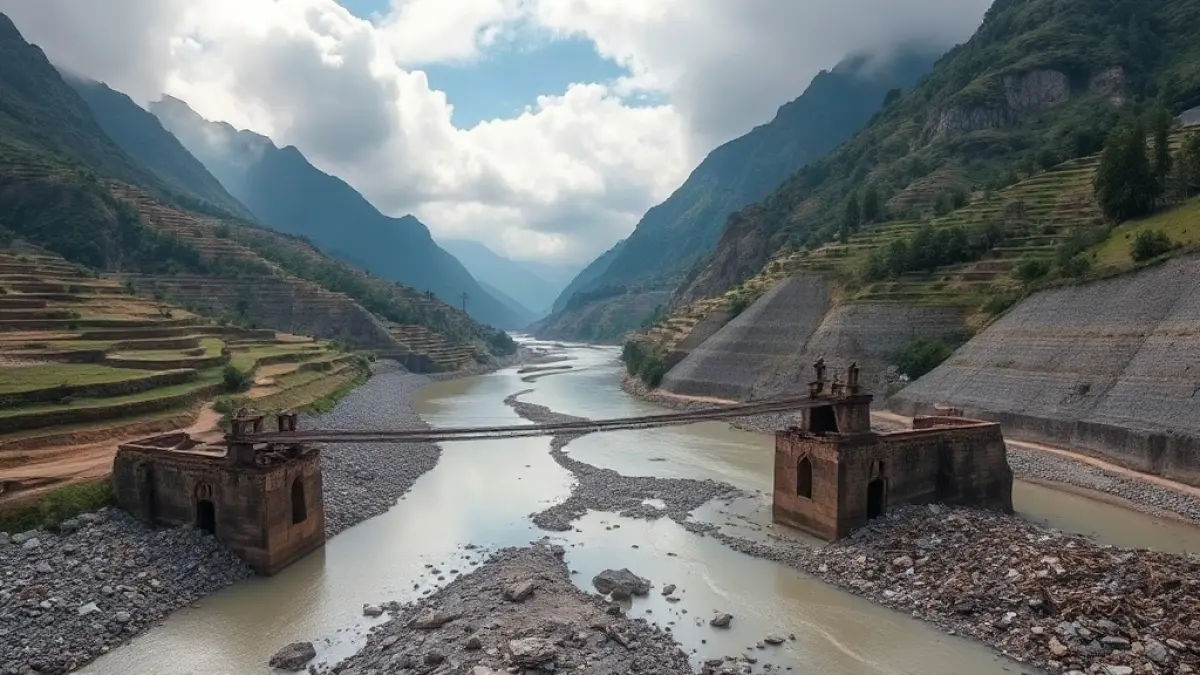
Flash floods triggered by a massive collapse of glacial ice, rock and debris high in the Himalayas swept through river valleys in Nepal and China on 26 August 2026, destroying homes, roads and bridges and cutting off entire communities along the Nepal-Tibet border. At least 1,287 people are known to have died, and at least 84,270 people have been affected.
Key facts
- Date of disaster: 26 August 2026
- Districts hit in Nepal: Rasuwa, Nuwakot, Dhading, Gorkha and Tanahun
- Deaths: at least 1,287 people known to have died
- People affected: at least 84,270, including children
- Damage: homes, roads and bridges swept away; communities cut off
- Funding: the Fund for responding to Loss and Damage provisionally set aside USD 21.6 million for Nepal
What happened?
A large collapse of glacial ice, rock and debris high in the Himalayas generated destructive flash flooding that surged through interconnected river valleys, damaging villages, towns and infrastructure on both sides of the border. Homes, roads and bridges were swept away in Nepal's Rasuwa, Nuwakot, Dhading, Gorkha and Tanahun Districts along the Nepal-Tibet border, leaving entire communities cut off.
What caused the flooding?
Investigators have examined a chain of events in which one natural hazard appears to have triggered another — a pattern known as "cascading hazards", where an initial event sets off a sequence of further events that together create a much larger disaster.
Satellite images appear to show the avalanche blocking the river with ice and debris about 20km upstream of the Nepal-Tibet border, according to Nepal's hydrology department. It has been suggested that water built up behind this temporary dam before it failed and released a sudden surge downstream.
Climate change is known to be driving faster glacier melt in the Hindu Kush Himalaya region, but scientists say it is too soon to pinpoint its role in these floods. There is also growing interest in the effects of unusually warm conditions and glacial permafrost instability, since warming can increase meltwater penetration into glacier crevasses and weaken ice-rock bonds.
What help has been announced?
The Fund for responding to Loss and Damage has provisionally set aside USD 21.6 million for Nepal following the catastrophic Bhote Khosi flash floods. The item describing this decision was dated 26 October 2026.
What this means for travellers
The floods destroyed roads and bridges and cut off communities in Rasuwa, Nuwakot, Dhading, Gorkha and Tanahun Districts along the Nepal-Tibet border. Travellers planning to move through these districts should check current local conditions before setting out, as the source describes transport links there as swept away or severed.
The collection of resources on the 2026 Nepal and Tibet flash floods was last updated on 27 October 2026, and further material is being added to it.
Also about:  China