
 GermanyEntry rules
Travellers from Russia report post-passport interviews by German intelligence at airports
Since at least early September 2026, German intelligence officers have asked some Russian arrivals at German airports to take part in interviews after passport control. At least 15 cases have come to light; the interviews appear to be voluntary.
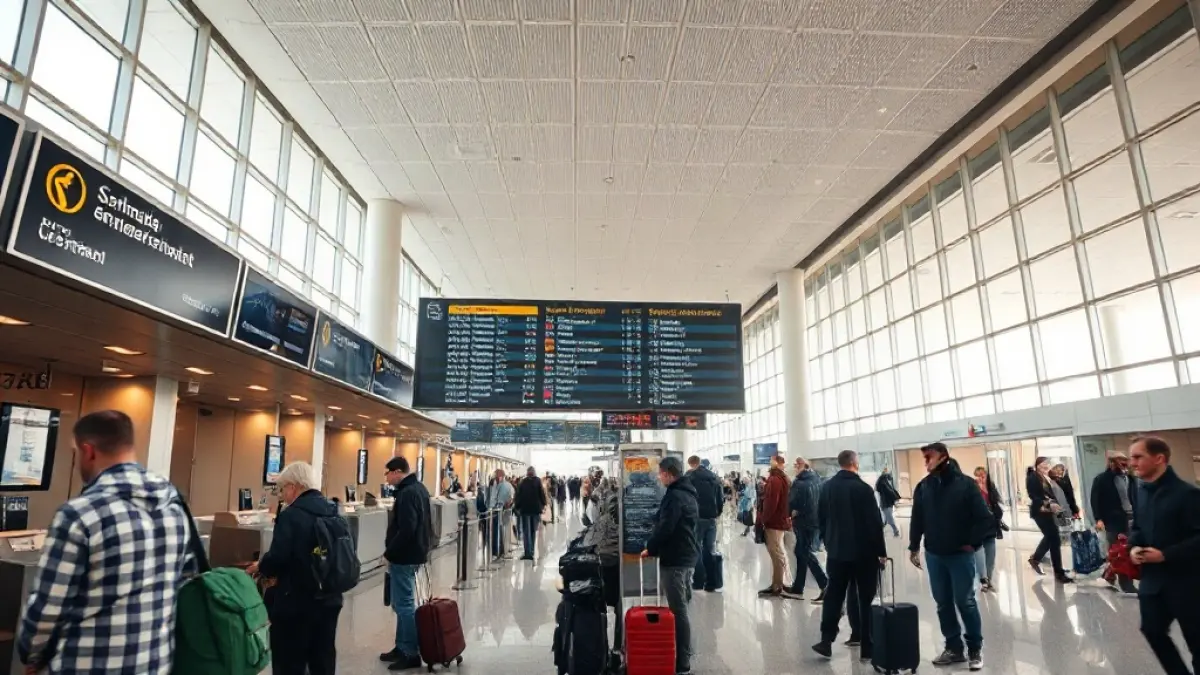
Some Russian citizens arriving at German airports have been stopped for questioning by German intelligence officers after clearing passport control, with cases documented since at least early September 2026. At least 15 such interviews have come to light so far, at Berlin's airport and at Frankfurt Airport. Those questioned described being asked about their lives, their families and their views on Russia and the war in Ukraine.
Key facts
- Since: at least early September 2026
- Who is affected: some Russian citizens, after passport control
- Where: Berlin's airport and Frankfurt Airport
- Who conducts them: Germany's Federal Office for the Protection of the Constitution confirmed it runs some of the interviews
- How long: reported interviews ranged from about three minutes to roughly an hour
- Voluntary: travellers who refused were allowed to continue on their way
What happens during the interviews?
Travellers described being approached after passport control and taken to a separate room. In several cases the interviewees were asked to place their phones in a container designed to prevent recording, and an interpreter took part in the conversation.
The questions covered what the traveller did in Germany, where family and friends lived, when they had last been to Russia and what they thought of "the current situation." Other reported questions asked whether mobilisation had affected the person's family, whether relatives served in the military, whether they had noticed prices rising, and whether they had any ties to Russian intelligence or the military.
Who is conducting them?
Germany's Federal Office for the Protection of the Constitution, the domestic agency responsible for counterintelligence, told Meduza it carries out some of these airport interviews. The agency said the threat situation in Germany "has been described in considerable detail and remains highly fluid," and that it continually adjusts its measures in response to the persistently high threat level. The Federal Intelligence Service (BND) did not respond to a request for comment.
Why has this started?
A drone carrying explosives was found at Leipzig airport late on 4 August or early on 5 August 2026, near a Ukrainian An-124 cargo plane carrying ammunition. Ten days later, another drone with traces of explosives was found near the same airport.
In September 2026 Germany blamed Russia for the attempted sabotage, closed the Russian Consulate General in Bonn and the Russian House in Berlin, and announced additional entry checks for Russian citizens. At the time, Foreign Minister Johann Wadephul did not say what those checks would involve.
Can travellers refuse?
The interviews appear to be voluntary. One Russian woman, told the interview was optional, declined and was allowed to leave the airport; the whole episode took about three minutes and her documents were returned. Another woman stopped after passport control was released without further questions when she said she had a doctor's appointment.
One account describes a woman who was asked to sign a cooperation agreement at the end of an interview and refused; she was reportedly denied entry to the Schengen Area on a later trip to an EU country. A political scientist commenting on the case said it remains completely unclear what happened.
What this means for travellers
Russian passport holders arriving at German airports should be aware that an approach after passport control is possible, and that interviews are not confined to Berlin. Refusing appears to result in being let go, though the purpose of the interviews, their legal basis and how often they occur have not been published.
Anyone questioned should note that participation has been described as voluntary, and that questions reported so far cover family, background and opinions rather than travel documents.
German authorities first commented publicly on the interviews in November 2026. How widespread the practice is, and what the interviews are for, remains unclear.
 Russia
 Ukraine