
 United StatesVisas
US visa denials keep Chinese scientists from Washington neuroscience meeting
Only four of six Peking University scientists obtained US visas for a neuroscience meeting in Washington, as security scrutiny and border worries push some academic conferences outside the United States.
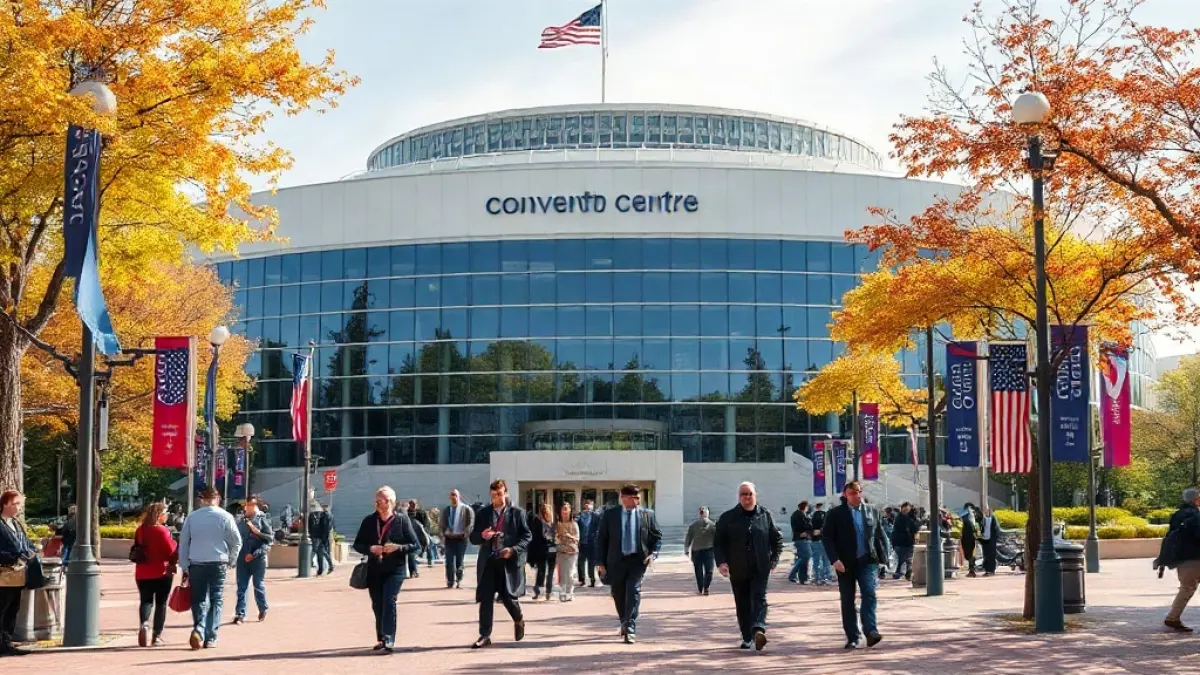
Six scientists from Peking University were accepted to present their work on detecting neural signals at the Society for Neuroscience's 56th annual meeting in Washington, but only four secured US visas to attend. Professor Li Yulong, whose team conducted the research, said the outcome showed how easily scientific exchanges could be disrupted.
The episode is one of several raised at the gathering, where researchers described visa refusals, long renewal waits and national-security vetting as growing barriers to travelling to the United States for academic meetings.
Key facts
- Four of six Peking University researchers obtained US visas for the Washington neuroscience meeting.
- Pentagon audits of 30 US universities led to the termination of more than 80 relationships with foreign entities deemed a security concern.
- The Pentagon's updated research-security watch list covers 130 academic and research institutions in China, Russia and Iran.
- Attendance at the neuroscience meeting fell from 25,808 in 2023 to 22,359 in 2024, then to 21,093 last year.
- The Academy of Management will hold its four meetings after 2026 outside the United States.
What is happening to researchers travelling to the United States?
Li has attended the world's largest neuroscience gathering every year since he was a student in 2000, and called it an essential forum for sharing findings. This year his team's visa difficulties highlighted how fragile those links have become.
Li said joint projects his group once ran with US research groups, some funded by the US National Institutes of Health's Brain Initiative launched in 2013, had largely ended, and that "much related cooperation has been severed". He added that many US universities no longer encourage researchers to co-author papers with Chinese collaborators.
He also said US teams can now use tools his group developed for detecting neural signals in different brain regions only after papers are published and via public citations, which delays access to the technology.
Why is scrutiny increasing?
The US House passed a bipartisan bill in May restricting US-Chinese university partnerships, and major US universities have already moved to sever ties with Chinese institutions. The Pentagon has separately pressed universities to review foreign partnerships and cut relationships it considers a security risk.
In a joint letter sent on Tuesday, the US State and Education departments urged university presidents and governing boards to audit financial ties with entities on government watch lists, saying greater scrutiny was needed to prevent unauthorised technology transfers and protect taxpayer-funded research.
The Pentagon's research-security watch list includes Fudan University, Shanghai Jiao Tong University and the Chinese Academy of Sciences in Beijing.
Are conferences moving away from the United States?
Since 2025, scattered complaints about academic conferences leaving the United States have become a recognisable trend. The Academy of Management, whose meetings draw about 13,500 people, decided in May that after its 2026 annual meeting in Philadelphia the following four consecutive meetings would be held outside the country; Seattle had been designated host city for 2027. Its president, Tammy Madsen, said the Copenhagen meeting showed what the association looks like when barriers to participation are removed.
The neuroscience meeting itself draws more than 20,000 people from more than 80 countries and has been held every year in October or November, except for a 2020 hiatus. Attendance figures for this year's gathering have not been released.
What this means for travellers
Researchers planning to attend US conferences may face visa delays or refusals: an Indonesian medical doctor said her company's CEO was denied a visa and she presented on his behalf. Iranian researcher Toktam Samiei of UC Riverside, who is waiting for a green card, said vetting remains strict and she cannot travel to Europe for conferences.
PhD students holding valid visas said they were reluctant to travel to Europe or China for meetings, citing months-long visa-renewal waits and possible entry risks. Indian undergraduate Pranitha Pakalapati said she had not been home since 2023.
Some gatherings are instead heading to China. Li pointed to next year's 20th annual meeting of the Chinese Neuroscience Society in Hangzhou, expected to draw about 5,000 participants, with more than 70 per cent of sessions in English and joint symposia with Canada, Germany, Japan and South Korea. He said China currently grants visa-free entry to most European countries and the Belt and Road Initiative, which he described as a practical advantage in attracting scientists.
Also about:  China
 Russia
 Iran
 Canada
 Germany
 Japan
 South Korea