
 UkraineVisas
Denmark asks EU to stop tourist visas for Russians and reject old passports
Denmark has proposed that EU member states stop issuing tourist visas to Russian citizens and stop recognising Russian non-biometric passports. No start date has been announced for the proposal, which follows an alleged assassination plot in Denmark.
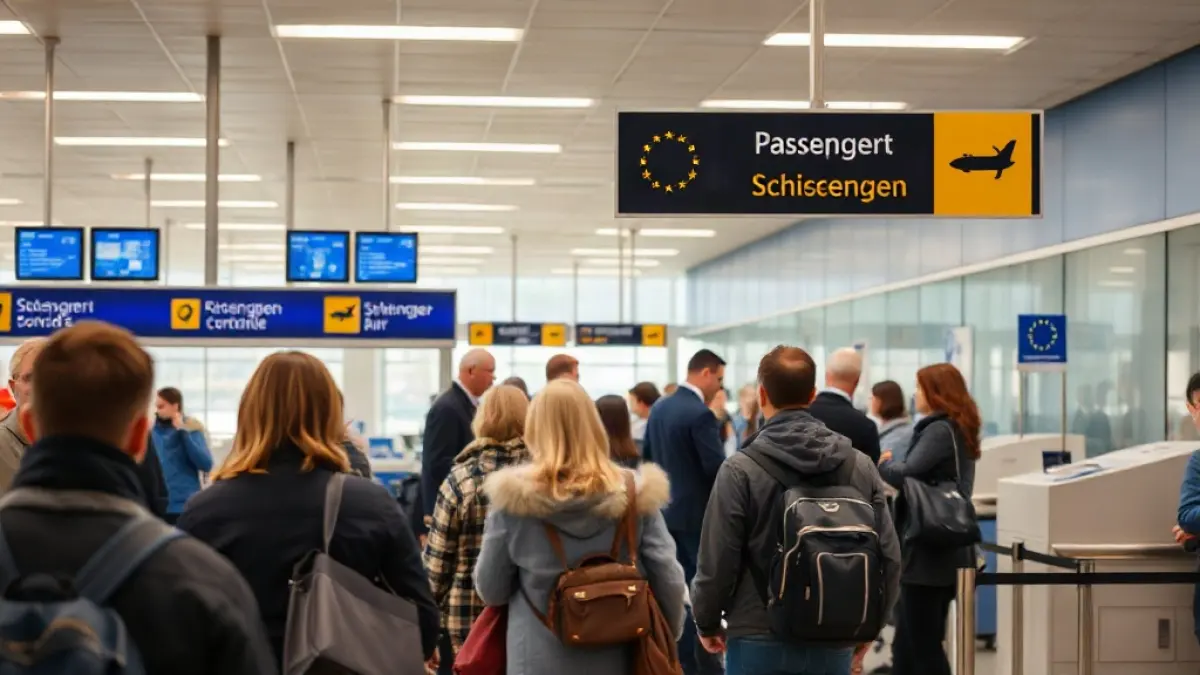
On 20 November 2026, Denmark proposed that EU member states stop issuing tourist visas to Russian citizens and cease recognising Russian non-biometric passports. The proposal came after an investigation into an alleged plot to assassinate the American-Ukrainian rapper Albert Vasilyev, known as Kiyvstoner, which Danish authorities linked to Russian intelligence services.
If adopted, the measure would go further than any EU-wide visa restriction on Russian travellers introduced so far. No start date or timetable for a decision has been announced.
Key facts
- 20 November 2026: Denmark proposed an EU-wide halt to tourist visas for Russian citizens.
- Denmark also proposed that EU states stop recognising Russian non-biometric passports.
- The EU suspended its visa facilitation agreement with Russia in 2022, extending it to all Russian citizens on 9 September 2022.
- On 6 November 2025, the European Commission restricted the issuance of multiple-entry Schengen visas to Russian citizens.
- No implementation date or duration for the Danish proposal is stated.
What is Denmark proposing?
Denmark asked EU member states to stop issuing tourist visas to Russian citizens and to stop recognising Russian non-biometric passports. Danish authorities connected the request to an investigation into an alleged plot to kill Albert Vasilyev. The suspected perpetrators were two Danish citizens with ties to local organised crime, and the case was presented as evidence that Russian intelligence services may recruit local operatives, including people from criminal networks, for operations abroad.
The source gives no detail on how long such measures would last, or whether other visa categories would be affected by Denmark's proposal.
Who is affected?
Directly, Russian citizens applying for tourist visas to the Schengen area and holders of Russian non-biometric passports. The Danish proposal concerns tourist visas specifically. Earlier, in October 2026, German Chancellor Friedrich Merz suggested that new restrictions could also cover private and business travel, but no such rules are described as having been adopted.
What rules apply to Russian travellers now?
The EU-Russia visa facilitation agreement, concluded in 2007, was partly suspended on 25 February 2022 for Russian diplomats, officials and business representatives. On 9 September 2022 the suspension was extended to Russian citizens as a whole.
In September 2022, Poland, Estonia, Latvia, Lithuania and Finland restricted the entry of Russian citizens across the Schengen area's external borders, citing security and public order; the Czech Republic introduced similar restrictions in October 2022.
On 6 November 2025, the European Commission adopted a decision substantially restricting the issuance of multiple-entry Schengen visas to Russian citizens, requiring more rigorous screening of applicants. The decision cited Russia's use of migration as pressure, sabotage in the EU and the Baltic region, cyber and industrial espionage, and the risks of propaganda and subversion.
Why are restrictions being tightened?
European governments' reasoning has shifted over time. The 2022 measures were driven mainly by lost trust in Russia and the view that Russian tourist travel to Europe was unacceptable during the war in Ukraine. By 2025, security concerns had moved to the fore: EU High Representative Kaja Kallas pointed to acts of sabotage on European territory and drone incidents, while European Commissioner for Home Affairs and Migration Magnus Brunner said the new rules would enhance security in the Schengen area.
Cited cases include the 2014 explosion at an ammunition depot in Vrbětice, after two GRU officers entered Prague on tourist visas issued by Italy and France, and the 2019 killing of Zelimkhan Khangoshvili in Berlin by Vadim Krasikov, who had obtained a multiple-entry French visa under a false name.
Research covering January 2022 to July 2025 identified 110 sabotage and other violent operations linked to Russia in Europe. Of 131 identified participants, 23 (17.6 per cent) held Russian citizenship. Leiden University researcher Bart Schuurman found that of 145 identified participants in operations carried out between 2022 and 2025, 24 (16.6 per cent) held Russian citizenship, and of 93 direct perpetrators only 11 (11.8 per cent) held Russian passports. More than 600 Russian representatives, including many intelligence officers, have been expelled from Europe since 2018.
The source stresses that visa restrictions can complement but cannot replace stronger identity checks, detection of cover documents and intelligence sharing, and do not by themselves remove the threat of sabotage.
Are EU countries agreed?
Positions differ. In October 2026, Finnish Foreign Minister Elina Valtonen called for a complete halt to tourist visas for Russians until the war in Ukraine ends, and the European Council called for additional visa measures to be considered in response to Russian hybrid threats. Estonia treated the continued issuance of tourist visas as a security threat, while Greece, although supporting common EU measures, emphasised the need to distinguish between the Russian leadership and Russian citizens.
What this means for travellers
Russian citizens planning travel to the Schengen area already face suspended visa facilitation, tighter screening and restrictions on multiple-entry visas, with some countries limiting entry at external borders. Anyone planning a trip should check the current rules of the specific country before booking, since measures vary between member states. If Denmark's proposal is adopted, tourist visa applications and the acceptance of non-biometric Russian passports could change EU-wide.
No date has been announced for an EU-level decision on Denmark's request.
 Russia
 Denmark
 Finland
 Germany