
 GermanyEntry rules
Carry ID When Crossing Czechia Border; German Spot Checks Run to March 2027
Germany is carrying out spot checks on its land border with Czechia until 15 March 2027, the European Commission's list shows. Austria checks its Czech border over the same period. Travellers should carry a valid ID card or passport.
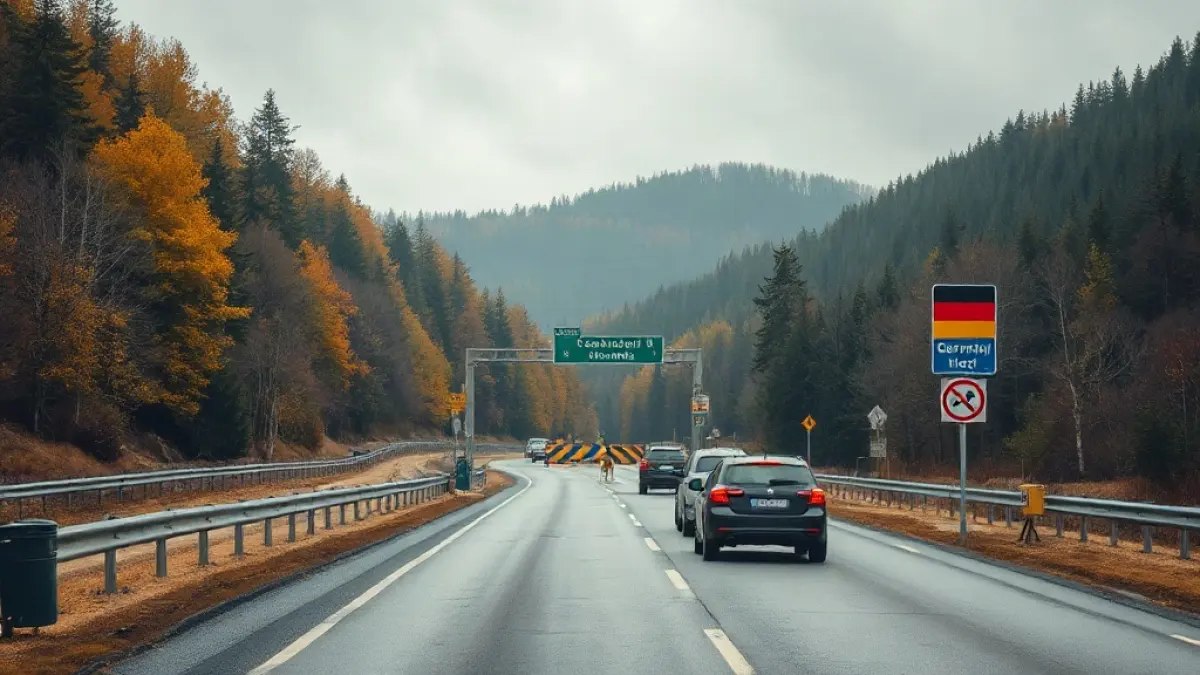
Travellers crossing from Czechia into Germany by road, rail or bus still face border spot checks. The European Commission's list of temporary internal border controls gives Germany the period 16 September 2026 to 15 March 2027, with the Czech Republic among the land borders named. Austria is checking its border with Czechia over the same period.
Key facts
- Controls run 16 September 2026 – 15 March 2027 on the German side of the border with Czechia
- Austria checks its land borders with Czechia, Hungary and Slovenia until 15 March 2027 inclusive
- Carry a valid ID card or passport; non-EU residents of Czechia need their passport and residence permit
- Checks are spot checks, sometimes up to 30 kilometres inside Germany
- Czechia itself does not appear in the Commission's list of temporary controls
Why are the checks in place?
The Commission's page on the temporary reintroduction of border control, updated 16 October 2026, cites high irregular migration, migrant smuggling and strain on the asylum system. The legal basis is Articles 25 and 28 ff. of the Schengen Borders Code.
The Bundespolizei (German Federal Police) reported on 17 February 2026 that Interior Minister Alexander Dobrindt had extended the controls beyond 15 March 2026 by six months. The current period from 16 September 2026 appears only in the Commission list; the German Interior Ministry's own release could not be opened at the time of checking. The Czech foreign ministry still shows 15 September 2026 as the end date, which is out of date. Austria's Interior Ministry, whose page was updated on 15 September 2026, states that checks run until 15 March 2027 inclusive.
What are the checks like?
The Bundespolizei conducts spot checks on roads, motorways and trains, both stationary and mobile, and the inside of a vehicle can be searched. Officers may also carry out checks up to 30 kilometres inside Germany. Austria's ministry says only that checks take place and asks travellers to always carry a valid travel document, without specifying whether they are stationary or mobile.
On bus and train journeys inside the Schengen area, carriers are not legally required to check documents, but police may still do so. Neither the Bundespolizei nor the ministries publish official waiting times; the Czech foreign ministry advises travellers to expect delays.
Which documents should I carry?
- EU citizens, including Czechs: a valid ID card or passport. The Czech foreign ministry says Czech eDoklady are not yet accepted in Germany.
- Non-EU residents of Czechia with a residence permit: passport and residence permit card, with stays of up to 90 days in any 180 in another Schengen state.
- Ukrainians with temporary protection in Czechia: passport and the Czech protection document, for 90 days in 180 in other EU countries. Which Czech papers count as the protection document is set by Czechia.
- Visitors from visa-free countries: passport, plus a visa where required.
Do children need their own document?
Yes. The Bundespolizei says every child, babies included, needs their own recognised travel document for trips abroad. German children can use a passport or ID card, including temporary versions. Germany has not issued child passports since 1 January 2024; existing ones stay valid until they expire but are not accepted everywhere. A child from a non-EU country who needs a visa requires their own visa or residence permit.
If a child travels without both parents, the Bundespolizei recommends — though it is not an obligation — an informal written consent from the other parent with contact details and a copy of the ID page. Where an adult has a different surname, a birth certificate or custody document helps, and custody checks can take longer.
Does the Entry/Exit System apply here?
According to the Commission, the Entry/Exit System (EES) has been fully operational at all external Schengen border crossing points since 10 April 2026, registering non-EU nationals on short stays each time they cross external borders. The Czech border with Germany and Austria is an internal border, and the pages reviewed describe the EES as an external-border system. Holders of a residence permit or long-stay visa are generally not registered, with an exception for permits from Cyprus and Ireland.
What this means for travellers
Everyone crossing should carry valid papers on their person. An expired ID is not enough, so check expiry dates before leaving. By car, keep documents within reach rather than in the boot; by train or bus, keep ID out of checked luggage.
Controls can be extended again after 15 March 2027, as states decide this themselves. Travellers should confirm the current status shortly before departure, as rules can change at short notice.
 Czechia
 Austria