
 South KoreaTravel
South Korea Draws Above-Average Visitor Spending as Asia Travel Turns Regional
Visa Business and Economic Insights finds travellers from within Asia Pacific now make up 74% of arrivals to the region, with South Korea drawing above-average spending growth from every source region. Incheon airport handled more than 38 million international passengers in the first half of 2026.
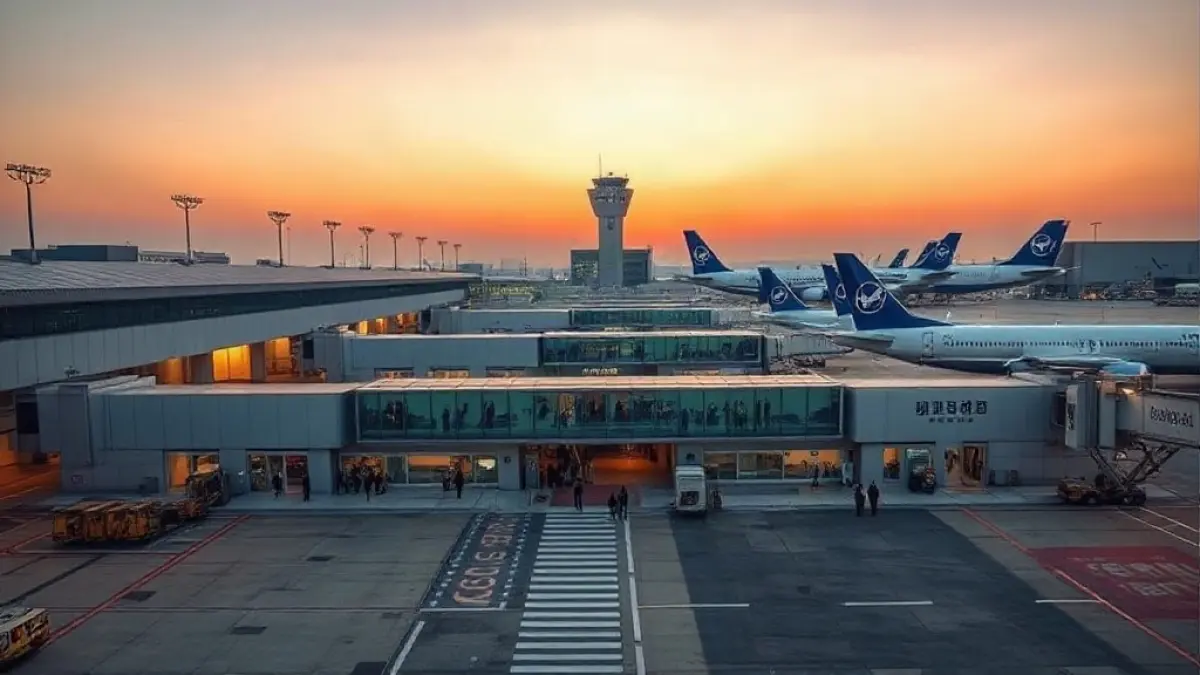
Travellers from within Asia Pacific now make up a larger share of arrivals to the region than before the Middle East conflict, according to an analysis published in November 2026 by Visa Business and Economic Insights (VBEI). South Korea is drawing above-average spending growth from every source region, and Seoul's Incheon International Airport handled more than 38 million international passengers in the first half of 2026 — ahead of London Heathrow and Singapore Changi.
Key facts
- The share of Asia Pacific arrivals originating inside the region rose from 72% in the five months before the Middle East conflict to 74% in the seven months since.
- Europe's share of arrivals fell from 11.1% to 9.2%, and North America's from 6.7% to 6.5%.
- South Korea, Japan and Singapore are winning more travel spend than the regional average, with South Korea ahead of both.
- Almost $1 in every $5 spent by international cardholders at South Korean merchants goes to wellness-related services.
- The South Korean currency has weakened to 79.7 on an index where 2020 equals 100, making the country cheaper in US-dollar terms.
Why are more travellers coming from within the region?
VBEI says part of the shift reflects policy support, including expanded visa-free entry arrangements across markets such as Mainland China. Its report cites China's extension of visa-free entry for France and other countries until 31 December 2026.
Cost and disruption also play a role. Airspace disruption, higher fuel costs and the rerouting of flights following the Middle East conflict have made journeys less predictable and more expensive, while higher airfares, longer flight routings and geopolitical uncertainty have increased the appeal of regional travel.
Where are travellers spending?
Regional visitors are not only more numerous but also spending faster. From February to July 2026, in-destination spending on the Singapore to Japan corridor nearly doubled compared with the same period a year earlier, making it the fastest-growing inbound corridor. The Taiwan to Japan corridor is among the largest by value and also one of the fastest growing.
Four of the five fastest-growing corridors start within Asia Pacific: Singapore to Japan, Taiwan to Japan, South Korea to Japan and Singapore to Malaysia. The exception is Europe to Japan.
Why is South Korea attracting more spending?
VBEI attributes the country's performance to the global popularity of K-pop, K-dramas and K-beauty, which it says converts cultural exports into tourism demand. Much of the cultural, entertainment and wellness offer is concentrated in Seoul, encouraging visitors to build itineraries around the city's neighbourhoods, shops and experiences.
Wellness is a major part of that spending. Average transaction size at health and wellness merchants in South Korea is the highest of any merchant category and more than 50% above that for airlines. Exchange rates add to the appeal: Japan, South Korea and Thailand — the three largest destinations by inbound card spending — have all become more affordable in US-dollar terms.
What could disrupt travel?
The report points to risks from disruption rather than demand. Geopolitical tensions can redirect travel flows quickly, and haze from wildfires has already disrupted flights in parts of Southeast Asia, including cancelled services between Singapore and Palembang. A strong El Niño also raises the prospect of extreme heat or floods across the region.
What this means for travellers
Travellers heading to South Korea, Japan or Thailand may find their money goes further in US-dollar terms than in recent years. Those flying within Southeast Asia should keep an eye on schedules, as haze has already led to cancellations on some routes.
VBEI expects wellness experiences, cultural tourism and rising affluence among Asia Pacific consumers to drive tourism growth in the year ahead, while warning that weather and geopolitical events may create new winners and losers across the region's destinations.
Also about:  Japan
 Singapore
 Malaysia
 China
 Thailand
 Taiwan
 Vietnam