
 Saudi ArabiaTravel
Riyadh drone attack pushes Gulf flight suspensions into 2027
Airlines are extending Middle East flight cancellations after a drone hit Riyadh on 24 November. EASA is urging carriers to avoid Gulf airspace over the UAE, Bahrain, Kuwait, Oman and Qatar until 31 January 2027.
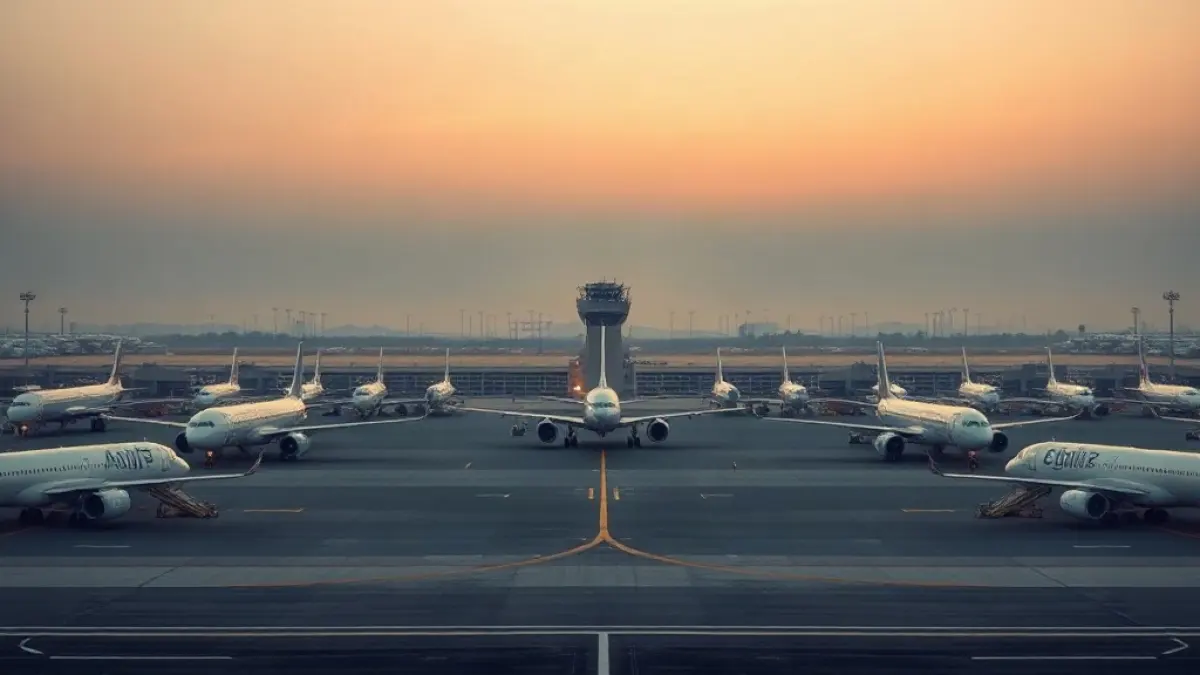
Flight disruption across the Middle East shows no sign of easing after a drone struck Riyadh's tallest skyscraper on Tuesday, 24 November, injuring 11 people. The incident was the second time in less than a week that a building in the Saudi capital's financial district had been targeted, and carriers are extending route suspensions and cancelling flights across the region.
Key facts
- The European Union Aviation Safety Agency (EASA) has extended its Gulf conflict zone advisory, urging airlines to avoid airspace over the waters of the UAE, Bahrain, Kuwait, Oman and Qatar until 31 January 2027.
- Etihad Airways has cancelled Abu Dhabi–Riyadh and Abu Dhabi–Dammam flights through Monday, 30 November; Flydubai's Riyadh and Abha services are suspended until Friday, 27 November, with bookings not opening until 28 November.
- Air France and ITA Airways have postponed their return to Riyadh until January 2027.
- Oman Air has reinstated its Muscat–Riyadh route, with one flight scheduled per day.
- The UK advises against all but essential travel to Saudi Arabia, and against all travel within 10km of the border with Yemen.
What has happened in the region?
The Saudi embassy in Washington said Saudi air defences have intercepted 209 Houthi aerial threats over the last two months. Riyadh's King Khalid International Airport has been repeatedly targeted since early October, and attacks on the kingdom's airports and other infrastructure have caused fatalities, casualties and widespread cancellations.
Tensions in Saudi Arabia, Bahrain and Kuwait over recent weeks have led several international and regional carriers to extend route suspensions and cancel flights. In the UAE, the General Civil Aviation Authority has suspended all flights operated by Iranian airlines after the United States imposed sanctions on Iran's civilian air fleet.
Which flights are still cancelled or suspended?
Emirates is still cancelling flights to Riyadh, although it now flies to Jeddah and Medina. Etihad has cancelled all passenger and cargo flights between Abu Dhabi and Riyadh and Dammam through 30 November; its other Saudi routes are operating. Qatar Airways has suspended Abha and Taif with no resumption date given, and has cut Jeddah from seven daily flights to four.
Other cancellations include Air India and IndiGo flights to Riyadh and Dammam until 30 November (IndiGo also Jeddah and Medina), Philippine Airlines' Manila–Riyadh service until 29 November citing the security situation at King Khalid airport, Gulf Air's flights to Saudi Arabia, Kuwait Airways' Riyadh service, and Pakistan International Airlines' Riyadh flights, suspended since 9 October with no resumption date. Aegean Airlines' Riyadh flights remain cancelled until 17 December, while Air Astana has cancelled Riyadh and Jeddah this week.
Longer-running gaps remain: British Airways does not plan to resume Riyadh flights until 11 January 2027, Abu Dhabi until winter 2027/2028 and Bahrain until the end of March 2027, and has permanently dropped its London–Jeddah route. Air Canada has extended its Dubai and Tel Aviv suspension until the end of March 2027, and AirBaltic has discontinued Dubai flights for the winter 2026/27 season.
Which services have resumed?
British Airways restarted daily London Heathrow–Dubai flights on 3 November after an eight-month suspension, with plans to increase to twice daily in summer 2027. Emirates says it is flying to 140 destinations in 72 countries, about 93 per cent of its pre-war capacity. Qatar Airways has resumed Dammam and Riyadh and is operating to more than 160 destinations.
Turkish Airlines has restored four daily Dubai–Istanbul flights and raised Abu Dhabi to seven per week. Air France resumed Paris–Dubai on 18 November and also flies to Tel Aviv and Beirut. Philippine Airlines restarted Manila–Dubai on 2 October, Malaysia Airlines returned to Jeddah and Madinah on 18 October, and Air Arabia is operating from Sharjah, Abu Dhabi and Ras Al Khaimah to destinations including Muscat, Jeddah and Bangkok.
What is the official travel advice?
The UK's Foreign, Commonwealth and Development Office advises against all but essential travel to Saudi Arabia and against all travel to within 10km of the border with Yemen. It warns that King Khalid International Airport remains at risk of further attacks and advises British nationals wishing to leave the kingdom to consider travelling overland to a neighbouring country before flying onwards.
The United States continues to advise its citizens across the Middle East to exercise heightened vigilance, and the US embassy in Riyadh issued a renewed security alert on Tuesday, 10 November.
What this means for travellers
Airlines across the region are telling passengers to check their flight status before leaving for the airport, and Emirates advises checking even after checking in. Flydubai warns of longer journey times on some routes because of rerouting, and Kuwait Airways says changes to booked flights are sent by text message.
Some flexibility is available. Emirates is letting customers change ticket dates as many times as needed free of charge, and offers international passengers travel insurance covering conflict-related expenses plus a free 30-day trip extension. Etihad allows one free rebooking for tickets issued on or after 6 March 2026 for travel scheduled up to 31 March 2027, and gives international travellers arriving in Abu Dhabi complimentary medical travel insurance for up to 15 days. Air Arabia passengers whose flights were previously cancelled may rebook if they have not yet used their modification or refund option.
Schedules remain subject to change, and Etihad warns that further changes are possible. This article was updated on 25 November 2026.
Also about:  United Arab Emirates
 Oman
 Bahrain
 Kuwait
 Qatar
 Yemen
 Israel