
 RussiaTravel
Designer Detained on Passport Renewal Trip to Moscow Dies in Hospital
A Russian television production designer who returned from Kyiv to Moscow to replace his passport has died in hospital after months in detention on treason charges, rights group First Department said on 26 October. The cause of death has not been disclosed.
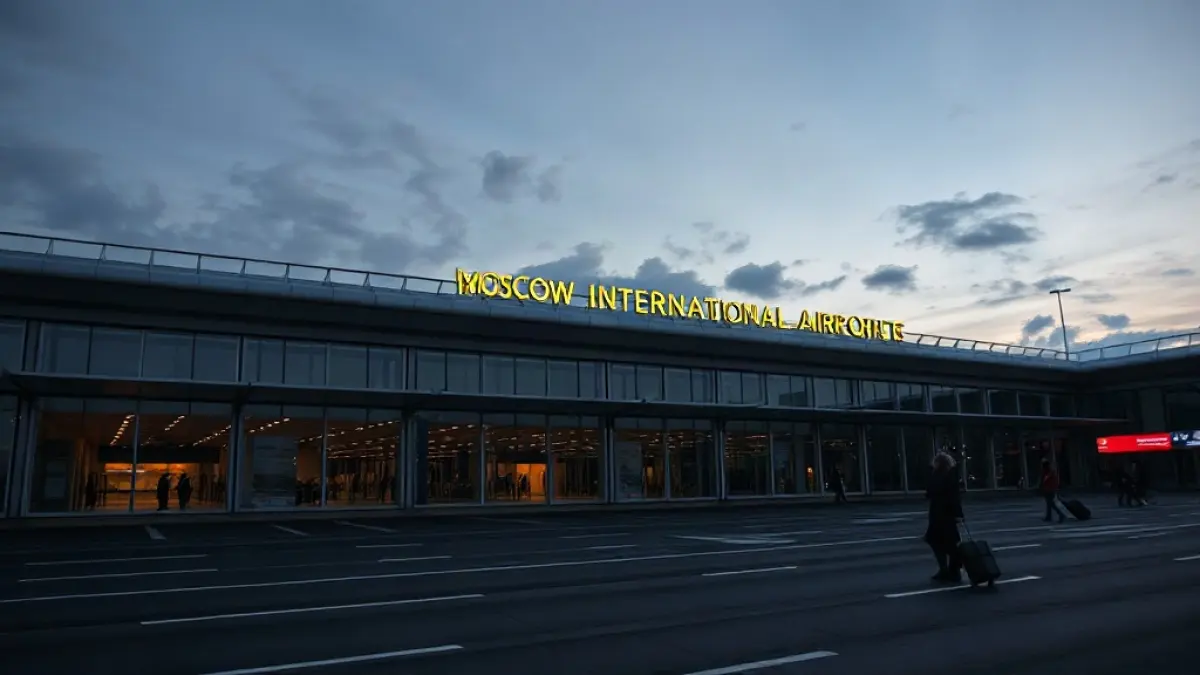
A Russian television production designer who travelled back to Moscow from Kyiv to renew his passport has died in a hospital after months in detention, the rights group First Department said on 26 October. Aleksandr Kondratov, 52, was facing a treason investigation at the time. No cause of death has been disclosed.
Key facts
- Kondratov was detained at Moscow's Vnukovo airport on 5 May
- He spent more than 70 days in successive administrative arrests before any criminal charge, OVD-Info said
- A treason case was opened on 5 August and investigated by the Federal Security Service (FSB)
- He was moved from pretrial detention to Botkin Hospital on 23 October
- First Department counts his death as at least the 11th this year in cases it considers politically motivated
Who was Aleksandr Kondratov?
Kondratov was a production designer best known for his work on "Likvidatsiya" ("Liquidation"), a 2007 crime drama set in postwar Odesa. He received Golden Eagle and TEFI awards for the series, and his other credits included Odesa-Mama and Return My Love.
According to rights monitors, he had lived in Kyiv since 2012 and went back to Russia to replace his passport. He was detained at Moscow's Vnukovo airport on 5 May.
Why was he detained?
Before any criminal case was opened, Kondratov was held for more than 70 days through repeated administrative arrests on allegations of petty hooliganism, the rights group OVD-Info said. Russian rights monitors commonly describe such repeated short sentences as carousel arrests.
The treason case was opened on 5 August and handled by the FSB's directorate for Moscow and the Moscow region. Mediazona, reporting from a Moscow City Court hearing in September, said his lawyer Natalia Tikhonova told the court the case concerned "at least six publications" online. She did not reveal their contents, and the court rejected an appeal against his detention. Publicly reported details do not establish what the posts said or how investigators argued they amounted to treason.
What do the rights groups record?
First Department said Kondratov's death was at least the 11th this year among defendants in cases it considers politically motivated. The group's count is a rights-monitoring assessment, not an official Russian category and not a finding that the deaths shared a cause.
The Moscow Times reported that Kondratov was the third such defendant whose death became known in October. The others were Igor Yakovenko, 52, who died in a Krasnodar detention centre, and Rustam Khalikov, 49, who died in a penal colony in the Penza region; both had been convicted on terrorism-related charges that their defence teams disputed. The newspaper said eight of the 11 people in its tally had entered custody aged 50 or older, and described complaints about detention conditions, pressure from prison administrations and difficulties obtaining medical treatment. Those broader allegations do not establish the circumstances of Kondratov's death.
What campaigners are asking for
Earlier in October, Memorial estimated that more than 1,800 people in Russia were recognised as political prisoners, with a broader figure of roughly 5,700 people imprisoned or facing politically motivated prosecution.
Speaking at the French National Assembly on 7 October, Memorial co-chair Oleg Orlov urged European lawmakers to prioritise prisoners whose health and circumstances put them at particular risk, and to follow individual cases, speak about them publicly and keep scrutiny on their treatment. He warned that some prisoners might die before completing their sentences.
What this means for travellers
The source describes no change to passport or entry rules. Its practical detail is that Kondratov's trip to Moscow to replace a passport ended in detention at an airport and, months later, in his death in hospital. The reports announcing his death did not identify a medical cause.
Memorial's campaign continues, with further attention expected on individual prisoners' cases and their treatment in custody.
Also about:  Ukraine