
 MyanmarTravel
Myanmar border job scams: Kokang centre ringleaders sentenced to death, dozens jailed
A Chinese court sentenced three people to death on 13 October 2026 for running scam centres in Myanmar's Kokang region, and jailed dozens more. The compounds lured people across the border with fake promises of high wages.
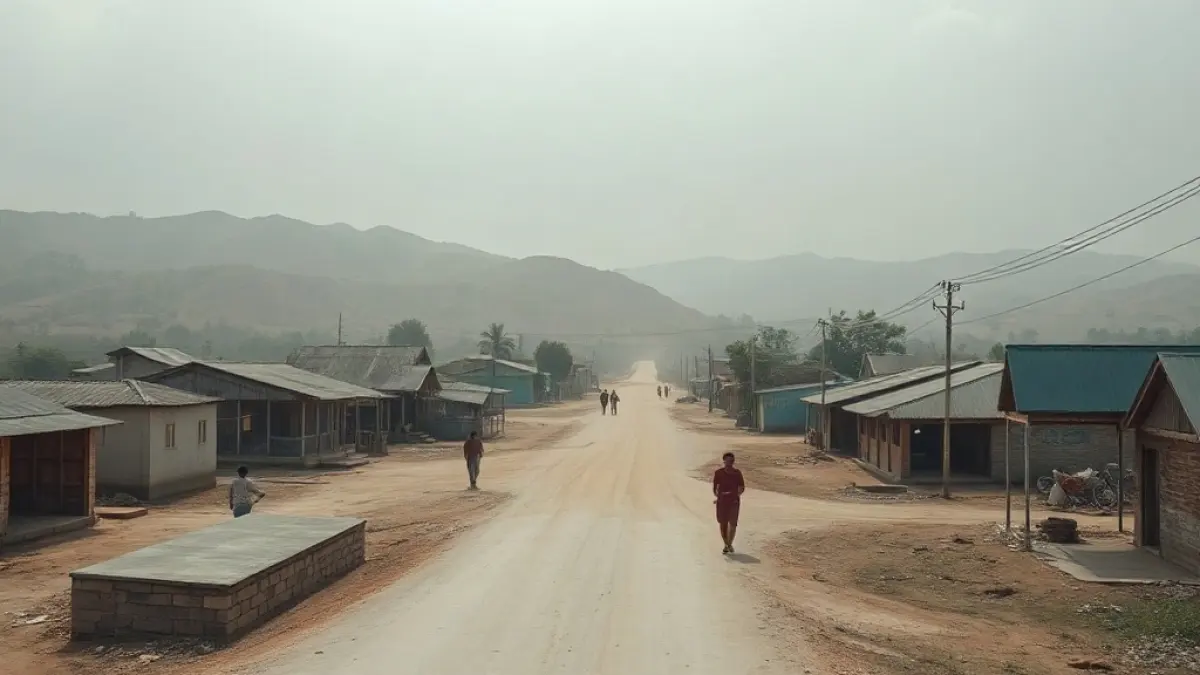
A Chinese court handed death sentences to three members of a criminal gang on Tuesday, 13 October 2026, for operating a network of brutal scam centres in Myanmar's Kokang region on the border with China. Dozens of other gang members were also jailed.
The case is part of a wider crackdown in which China has stepped up cooperation with Southeast Asian nations against an industry that has flourished in the region and fleeced people out of billions of dollars.
Key facts
- 13 October 2026: Quanzhou Intermediate People's Court sentenced Wei Huairen, Chen Dawei and Liao Jingfang to death.
- The three were involved in the "Wei family criminal gang", which ran scam compounds in Myanmar's Kokang region.
- The gang's operations netted more than 12.2 billion yuan ($1.8 billion).
- Three other members received life sentences; 55 more were jailed for terms ranging from 24 years to three years and three months.
- China's state broadcaster CCTV said the gang ran 14 "large-scale" scam compounds.
- The Wei family members were first indicted in October 2025.
What were the gang's crimes?
The court said the Wei family gang was involved in drug trafficking, organising prostitution, running illegal casinos, telecommunications fraud and the murder of at least two Chinese citizens. Wei Huairen was identified as one of the group's leaders and was found guilty of several crimes including murder.
CCTV described the group as the "most violent criminal force in northern Myanmar" and said it had created an "iron triangle of political, military, and business criminal activities". Police discovered remains of victims bound with iron chains and with bullet holes in their skulls, the broadcaster said. Analysts describe the Wei clan as one of the "four families" running crime syndicates in Kokang.
How are people drawn into the scam compounds?
Those carrying out the online scams are sometimes willing con artists and sometimes trafficked foreign nationals — many of them Chinese — who were tricked into the work and held in prison-like compounds. CCTV said the gang lured "large numbers" of Chinese people to Myanmar with fake promises of high wages.
The United Nations warned that Chinese and Southeast Asian gangs are making tens of billions of dollars a year from cyber scam centres, and estimates that hundreds of thousands of people are working in such centres globally. The compounds have thrived along Myanmar's loosely governed border during the civil war sparked by the 2021 coup, drawing workers from Southeast Asia as well as China. The U.N. Office on Drugs and Crime says the industry has also spread to South America, Africa, the Middle East, Europe and some Pacific Islands.
What this means for travellers
The case underlines the risk behind job offers promising high wages to work in Myanmar's border areas. People offered such work can end up detained in compounds rather than employed, and the source describes victims being held against their will. Treat unsolicited overseas job offers with caution and check who is behind them before travelling.
What happens next
China has previously executed people linked to other Kokang crime clans: in January it executed 11 people, including members of the "Ming family criminal gang", and the following month four members of the Bai clan were executed for crimes including fraud, intentional homicide, intentional injury, kidnapping and extortion. Experts say Myanmar's military has long turned a blind eye to the scam centres, whose profits are believed to go to militia allies, but the junta has faced pressure from China to shut the operations down.
Also about:  China