
 ThailandEntry rules
Myanmar workers boycott Thailand's Certificate of Identity centres
A poll found more than 2 million Myanmar workers in Thailand are refusing to use the new Certificate of Identity centres. Civil society groups have asked the Thai government to suspend the process, which runs until 14 January 2027.
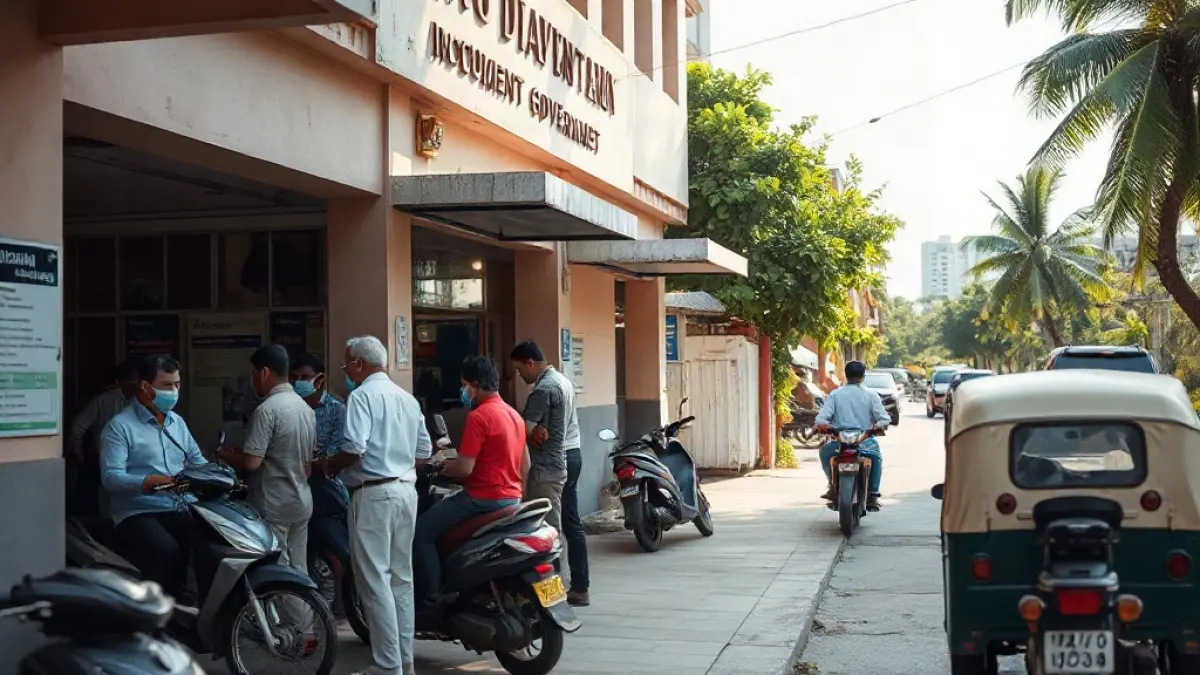
More than 2 million Myanmar workers in Thailand are boycotting identity-document centres opened by the Myanmar government, according to a poll by the Myanmar Migrant Workers' Representative Coordinating Committee in Thailand (MMWRCCT). Civil society organisations are calling on Thai authorities to suspend the Certificate of Identity (CI) process, saying workers are turning away because of new tax and remittance conditions attached to it.
The document is a requirement for Myanmar workers seeking a Thai work permit and visa, so the boycott has direct consequences for anyone in this group trying to legalise or renew their status.
Key facts
- Five CI centres opened on 14 October and will process applications until 14 January 2027.
- Some 770,000 undocumented Myanmar workers must obtain a CI in this round, but only around 15,000 have turned up.
- Applicants must prove they remitted at least 25% of monthly earnings through Myanmar government-controlled banks and paid 2% annual income tax.
- The CI is valid for four years and can be used only to cross the Thai-Myanmar border.
- One Myanmar worker put the total cost of a CI at more than 10,000 baht.
- About 1.4 million Myanmar workers are said to need a visa stamp before 14 February.
What is a Certificate of Identity?
Green Certificates of Identity are issued by CI centres located in Thailand but operated directly by the Myanmar government. The document allows holders to cross the Thai-Myanmar border, but not to travel to any other country.
The centres are in Samut Prakan, Samut Sakhon, Surat Thani and Chiang Mai, plus a mobile unit in Chon Buri. Human rights organisations estimate that Thailand hosts between 1 million and 1.7 million undocumented Myanmar migrants.
Why are workers refusing it?
Workers must show they have sent at least 25% of their monthly income through Myanmar government-controlled banks and paid 2% annual income tax to obtain or renew a CI. Opposition MP Sahatsawat Kumkong of the People's Party noted that many Myanmar workers have no dependants in Myanmar to send money to, so they cannot meet the remittance condition.
The remittance and tax requirement was issued in 2023 and was widely criticised as a move by the military regime to boost its depleted foreign currency reserves. Many workers are unwilling to fund or legitimise the current government by complying.
What does the process cost?
Sahatsawat said the CI application fee has risen since the COVID-19 pandemic from about 300 baht to 2,670 baht. He reported complaints of extra charges of up to 1,500 baht to secure a processing slot, doubling for urgent cases.
The application itself costs 690 baht filed officially, or about 1,100 baht through an agent, he said, while the visa stamp costs about 2,500 baht, or about 3,000 baht via an agent. Myanmar worker Thain Tun Soet put the total cost of a CI at more than 10,000 baht, which he said is nearly a full month's pay for low-paid migrant workers.
What is the Thai government doing?
Labour Minister Julapun Amornvivat said migrants' identities must be verified by Myanmar authorities to avoid fake identities that could threaten public security. However, he said the Thai government opposes the mandatory 25% remittance requirement and will officially ask Myanmar to remove it from CI issuance and renewal, describing it as a violation of international standards and the right to work overseas.
The Migrant Working Group (MWG), the White Employers Group and the Thailand Migration Reform Consortium are pressing for the CI process to be suspended. MWG coordinator Adisorn Kerdmongkol warned that without suspension, "at least 600,000 Myanmar workers in Thailand will become illegal".
What this means for workers and travellers
Myanmar nationals working in Thailand need a CI to obtain a work permit and visa, and centres will take applications only until 14 January 2027. The Labour Rights Foundation has asked for the document to be replaced with an e-work permit and for the visa stamp, which about 1.4 million Myanmar workers need before 14 February, to be waived.
Workers without a CI or passport for the visa stamp may have to return home, the source says. The Labour Rights Foundation argued that waiving the stamp would spare them the risk of military conscription after the junta introduced two years of mandatory service for males aged 18-35 in 2024.
MP Sahatsawat proposed that Thailand collect workers' biometrics and share them with the Immigration Bureau instead, citing national registration drives in 2004 and 2014 that provided temporary work permits and health check-ups. He also argued that Myanmar's tax collection breaches the Thailand-Myanmar Double Taxation Agreement signed in 2002 and in force 10 years later. The outcome of the Thai government's request to Myanmar has not yet been announced.
Also about:  Myanmar