
 MyanmarTravel
Flying Into Myanmar in 2026: What Travellers Can Expect at Mandalay
A first-hand account of flying Myanmar Airways International from Bangkok to Mandalay in September and October 2026 sets out flight changes, a near-empty airport, cash advice and a straightforward eVisa process. Most foreign governments advise against travel to Myanmar.
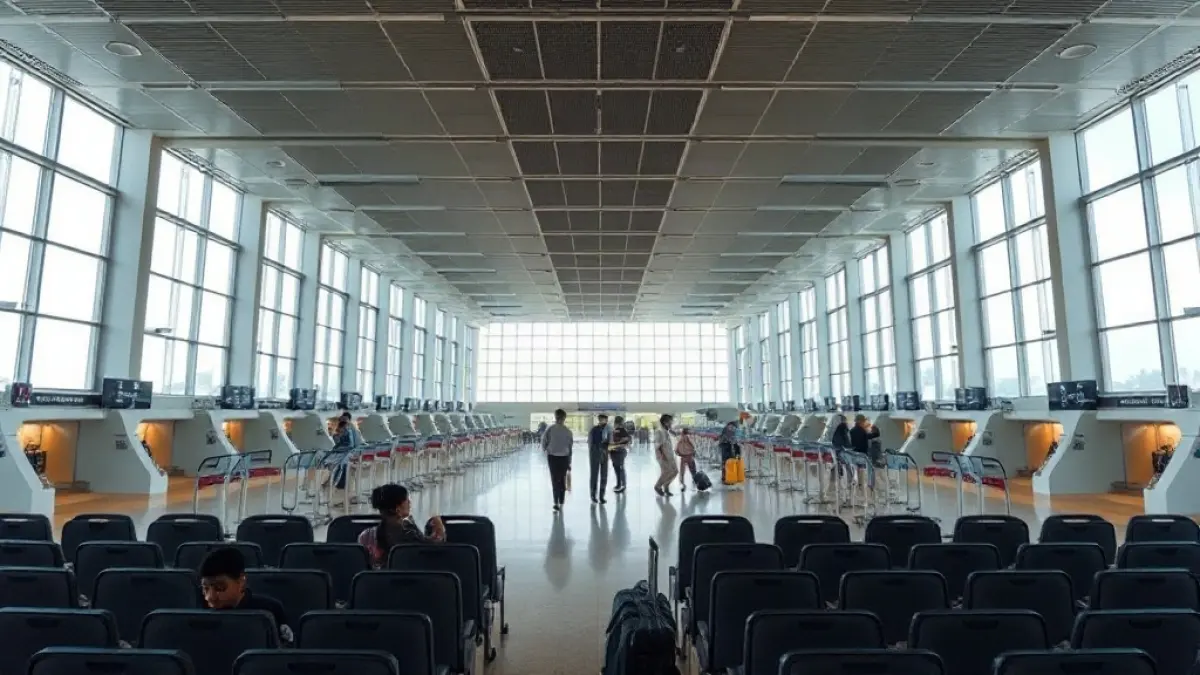
Myanmar's airline network has shrunk since 2021 but has not collapsed, and Myanmar Airways International (MAI) continues to fly into Mandalay from Bangkok — while most foreign governments advise against visiting the country at all. A first-hand account of flights between Bangkok's Don Mueang International Airport and Mandalay International Airport in September and October 2026 describes a functional but largely deserted airport, a working eVisa process and several practical obstacles for travellers.
Key facts
- Route and timing: MAI flies Bangkok Don Mueang–Mandalay daily with Airbus A319s; its Bangkok Suvarnabhumi service is also daily with A319s
- Flight time: the scheduled time from Bangkok to Mandalay (flight 8M362) is one hour and 50 minutes
- Schedule reliability: both flights saw departure times moved by more than an hour a week or two ahead, but operated at the revised times
- Aircraft swap: the Mandalay–Bangkok return, sold as an A319, was changed to an ATR 72 turboprop
- Baggage in economy: one personal item, one carry-on of up to 5 kg (11 lbs) and a checked bag up to 20 kg (44 lbs)
What is the situation at Mandalay airport?
Mandalay International Airport is operating normally but is far below its designed capacity. Only around a third of the shops appeared open, though restaurants, souvenir shops and a bar were trading, and just one section of the duty-free outlet was operating with a very limited selection of alcohol and many empty shelves.
The terminal remained calm and welcoming: the eVisa process was straightforward, immigration was easy, and airline, airport and immigration staff were friendly. The account notes that power cut out briefly during check-in before a backup system kicked in. Dozens or hundreds of tourists still pass through each day, along with many Burmese travelling for work.
What should travellers know before flying?
The eVisa process for Myanmar was described as straightforward. Foreign credit cards may or may not work in the country, so travellers are advised to carry crisp, clean, unmarked and unfolded US dollars. Exchange rates vary widely: the airport rate is around the middle of the road, rates in Mandalay are better and rates in Bagan are worse.
Booking was also difficult in this case: attempts to buy tickets directly on the airline's website using MasterCard and VISA cards issued by banks in the United States and the United Kingdom were declined repeatedly, and the fares were ultimately purchased through a third-party booking site. On board, MAI served a light meal with boxed juice and snacks.
How large is the airline?
MAI is a privately owned full-service carrier based at Yangon and is Myanmar's primary airline, serving around 30 destinations, mostly from Yangon but also from Mandalay. It is not to be confused with the state-owned Myanmar National Airlines.
Its fleet of 12 aircraft comprises three ATR 72-600s, six A319s, two A320s and one cargo-configured A321, with an average age of 16.8 years. The airline has no aircraft on order. Domestic routes have been disrupted and shut down by the civil war, and some can change at short notice.
What this means for travellers
Travellers considering Myanmar should check their government's current travel advice before making any plans: the US Department of State advises "Do not travel to Burma for any reason" because of armed conflict, unrest, landmines, crime and weak health infrastructure. Anyone who does travel should expect schedule changes and aircraft swaps, plan to pay in clean US dollars and be prepared for an airport operating well below capacity.
MAI's flights continue to run, and more international airlines serve Yangon than Mandalay. No further changes to the route have been announced.
 Thailand
 China