
 JapanVisas
Tokyo probe: $600,000 scheme sold Japan skilled-professional visas
Tokyo police say a company executive sold Japan's highly skilled professional residence status to wealthy Chinese clients for $600,000 each using forged degrees and fake job papers. He was rearrested on 28 October 2026.
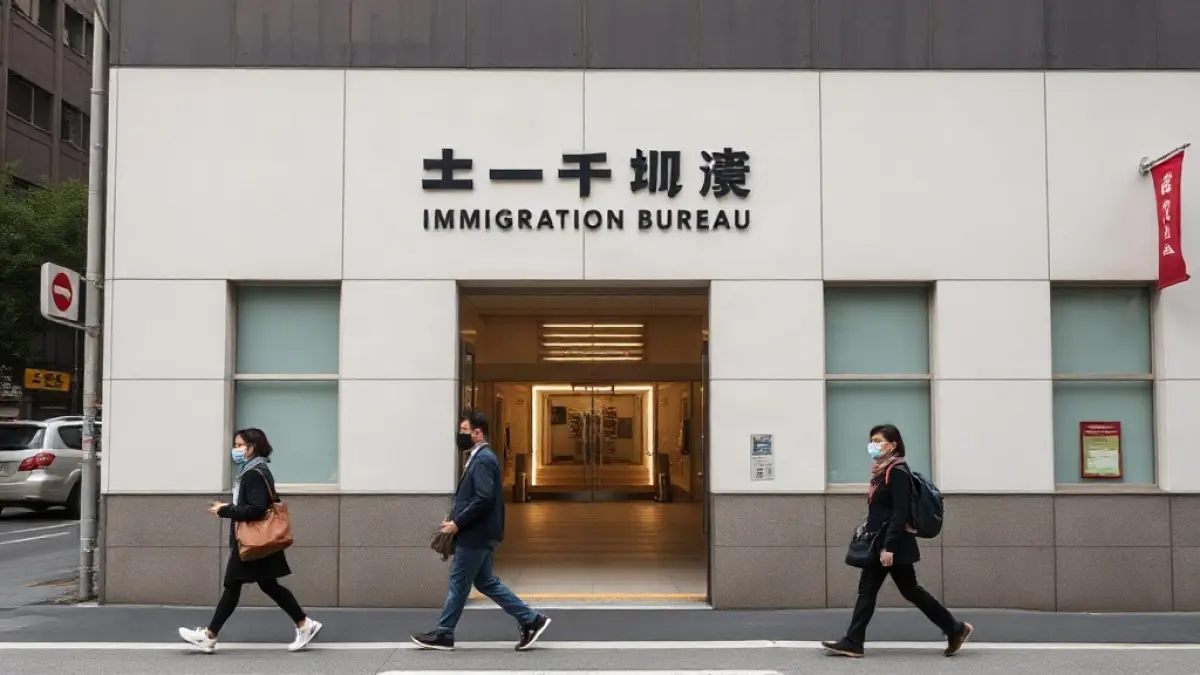
Tokyo police rearrested a company executive on 28 October 2026 over an alleged scheme that sold Japan's "highly skilled professional" residence status to wealthy Chinese clients for $600,000 (94.7 million yen) each. Investigators say forged academic credentials and false employment documents were used to win the status, which leads into a fast track for permanent residency.
Key facts
- Arrest date: 28 October 2026, on suspicion of violating the Immigration Control Law by filing a false application
- Alleged price: $600,000 per client, with $150,000 returned as "salary"
- Scale: police believe 30 to 40 people linked to the business entered Japan under the scheme
- Documents filed: 5 December 2025 to the Tokyo Regional Immigration Services Bureau
- Fast track: applicants with 80 or more points can seek permanent residency after one year
What is alleged?
Hotei Aizawa, 39, a resident of Tokyo's Minato Ward, is accused of helping clients fraudulently obtain the highly skilled professional status. Police also arrested a 57-year-old Chinese woman who received the status and a 45-year-old female executive of a medical consulting company in Tokyo's Koto Ward. Aizawa has denied the allegations, telling investigators: "I deny everything."
The three allegedly conspired on 5 December 2025 to submit forged and false documents to the Tokyo Regional Immigration Services Bureau. One document claimed the Chinese woman held a master's degree she had never obtained; others said she would work for the Tokyo medical consulting company, although she had no intention of doing so.
The two female suspects identified Aizawa as the mastermind, investigators said. The Chinese woman told police she paid him $600,000 after being introduced by a third party and was told she could legally obtain permanent residency. The company executive said Aizawa prepared the documents and handled the application, and that she had never met the woman.
How were clients solicited?
Aizawa is believed to have advertised a "Japan immigration program" offering permanent residency in as little as one year for $600,000, with $150,000 returned to the client as "salary." Police therefore suspect he received $450,000, about 70 million yen, per client, and are still investigating the extent of the operation. The materials reportedly used "Run Ri," Chinese internet slang for escaping from China to Japan.
How does the highly skilled professional visa work?
The category was created to attract foreign nationals with advanced expertise in academia, technology and business management. Applicants earn points for education, work experience, expected income, age, professional qualifications and Japanese-language ability.
Foreign residents generally must live in Japan for at least 10 years before applying for permanent residency, but the government relaxed this in 2017: those with at least 70 points can apply after three years, and those with 80 or more after just one. The government has promoted the program as a "Japanese-style green card."
At the end of 2025, 32,953 foreign nationals held the status, of whom 22,169 — 67.3 percent — were Chinese, more than double the fewer than 10,000 recorded in 2019. More than half of the roughly 15,000 people who obtained the status from 2017 through 2019 had switched to permanent resident status by 2025, according to the Immigration Services Agency.
Why was the scheme possible?
The Immigration Services Agency said applications are generally assessed on the documents submitted. Unless graduation certificates or a sponsoring company's activities raise suspicions, officials do not routinely contact issuing institutions for verification or inspect companies on site. About 680,000 certificates of eligibility were issued across all residence categories in 2025, including 3,257 under the highly skilled professional category. An agency official said many cases are screened solely on documents and that inquiries or on-site inspections in every case are difficult.
Immigration lawyer Koji Yamawaki said checks remain weak after entry: residents are not reviewed for five years, so authorities cannot confirm whether income and activities match what was declared. Highly skilled professional holders must submit tax certificates and details of their employer and activities when renewing their status. Concerns have surfaced before — in June, a man in his 40s who obtained the status in 2023 was suspected of being an executive of the Prince Group, which operated special-fraud bases in Cambodia and elsewhere.
What this means for travellers
Anyone applying for the highly skilled professional status should make sure academic credentials and employment documents are genuine and accurate, since the agency assesses applications mainly on the papers submitted. Applicants should also note the renewal requirement to provide tax certificates and employer information.
Yamawaki called for closer verification of academic credentials with overseas universities and Japanese diplomatic missions, more on-site inspections of sponsoring companies and a review of the points system. If such abuse spreads, he warned, "it could fuel distrust of immigration administration and increase anti-foreigner sentiment." Police say they are still investigating the full extent of the alleged operation.
Also about:  China