
 GhanaTravel
Nigeria-Ghana Road Route Used to Move People Without Papers, Probe Finds
An investigation of the Nigeria-Ghana road corridor found transporters carrying passengers without passports or ID for extra fees. Ghanaian authorities identified 794 trafficking victims in 2024, 358 of them Nigerians.
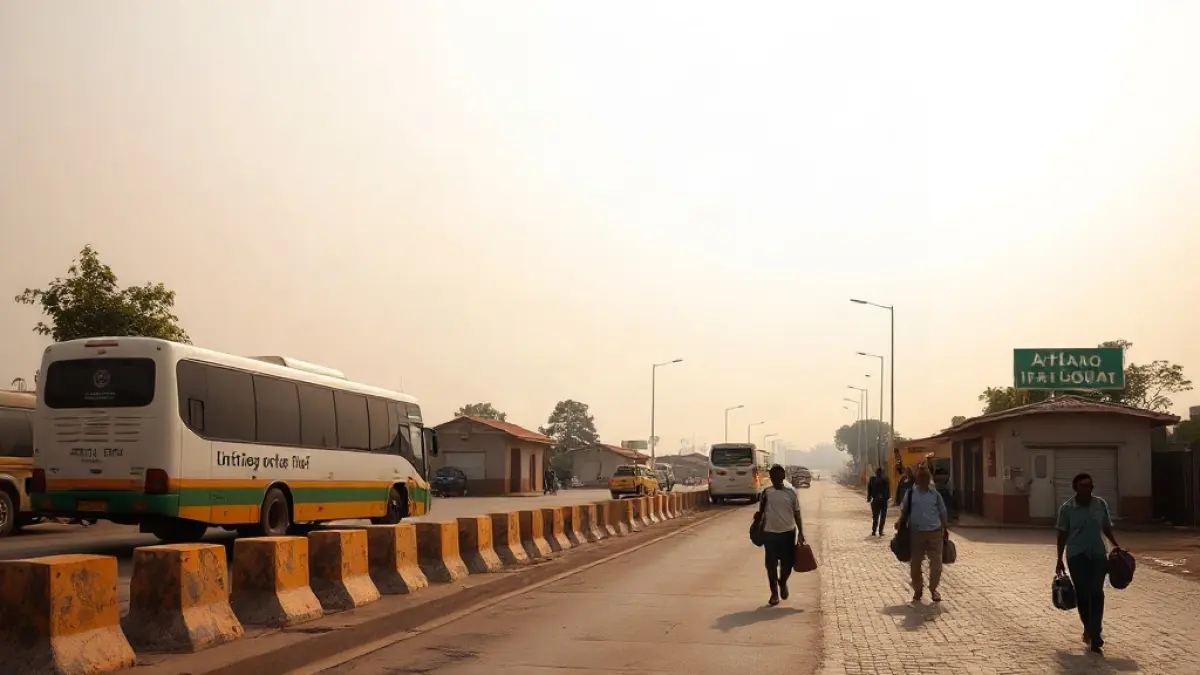
Travelling by road from Nigeria to Ghana requires a passport, a yellow fever card and proof of accommodation, but an investigation of the corridor found transport operators ready to carry passengers with none of those documents for an extra fee. The same road network is being used to move people into sexual exploitation, forced labour and cybercrime, with Ghanaian authorities identifying 794 trafficking victims in 2024, 493 of them foreign nationals.
Key facts
- Of the 493 foreign victims identified in Ghana in 2024, 358 were Nigerian — about 73%; the figures cover only victims found by authorities, not the total.
- The road journey spans 450 to 500 kilometres and takes 9 to 14 hours, passing three official border posts.
- Required documents: a valid international passport or ECOWAS passport, a yellow fever card and evidence of accommodation.
- Nigeria's immigration authority requires landing and exit cards for all passengers entering or departing the country.
- At Lagos parks, staff offered to obtain an identity document for N10,000 through a third party.
What documents are required for the trip?
Travel experts list a valid international passport or ECOWAS passport, a yellow fever card and evidence of accommodation as the requirements for travel between Nigeria and Ghana. The Nigeria Immigration Service states that landing and exit cards are mandatory for every passenger entering or departing Nigeria, and that they must be completed at the borders to support immigration control and border management.
How are undocumented travellers moved?
Checks at almost five parks in Lagos where passengers board buses to Ghana found transporters or their representatives offering to complete the trip without the required documents, on payment of an extra fee compared with fares for passport holders. At two parks, passengers had to show an identification card, which staff said could be arranged for N10,000 through a third party; the reporter later learned the document produced is usually a fake National Identification Number (NIN) slip. Other operators said that with the extra fare, no passport or identity card was needed at all.
Accounts collected along the route describe a chain of handovers. One woman said she was driven from Badagry to the Seme-Krake border, passed by motorcycle into Benin, then driven through Togo to the Aflao corridor, walking past a barricade rather than through the border post. Another said she reached Ghana with no documents at all, seated at the back of the bus and told to say she was travelling to Ivory Coast at Aflao.
How many victims have been identified?
Nigeria's Nigerians in Diaspora Commission (NiDCOM) said 163 Nigerians were rescued from trafficking in Ghana between July and November 2024, and more than 200 between April and May 2025, with over 360 people rescued and repatriated in that period. In July 2024, Nigerian immigration received 66 trafficked Nigerians returned from Ghana through the Seme border; separate operations rescued 58 Nigerian women and children and eight Nigerian girls aged 15 to 22.
Nigerian authorities said 288 trafficking victims were rescued in Ghana during operations in 2025. In February 2026, 13 suspected commercial sex workers — 12 Nigerians and one Ghanaian — were rescued, and in April 2026, 42 Nigerian teenage girls were rescued from forced prostitution in Ghana's Western North Region.
What did the reporter observe at checkpoints?
On one bus trip, only four of 13 passengers carried international passports; five held NIN slips, two had Ghana cards and two, including the reporter, had no identity document at all. At Agbara, the driver visited the immigration post with only the passenger manifest and the bus continued without passenger checks. Between Agbara and Seme, an officer questioned passengers at random and the driver intervened to stop one line of questioning; at another stop, the driver said he had run out of manifest photocopies, handed an officer a gift and drove on.
What this means for travellers
Anyone making this journey should carry the documents the corridor's rules call for: a valid international passport or ECOWAS passport, a yellow fever card and evidence of accommodation, plus landing and exit cards for travel through Nigeria. The investigation shows these requirements are not consistently checked at some Lagos parks and along the route, and that operators can arrange substitute identity papers, so travellers should verify their own documents are genuine and in order before boarding. The source does not report any announced change to entry rules or enforcement on the corridor.
 Nigeria
 Benin
 Togo