
 VietnamEntry rules
Ho Chi Minh City Airport Queues: What to Expect at Tan Son Nhat
Tan Son Nhat International Airport, serving Ho Chi Minh City, is well over capacity, with immigration and emigration waits of around 45 minutes common. Travellers should also complete Vietnam's online arrival card and print their e-Visa.
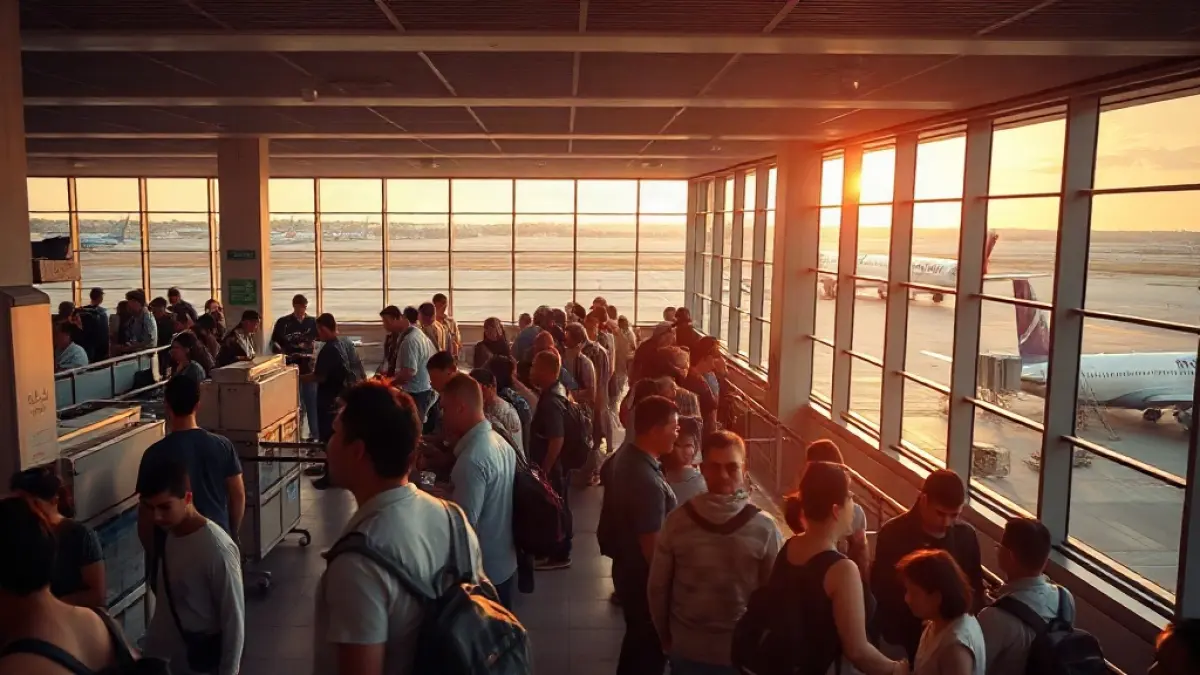
Tan Son Nhat International Airport, the airport serving Ho Chi Minh City and southern Vietnam, is handling far more passengers than its international terminal was built for. Queues at immigration and emigration of around 45 minutes are routine, and a new airport is expected to open at the end of 2026 or early 2027 to complement — not fully replace — it.
Key facts
- The international terminal was designed for 8–10 million passengers a year, expanded to 13 million in 2018, and now handles 18+ million annually.
- Immigration and emigration queues commonly take around 45 minutes, and can stretch to an hour.
- Visitors must complete Vietnam's online arrival card before travelling.
- Long Thanh International Airport is expected to open at the end of 2026 or early 2027.
- After immigration, prices are listed in US dollars: a bowl of pho can cost around $25, versus about $3 outside the airport.
How long are the queues?
On arrival, getting through immigration routinely takes around 45 minutes; 20 minutes is unusually fast, and an hour is common depending on how many flights have landed. Departure queues are similar, commonly 45 minutes and sometimes an hour. Security after immigration is quicker but can add another 15 minutes.
All immigration booths are typically staffed. Unlike most countries, this airport does not operate separate lines for Vietnamese citizens and foreigners. Some e-Gates exist, but they appear to be used mainly by flight crew, and it is unclear whether a fee applies to them.
What do I need to enter Vietnam?
Vietnam requires visitors to fill out an online arrival card. Vietnam is visa-free for British citizens and most of Europe, while US, New Zealand, Australian and most other passport holders can obtain a straightforward 90-day e-Visa. Travellers should bring a printed copy of the e-Visa.
Many third-party websites offer Vietnamese e-Visas and can be faster than the official system, but they are not official sites. One traveller's daughter was initially refused entry because of a spelling error on her visa before being allowed through, so document details are worth checking carefully. As of the time of writing, Vietnam does not require a customs declaration form, and whether arriving bags must be scanned appears to be random.
What is the terminal like?
Terminal 2 handles international flights and is described as old, cramped and run-down, though functional, and flights are not normally delayed despite the airport operating with a single runway. Check-in queues for VietJet can wrap around the terminal with waits of at least an hour, while check-in for Vietnam Airlines, AirAsia and international flag carriers is generally modest. VietJet passengers should allow extra time.
Beyond immigration, food and retail prices are listed in US dollars and feel high for the facilities; the duty-free area is limited, and most vendors sell Vietnamese souvenirs such as conical hats, coffee and chocolate. The terminal's windows offer excellent runway views. Local SIM cards can be bought before immigration or after customs, and taxis and ride-hailing are available outside; taxis typically need cash or QR payment, while Grab accepts international credit cards.
What is changing?
Long Thanh International Airport is expected to open at the end of 2026 or early 2027 with an initial capacity of 25 million passengers, rising eventually to a planned 100 million. Traffic forecasts put Long Thanh at 44.5 million passengers by 2030 and 77.5 million by 2040, mostly international, while Tan Son Nhat is expected to handle 40 million by 2030 and 50 million by 2040, mostly domestic.
At Tan Son Nhat, the newer domestic Terminal 3 is modern and spacious, with rapid security and straightforward check-in, and further expansion and technology upgrades are under consideration. Vietnam Airlines and several other carriers have moved to the newer terminal, freeing capacity at Terminal 1, though VietJet's queues there remain long.
What this means for travellers
Travellers flying through Ho Chi Minh City should allow at least an hour for immigration on arrival and for departure formalities, and more when several flights land together. VietJet passengers in particular should get to the airport earlier than usual. Before flying, complete the online arrival card, check that the name on your visa matches your passport exactly, and carry a printed e-Visa.
The opening of Long Thanh International Airport at the end of 2026 or early 2027 is the next development to watch, along with any further upgrades planned for Terminal 3.
Also about:  United Kingdom
 United States
 New Zealand
 Australia