
 TongaEntry rules
Tonga to Get US-Funded Cargo Screening and Canine Border Units
The United States has announced more than $44 million in Pacific security funding, including about $3.5 million for Tonga to install cargo-screening equipment at Nuku'alofa's main wharf and support canine-detection kennels on Vava'u. No start date has been given.
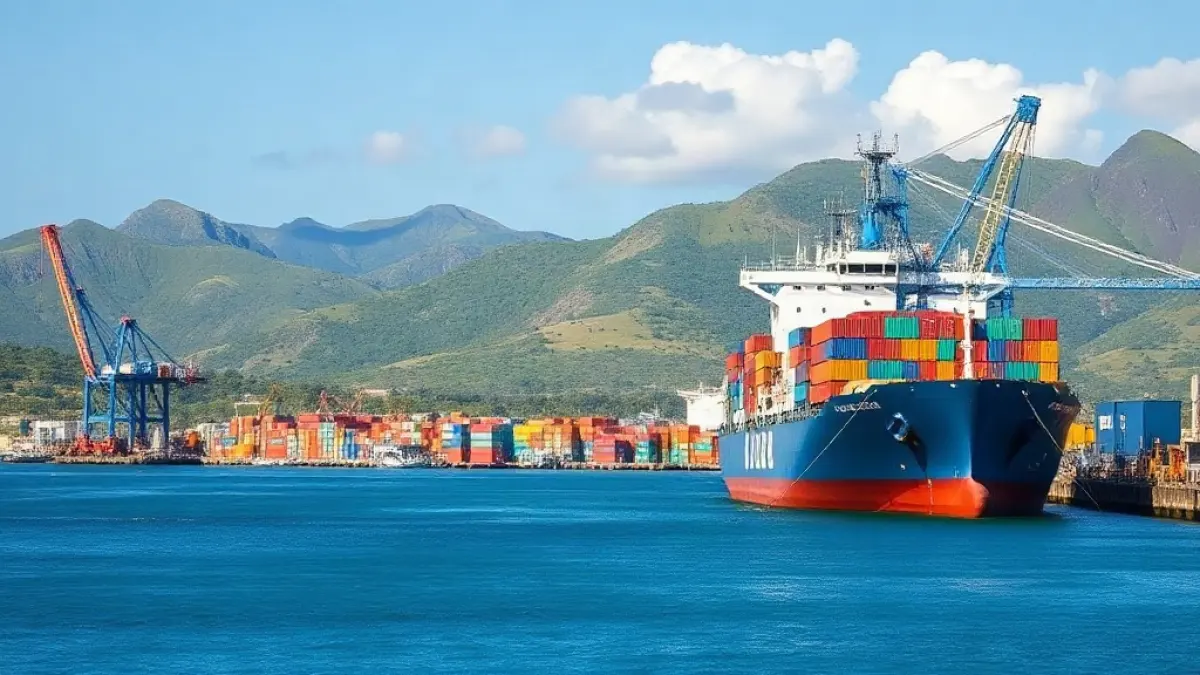
The United States has announced more than $USD44 million in new security programming for the Pacific, including about $3.5 million for Tonga to strengthen border detection at its ports. The package was unveiled at a police ministers' conference in Los Angeles and covers maritime surveillance, police investigations, port security and financial-crime enforcement.
Key facts
- Announced at the inaugural US-Pacific Islands Conference of Police Ministers, held 21–22 October in Los Angeles.
- Tonga is to receive about $3.5 million for border detection, including cargo-screening equipment at Queen Salote International Wharf in Nuku'alofa.
- A US task force will work with Tongan authorities on an administrative facility for canine-detection kennels at Neiafu Police Station on Vava'u.
- More than $1.3 million will fund investigator training in Fiji, Tonga, the Marshall Islands, the Federated States of Micronesia and Palau.
- No start date has been announced for the Tonga equipment or the kennel facility.
What is changing in Tonga?
The US State Department plans to install cargo-screening equipment at Queen Salote International Wharf in Nuku'alofa. At the same time, a US task force will work with Tongan authorities to support an administrative facility for canine-detection kennels at Neiafu Police Station on Vava'u.
Tonga is also included in a separate programme of more than $1.3 million for investigator training, alongside Fiji, the Marshall Islands, the Federated States of Micronesia and Palau. The source does not state when any of these measures will be in place.
What else is in the US package?
The United States is investing $7 million in a regional maritime law enforcement training and coordination centre in Palau, which will serve as headquarters for the Aumoana Regional Law Enforcement Initiative and train Pacific personnel in vessel boarding, evidence handling and maritime awareness.
A maritime-awareness package of nearly $5.5 million includes more than $1.4 million in surveillance tools for the Pacific Islands Forum Fisheries Agency and Fiji's maritime services, a secure communications system for the Samoa-hosted Pacific Transnational Crime Coordination Centre, and a boat ramp in Fiji. Four Papua New Guinea National Fisheries Authority patrol boats are to be fitted with electro-optical and infrared cameras, upgraded radar displays and real-time data transmission.
Other elements include $4.5 million from the US Coast Guard through Project Kanaloa for training, equipment and embedded advisers; $5 million through the FBI for Pacific police investigations; $5 million for financial intelligence and cybercrime units; $2.5 million through Homeland Security Investigations for border and port security; and $5 million to strengthen Pacific police academies. A $450,000 programme will fund three years of training and mentorship.
Why is this happening?
The funding targets what the US State Department described as a connected criminal network moving narcotics across the Pacific and laundering proceeds. The department said precursor chemicals reach clandestine laboratories in Mexico, Colombia, Ecuador and Southeast Asia, with finished drugs then moved across the Pacific by couriers, international mail, private aircraft and semi-submersible vessels. It said that since 2024, narcotics trafficked through the Pacific by Western Hemisphere cartels have surpassed the flow from Asia.
The conference was co-chaired by US Coast Guard Commandant Admiral Kevin Lunday and Palau Justice Minister Jennifer Olegeriil, and followed a 1 September commitment at the Pacific Islands Forum in Palau to convene Pacific police ministers. Participants included officials from Pacific Island countries, Australia, New Zealand and France, as well as regional organisations.
What this means for travellers
The source describes cargo-screening and law-enforcement measures at Tonga's ports and does not announce any change to visas, passports or entry requirements for visitors. Travellers should simply be aware that new screening equipment is planned for Queen Salote International Wharf in Nuku'alofa.
The United States and Palau signed a law enforcement agreement at the conference that may also benefit the Marshall Islands and the Federated States of Micronesia. The State Department said it would support Pacific partners in carrying the effort into 2027 and beyond.
Also about:  United States
 Palau
 Fiji
 Papua New Guinea
 Samoa
 Marshall Islands
 Australia