
 SpainTravel
Spain Train Crash Kills at Least 69 as Probe Eyes Signalling
Two trains collided near Urda, Spain on Wednesday 28 October 2026, killing at least 69 people and injuring more than 100. Investigators are examining a signalling system failure and instructions from a Madrid control centre.
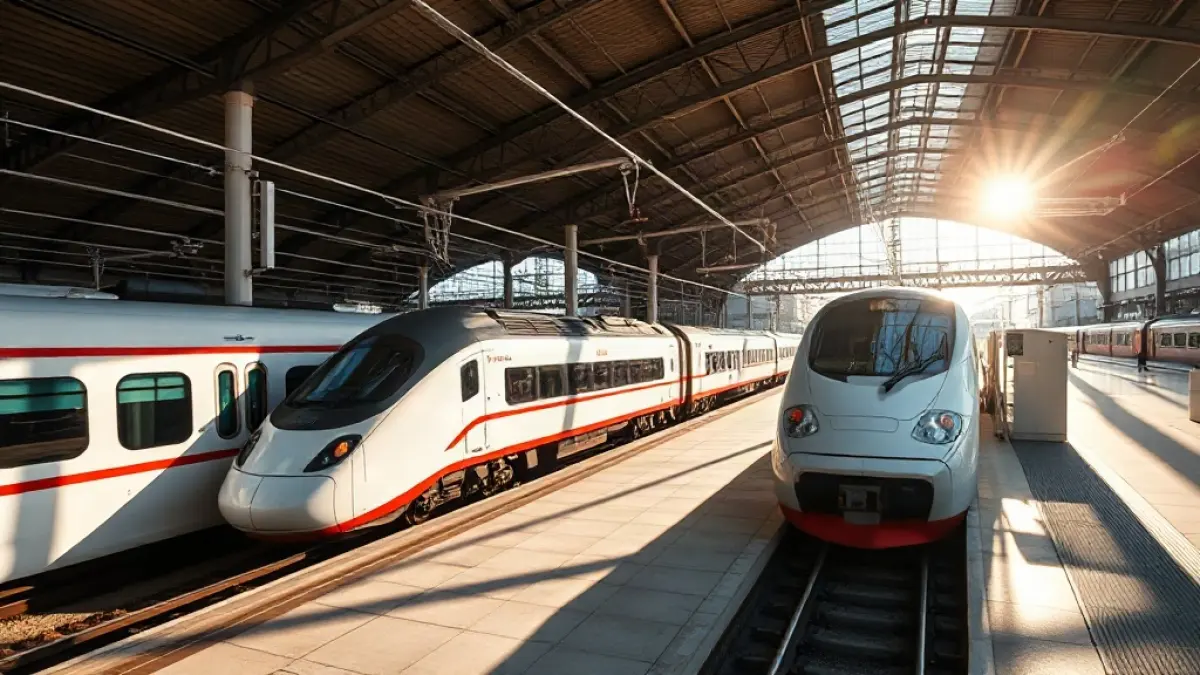
Investigators in Spain are examining an automatic safety system and the actions of train traffic controllers after two trains collided near the rural town of Urda on Wednesday 28 October 2026, killing at least 69 people. The two trains were carrying 544 passengers in total, and more than 100 people were injured, officials said.
It was Spain's fourth-deadliest train crash on record and the country's second major rail accident of 2026. Many of the injured remained in hospital in serious condition on Thursday, officials said.
Key facts
- At least 69 people died and more than 100 were injured near Urda on 28 October 2026
- The two trains were carrying a combined 544 passengers
- Spain's transport minister linked the crash to a computer malfunction and human error
- This is Spain's second major train accident in 2026
- Investigations are focused on the LZB signalling system and the Madrid command centre
What happened?
Spain's transport minister Oscar Puente said the trains rely on a computerised signalling system called LZB, which automatically stops a train when the track ahead is occupied. A computer malfunction at around 8:30 a.m. took LZB out of service.
Six trains were halted as a result, including one operated by the private company Iryo, which was stationary near Urda. A 24-hour command centre in Madrid then mistakenly told the Renfe train — run by Spain's state-owned railway — to continue past a red signal, and it struck the Iryo train. The impact knocked multiple carriages off the tracks, authorities said.
What do officials say caused the crash?
Puente told reporters in Madrid on Wednesday that the crash involved a computer communications malfunction and human error. Describing the control centre's instruction to resume traffic, he said: "Clearly, it was a wrong decision."
Experts said serious rail accidents rarely have a single cause. Ka Ho Tsoi, assistant professor in transport planning, said such incidents often involve a mix of technical, human and organisational factors, and that a thorough review would consider engineering, enforcement and education together. He noted that Spain has Europe's largest high-speed rail network and that parts of it are decades old.
Has Spain had other train crashes?
The cause of Wednesday's collision appears different from January 2026's crash, when a derailment and collision in Adamuz in southern Spain killed 46 people due to track defects. A 2013 derailment in Santiago de Compostela killed 78 people after the driver sped approaching a curve.
Is train travel in Europe still safe?
Fulvio Lopane, assistant professor in transport planning, said two fatal high-speed accidents on the same line in one year "demand full, transparent answers" — but stressed that rail remains one of the safest ways to travel in Europe and that passengers have the right to be absolutely safe.
European Commission data cited by the International Railway Safety Council puts the risk of death for a train passenger in the EU at around 0.09 fatalities per billion kilometres, compared with 2.52 for car occupants and 36.41 for motorcyclists. Lopane said the worst outcome would be travellers abandoning trains for cars, which he said would make them less safe.
What this means for travellers
Travellers planning rail journeys in Spain should expect ongoing scrutiny of the network's signalling and traffic control arrangements as the investigations continue. The source does not announce any new entry rules, ticket changes or service suspensions.
No further details on next steps or a timetable for the investigations have been announced.