
 PhilippinesPassports
Travellers Applying for US Passports in Manila, Cebu Need Barcoded Printout
The US Embassy in Manila and the Consular Agency in Cebu stopped accepting handwritten passport applications on 13 November 2026. Every application must now include a barcoded printout from the State Department's Form Filler.
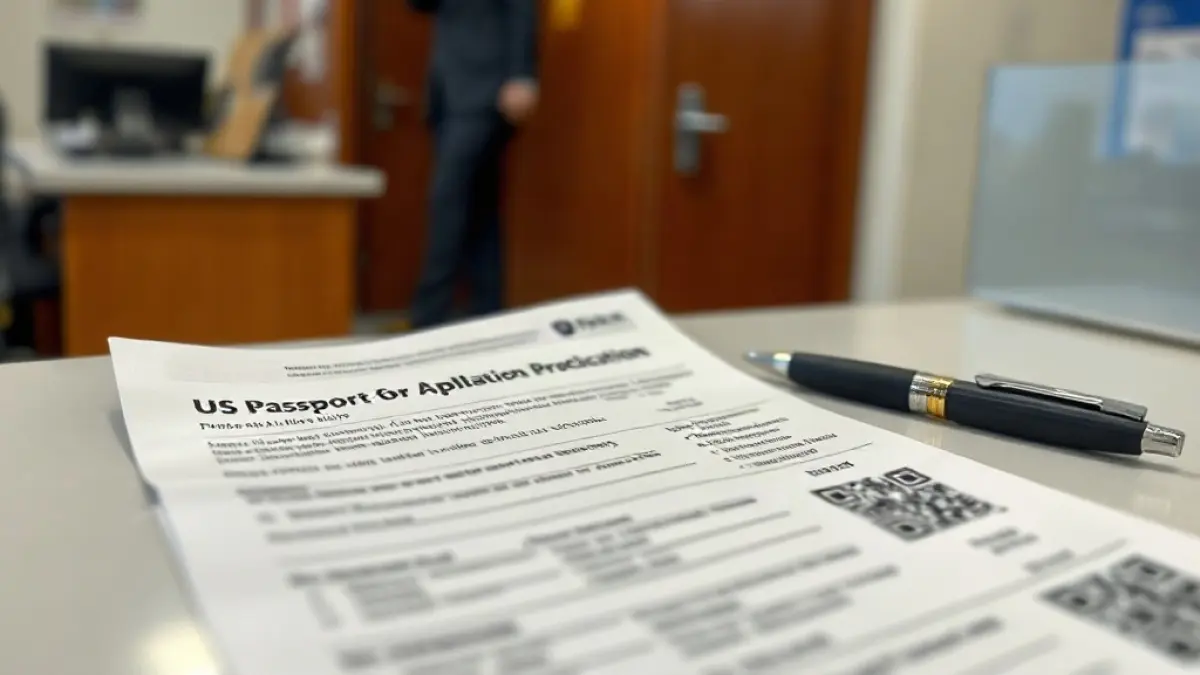
Americans applying for a US passport in the Philippines must now complete their paperwork online before printing it. The US Embassy in Manila and the US Consular Agency in Cebu stopped accepting handwritten passport applications on 13 November 2026, the embassy announced on 9 October and repeated in a notice posted on 12 November.
Key facts
- Effective: 13 November 2026 at the US Embassy in Manila and the US Consular Agency in Cebu
- Who is affected: every American applying in the Philippines — first passports, renewals and children's applications
- What is required: forms completed in the State Department's online Form Filler, submitted as a barcoded printout by mail or at an appointment
- Penalty for non-compliance: mailed applications without a barcode are returned; applicants with hand-filled forms cannot use a booked appointment
- Handwritten fallback: none offered in Manila, unlike the State Department's general guidance and the US mission in Australia
What is changing?
Handwritten US passport application forms are no longer accepted at either post. Applicants must enter their details in the State Department's online Form Filler and print the resulting paper form, which carries a barcode containing the same data so passport staff do not have to retype handwriting. The completed barcoded printout is then submitted either by mail or in person at an appointment.
The Form Filler is not an online passport application. Its instructions warn that nothing is saved once the form is printed, that errors cannot be corrected after printing, and that handwritten changes or additions to the printout can cause data errors. State Department forms guidance says the only handwriting permitted on a Form Filler printout is the applicant's signature and date, and that pages must be printed single-sided on 8.5-by-11-inch letter paper.
What happens if the form is wrong?
The embassy spells out the consequences. A mailed application that arrives without a Form Filler barcode is sent back to the applicant, which the embassy says adds processing time. An applicant who attends an appointment with a hand-filled form cannot proceed and must either redo the application in the Form Filler or book a new slot.
Is there any handwritten exception?
Not in Manila. The State Department's forms page tells applicants who hit technical trouble with the Form Filler to download a PDF and complete it by hand, while directing people abroad to their embassy's own instructions. Manila's notices offer no such fallback. The US mission in Australia also requires the Form Filler but says it may accept a handwritten application in exceptional circumstances, at the consulate's discretion.
Does the online passport application help?
Not yet for applicants in the Philippines. The Manila change took effect three days before the State Department opened its pilot for an online version of Form DS-11, the application that normally requires an in-person appearance. That pilot is limited to adults located in the United States, with applicants overseas and Consular Reports of Birth Abroad listed only as anticipated later additions. For a US citizen in Cebu or Mindanao, the route remains paper and in person, now with a stricter front door.
What this means for travellers
Applicants with appointments already booked should build the form on a desktop or laptop, which the department recommends, check every entry before printing, and bring the barcoded pages unmarked apart from the signature and date where the form calls for them. A DS-11 is signed in front of the consular officer, not beforehand. Accuracy matters more than before: passport records now feed uses beyond travel, including citizenship checks run against voter rolls, so a name or date entered wrongly in a barcode is likely to follow the applicant into other federal systems.
Whether other posts in the region adopt Manila's no-exception approach is the next thing to watch.
Also about:  United States