
 ParaguayTravel
Paraguay bank seizure and president's ouster: what it means for travellers' cash
Paraguay's Senate removed President Santiago Peña and he was placed under house arrest after regulators seized Ueno Bank, leaving millions unable to reach their money. Some depositors began recovering funds on Thursday.
Paraguay's Senate voted to remove President Santiago Peña for misconduct in office, and he was placed under house arrest on Friday after the collapse of a government-linked bank that left nearly half the country's population locked out of their accounts. Regulators had seized Ueno Bank just three days earlier, triggering what the report describes as the country's worst political crisis in more than a decade.
Key facts
- The Senate voted to remove Santiago Peña for misconduct in office — the second president ousted by impeachment since the end of Gen. Alfredo Stroessner's 35-year dictatorship in 1989.
- Regulators seized Ueno Bank three days before the house arrest order.
- Peña must remain at one of his homes in Asunción until he appears before prosecutors on Saturday morning.
- Deposits are insured up to about $35,000, which the central bank says covers 97% of Ueno's customers.
- Repayments began on Thursday, starting with balances of up to 10 million guaraníes (about $1,500).
What happened to Ueno Bank?
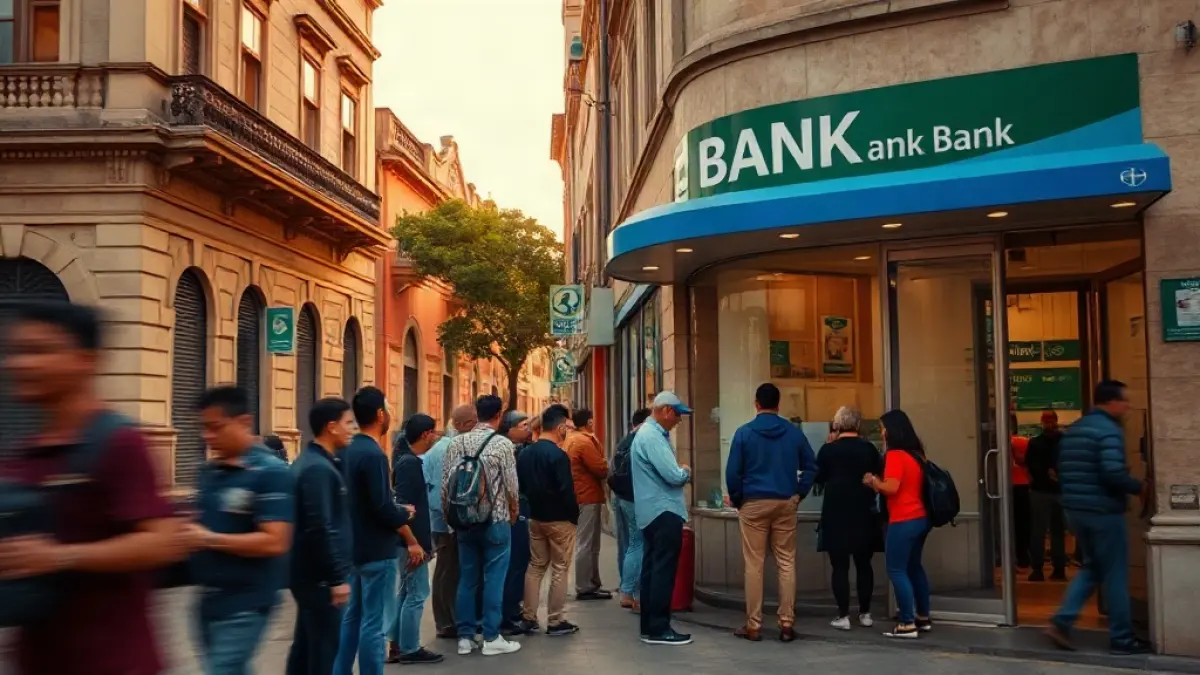
Regulators seized the digital lender, after which Ueno customers could no longer withdraw cash, reach their savings or use their cards to buy anything. According to Ueno, the bank had courted poor and unbanked customers with generous supermarket rebates, and more than 1 million Paraguayans opened their first bank account there.
Even players on the national soccer team — sponsored by Ueno through its run to a World Cup upset of Germany this year — say they cannot reach their money. Queues formed outside other bank branches in Asunción as people tried to withdraw savings.
Why has the president been charged?
Peña was ordered to stay at one of his homes in Asunción until he faces prosecutors on Saturday morning on charges of breach of trust, influence peddling and using public office for personal gain. The most serious of those charges carry up to 10 years in prison.
Lawmakers accuse him of using his political influence to steer hundreds of millions of dollars in public funds into Ueno while regulators overlooked risky insider lending. Peña denied wrongdoing.
What is the wider impact?
The fallout extends beyond savers. A ride-hailing app that depended on Ueno closed down, leaving 3,000 drivers without work. The state power company says $21 million in loans from the Inter-American Development Bank and Taiwan, earmarked for public works, is trapped at the bank. Paraguay's bonds have posted some of the worst losses in emerging markets this week, and the guaraní has slid against the dollar.
What this means for travellers
The source reports no changes to Paraguay's visa or entry rules. It does describe disruption to card payments and cash withdrawals linked to Ueno, and a weaker guaraní against the dollar, so travellers planning to pay by card or withdraw cash may want to confirm their payment options before travelling.
The central bank calls the collapse an isolated case and insists the broader financial system is safe. Peña's court appearance before prosecutors is due on Saturday morning.