
 LiechtensteinEntry rules
Nine Schengen states delay full EES biometric checks this winter
The EU's Entry/Exit System has been fully operational since 10 April 2026, but nine Schengen countries are still not enforcing biometric checks in full. Travellers face different border processes depending on where they land this winter.
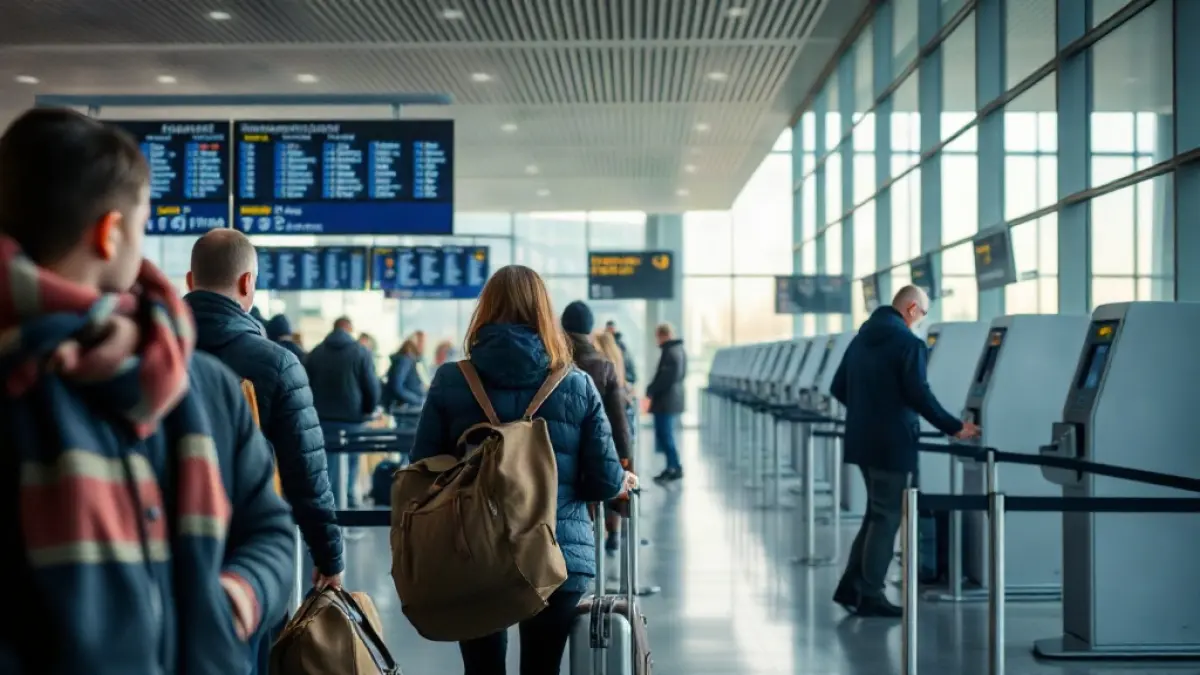
The European Union's Entry/Exit System (EES) has been fully operational at every external Schengen border since 10 April 2026
, yet nine countries are still not applying it in full this winter. That means the border experience on a Christmas or January trip depends heavily on the airport or station a traveller arrives at.France, Belgium, the Netherlands, Germany, Greece, Malta, Portugal, Italy and Switzerland have been informally allowed to postpone full biometric enforcement since September, after member states lost their formal right to suspend the system on 6 September 2026. No end date was attached to that arrangement.
Key facts
- EES has been fully operational at external Schengen borders since 10 April 2026.
- Nine countries are not enforcing it in full: France, Belgium, the Netherlands, Germany, Greece, Malta, Portugal, Italy and Switzerland.
- It covers short stays of up to 90 days in any 180-day period for non-EU nationals.
- First entry requires fingerprints, a facial image and passport details; later trips reuse the stored record.
- It applies in the 25 Schengen EU states plus Iceland, Liechtenstein, Norway and Switzerland.
- Irish passport holders and British passport holders with EU residency are exempt.
What does EES ask of travellers?
The system replaces the old passport stamp with an electronic record. British and other non-EU nationals visiting the Schengen area for short stays have their fingerprints and a facial image captured on their first entry, together with personal details read from their passport.
On later trips the existing record is checked rather than created again, which should speed up repeat crossings once the system is established. Registration happens once, so any error in the record follows the traveller. Errors in counting days under the 90-day rule have left travellers having to prove their EU exits, with penalties in Spain for less serious infractions starting at around 500 euros and rising to 10,000 euros.
Which countries are holding off?
The nine countries told Brussels they would not enforce the new biometric controls in full until the technology behind them worked properly, citing the need to "maintain border fluidity". The list covers many of the routes used most often, including Paris, Brussels, Amsterdam, Frankfurt, Munich, Milan, Lisbon and Zurich.
Arrivals at those airports are less likely to face the long processing times seen during the summer, when technical failures and bottlenecks caused severe delays at several European hubs. Elsewhere, travellers should assume the system is running: Spain is not on the list, and neither are the Nordic countries or Austria.
The European Commission had insisted no further extensions would be granted once the suspension power expired, but a spokesperson said it remains in close and constructive contact with member states needing operational adjustments. IATA has called for the partial suspension provisions to run until the end of the winter season in late March 2027, and Ryanair has urged the Commission to extend flexibility until at least April 2027.
What about rail and multi-city trips?
Eurostar passengers complete EES checks at St Pancras before boarding, under juxtaposed controls that place French border officers in London. Because France is on the list, the process there should stay lighter than full enforcement for now, but the pre-Christmas weeks still bring heavy demand, so travellers should allow at least one hour at St Pancras before departure.
Multi-city itineraries carry more uncertainty. A traveller flying into Amsterdam and connecting to Madrid enters the Schengen area only once, at the first external border, but a same-day return from a country enforcing EES in full may take longer than the outbound leg suggested. The Christmas and New Year period adds pressure because holidaymakers, many registering for the first time, share the terminals; first-time registration takes longer than a returning check, and families with children tend to slow queues further. Early January brings another surge as conference season resumes.
What this means for travellers
- Allow an extra 30 minutes at the busiest Schengen gateways, and more at airports outside the nine countries during the holiday peak.
- Avoid scheduling meetings within two hours of landing until the rollout settles.
- Check the position for each border on a multi-country trip rather than assuming one airport predicts the next; the FCDO travel advice pages for individual countries are a starting point.
- Keep boarding passes, rail tickets and hotel receipts that prove when you left the Schengen area.
- Brief colleagues who have not visited Europe since April that they will be registering with fingerprints and facial scans for the first time.
Biometric registration is not going away, and the flexibility enjoyed by the nine countries could be withdrawn at short notice. No date has been announced for full enforcement in those states, and the likeliest pattern is a phased, uneven rollout, country by country rather than on a single date.
Also about:  France
 Belgium
 Netherlands
 Germany
 Greece
 Malta
 Portugal