
 JordanTravel
Travellers and freight can again cross into Jordan via Syria's Nassib-Jaber post
Syria has reopened its main border crossing with Jordan at Nassib, called Jaber on the Jordanian side, after it was shut following Jordanian airstrikes on southern Syria. Passenger and commercial movement is returning to normal.
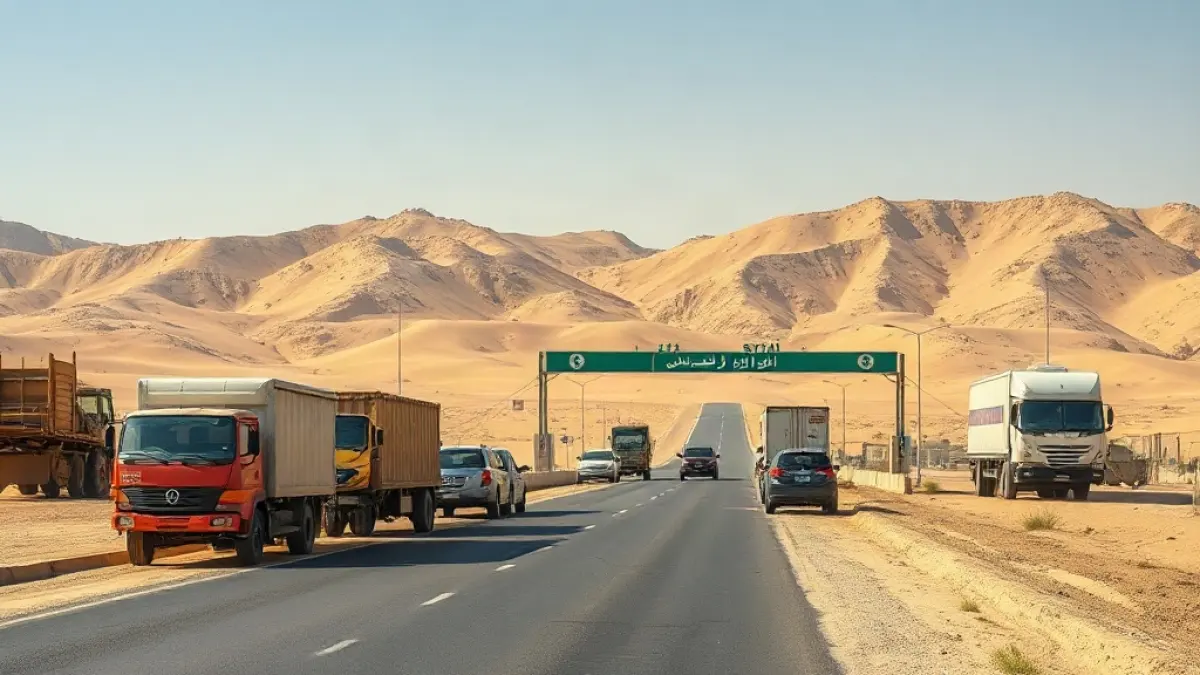
Syria has reopened its main border crossing with Jordan after the two countries moved to ease tensions caused by Jordanian airstrikes on southern Syria. Passenger and commercial traffic through the crossing, known as Nassib on the Syrian side and Jaber on the Jordanian side, is returning to normal, senior Syrian customs official Mazen Alloush told state news agency SANA.
Key facts
- The Nassib crossing, called Jaber in Jordan, is the main land route between the two countries.
- Passenger and commercial movement was due to return to normal from Wednesday morning.
- The crossing was closed after Jordanian strikes on southern Syria.
- The strikes followed a gun attack on a Greek Orthodox church in Jordan's Karak governorate that killed nine people and wounded 25.
- A joint Syrian-Jordanian security committee is due to meet in the coming days.
Why was the crossing closed?
Gunmen opened fire during a funeral service at a Greek Orthodox church in southern Jordan's Karak governorate last week, killing nine people and wounding 25. Jordan responded with a military strike described as a reprisal.
Jordan's government spokesman, Mohammad al-Momani, said preliminary results indicated significant losses among the ranks of Daesh — an acronym for the Islamic State (IS) group — estimated at more than 20 fighters, and that a large weapons depot belonging to the group had been destroyed. Syria's civil defence agency said the raids killed seven people, including three children. Syria said five people, including a woman and three children, were killed in the village of Al-Taf in Daraa province, which borders Jordan, with two others killed elsewhere in the south.
The exchange of strikes sparked the worst crisis between the two countries since the ousting of longtime Syrian ruler Bashar al-Assad in December 2024.
What is happening now?
The Nassib crossing was shut after the strikes, but passenger and commercial movement is returning to normal as of Wednesday morning, Syrian customs official Mazen Alloush told SANA.
Diplomatic contacts have also resumed. On Tuesday, Jordan's Foreign Minister Ayman Safadi spoke with his Syrian counterpart and emphasised Jordan's full respect for Syria's sovereignty and security, while expressing "sorrow and grief over the death of innocent civilian victims". The two officials also discussed the operations against what their joint statement called "Daesh sites".
Earlier, Jordan's government had said it coordinated its airstrikes with Syria; Damascus denied that claim. Syria's foreign ministry issued a condemnation and rejection of the strikes, calling them an unacceptable violation of Syrian airspace without prior coordination and a breach of good-neighbourliness and Syrian national sovereignty. Syrian Emergencies and Disaster Management Minister Raed al-Saleh said both sides were handling the dispute through diplomatic and legal channels with the aim of securing justice for the victims.
What this means for travellers
The main land crossing between Jordan and Syria, which was closed in the wake of the strikes, has reopened, and passenger and commercial movement is returning to normal as of Wednesday morning. Travellers using this route should check the latest conditions before crossing, as a joint Syrian-Jordanian security committee is set to meet in the coming days to discuss operations against IS.
What happens next
Amman said on Monday that authorities had arrested three Jordanians accused of the church killings — two brothers and another man related to them by marriage — and that the suspects were hospitalised after being wounded in a shootout with security forces. A joint Syrian-Jordanian security committee is scheduled to meet in the coming days to discuss the operations against IS, a government source told SANA.
Also about:  Syria