
 Guinea-BissauTravel
Guinea-Bissau Draws Just 45,000 Visitors a Year as Visas and Access Keep Tourists Away
A ranking of the world's least visited countries places Guinea-Bissau among 30 states that together draw under 0.1 percent of global tourist arrivals, at about 45,000 visitors a year. Distance, conflict and difficult visas keep numbers low.
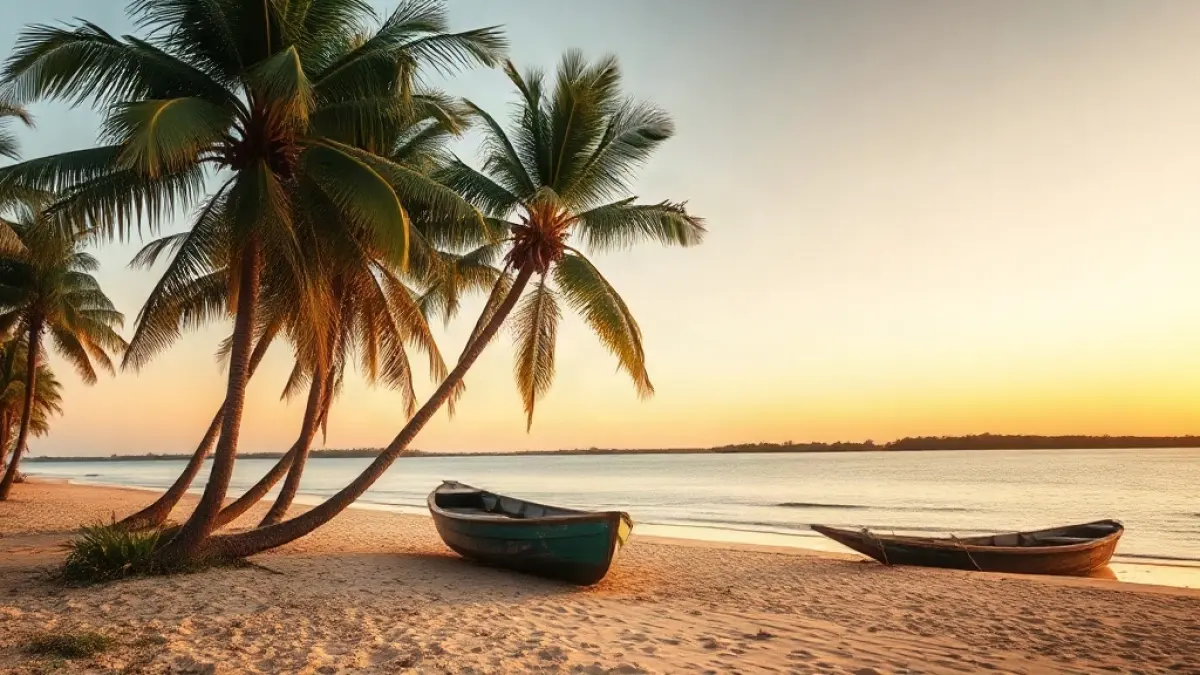
Guinea-Bissau is one of 30 countries that together account for less than 0.1 percent of global tourism traffic, according to a ranking compiled by the author of the One Step 4Ward blog. The West African state draws about 45,000 tourists a year, the same level as Guinea and Liberia, while Somalia sits at the bottom of the list with fewer than 100 visitors.
Key facts
- The list covers 30 countries that together attract less than 0.1 percent of global tourism traffic, yet make up more than 15 percent of all countries in the world.
- Guinea-Bissau receives about 45,000 tourists a year, alongside Guinea and Liberia.
- Somalia records the fewest visitors, fewer than 100 a year, followed by Yemen with fewer than 500.
- The ranking uses arrival statistics from the UN World Tourism Organization, the World Bank, Index Mundi and Our World in Data.
- North Korea and Turkmenistan are named among the destinations where visas and trip organisation are hardest.
How was the ranking put together?
The author combined international tourist arrival statistics from several sources — the UN World Tourism Organization, the World Bank, Index Mundi and Our World in Data — with personal travel experience. Between 2007 and 2017 the author visited 197 countries and has been to many of the destinations featured on the list.
Which countries get the fewest visitors?
Somalia receives fewer than 100 tourists a year, the author estimates, followed by Yemen with fewer than 500, Equatorial Guinea with fewer than 1,000 and Tuvalu with about 2,000. Kiribati draws around 4,000 visitors, South Sudan 5,500, and Libya and the Marshall Islands about 6,000 each. São Tomé and Príncipe records roughly 8,000, while Turkmenistan sees fewer than 9,000.
Figures for the remaining countries are higher:
- Mali — about 14,000 tourists a year
- Federated States of Micronesia — 19,000
- Afghanistan — about 20,000
- Solomon Islands — 27,000
- Mauritania — 30,000
- Comoros — 36,000
- Guinea, Guinea-Bissau and Liberia — about 45,000 each
- Djibouti — 51,000
- Tonga — 54,000
- Sierra Leone — 57,000
- Dominica — 63,000
- East Timor — 75,000
- Saint Vincent and the Grenadines — 80,000
- San Marino — about 84,000
- Liechtenstein — about 85,000
- North Korea — about 100,000
- Eritrea — 142,000
- Moldova — 145,000
Why do so few travellers go?
Distance is the first reason the author gives. Many of the countries are small Pacific islands that are hard to reach, with often expensive tickets — Tuvalu, Kiribati and the Marshall Islands are cited as examples. The second reason is armed conflict and instability, which applies to Yemen, Afghanistan, Somalia, Libya and South Sudan.
Some destinations are simply little known, the author says, naming Eritrea, Comoros and Guinea-Bissau. In other cases, visas are difficult to obtain or trips are hard to organise; North Korea and Turkmenistan are identified as examples.
Are any of these destinations worth visiting?
Low visitor numbers do not mean a country has nothing to offer, the author argues. In Moldova, travellers can see the capital Chișinău, historic buildings and wineries, and the author describes it as ideal for a budget trip, spending about $15 per day during a 2012 visit. In Eritrea, the capital Asmara is highlighted for its Art Deco buildings from the Italian colonial period, along with a graveyard of old military vehicles.
North Korea offers grand monuments, unusual architecture and the Pyongyang metro, but independent travel is prohibited and trips run with local guides. Dominica has forests, waterfalls and beaches with relatively few tourist shops. In Mauritania, the author points to the train carrying iron ore across the Sahara, ancient cities and desert landscapes, while Turkmenistan draws visitors to the burning Darvaza gas crater, known as the "Gates of Hell", alight since 1971. Socotra, an island of Yemen, is singled out for its unique trees and beaches.
Why were some countries left off the list?
Nauru was excluded because many foreigners travel there for purposes other than tourism, the author explains. Niue, the Cook Islands and American Samoa were also left out. The Somalia figure does not include trips to Somaliland.
What this means for travellers
Anyone considering these destinations should weigh the practical barriers the author describes: difficult visas and tightly organised trips for North Korea and Turkmenistan, conflict and instability in Yemen, Afghanistan, Somalia, Libya and South Sudan, and limited, costly transport to remote Pacific islands. Checking entry requirements and how to reach a destination before booking is the sensible first step.
The ranking is a statistical comparison based on arrival figures gathered by the author rather than a change to any country's entry rules.
Also about:  Guinea
 Liberia
 Somalia
 Yemen
 Equatorial Guinea
 Tuvalu
 Kiribati