
 GeorgiaTravel
Georgia's weekend protests continue as tourist visits hit record high
Georgia marked two years since its contested 26 October 2024 election with weekly marches still crossing central Tbilisi, while the country recorded more than 5.5 million international tourist visits in 2025. Travellers should expect demonstrations in the historic centre.
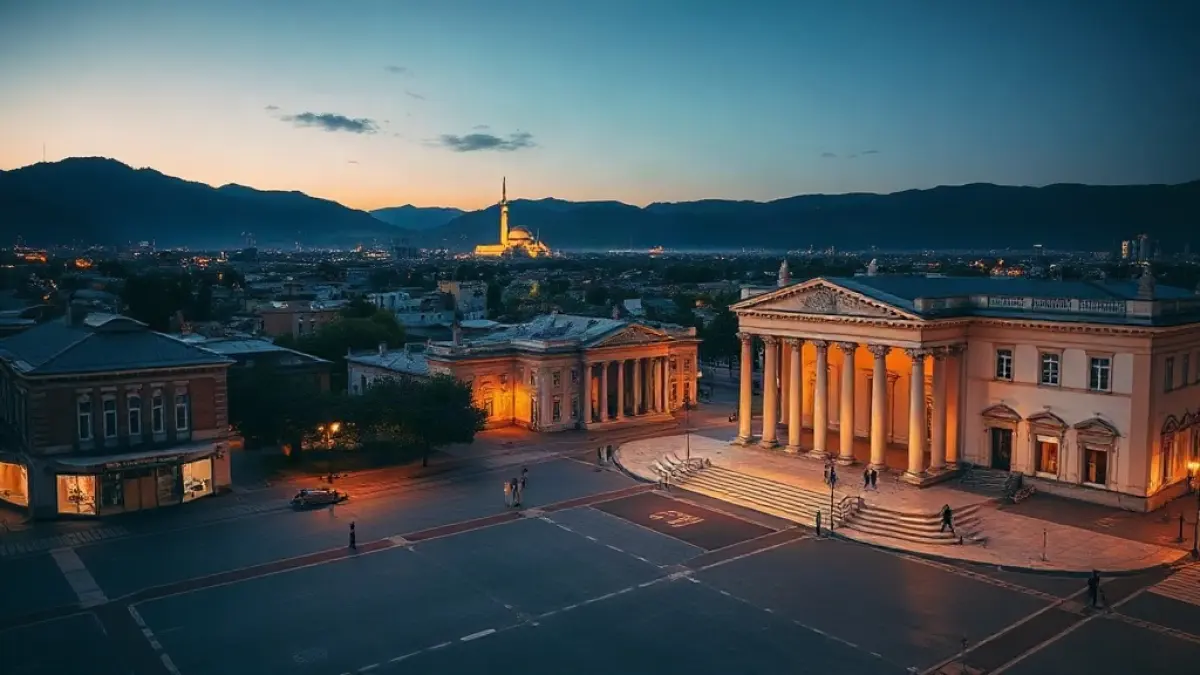
Georgia is drawing record numbers of visitors even as protesters keep up a weekly march through the heart of Tbilisi. The country recorded more than 5.5 million international tourist visits in 2025, according to the Georgian National Tourism Administration, while demonstrations against the government continue in the capital's historic centre.
Key facts
- 26 October 2026 marks two years since Georgia's contested parliamentary elections
- Protests began two days after the vote and peaked on 28 November, when the government said EU negotiations would not be on its agenda before the end of 2028
- More than 5.5 million international tourist visits were recorded in 2025, up 8.4% on 2024
- Visitors come from Europe, the Middle East and Russia
- Georgia has been an EU candidate since 2023
Where are the protests taking place?
The weekly demonstration, known as the "Saturday March", gathers in Avlabari Square in Tbilisi's Armenian quarter. From there protesters walk towards the Bridge of Love, reach Freedom Square and continue to parliament, chanting slogans against the government of Irakli Kobakhidze.
The march is organised by pro-European parties and movements and passes through the historic centre. Their target is the Georgian Dream party, in power since 2012, which critics accuse of growing authoritarianism and of moving the country closer to Moscow by suspending EU accession talks.
Why is the unrest continuing?
The political crisis was ignited by the parliamentary elections of 26 October 2024, which were contested. Protests started two days later and reached their peak on 28 November, when the government announced it would not put the opening of EU negotiations on its agenda before the end of 2028. Georgia had been granted EU candidate status in 2023.
Discontent has also been fuelled by the arrival of tens of thousands of Russian citizens after the full-scale invasion of Ukraine in 2022. The newcomers brought money and opened businesses, but also put strong pressure on the property market by buying homes across the country.
What are tourists coming to see?
Georgia, a republic roughly the size of Ireland with fewer than 4 million people, sits between Russia and Turkey alongside Armenia and Azerbaijan. Its draws include mountain villages along the Georgian Military Road, ancient Orthodox churches above rivers and valleys, post-Soviet cities, wine with a millennia-old history, the Black Sea port of Batumi and the capital itself.
Some sites trade on Soviet-era nostalgia. The Joseph Stalin Museum in Gori, established in 1937 near the dictator's birthplace and turned into a museum glorifying him in 1957, has stayed open through the collapse of the USSR and the 2008 war with Russia. In Tskaltubo, once a spa town that received 120,000 visitors a year across 22 sanatoriums, only a few hundred tourists now visit the sole remaining spa centre. In the mining town of Chiatura, workers continue to protest over a severe environmental and economic crisis in the manganese industry.
What this means for travellers
Visitors to Tbilisi should be aware that demonstrations take place every weekend along a route through the city centre, from Avlabari Square to parliament. Anyone planning to be in the historic centre on a Saturday may wish to check locally whether a march is taking place.
No changes to Georgia's visa or entry rules are mentioned in this account. The photo essay does not set out what happens next politically, beyond the government's stated position that EU negotiations are not on its agenda before the end of 2028.
Also about:  Russia
 Ukraine
 Türkiye
 Armenia
 Azerbaijan