
 DR CongoTravel
Ebola in Africa tops 10,000 cases as outbreak spreads beyond DR Congo
Africa's Ebola outbreak has passed 10,000 confirmed cases, almost all in the Democratic Republic of the Congo, where 4,887 people have died since May. Cases have also appeared in Kenya, Nigeria and Uganda, several linked to travellers.
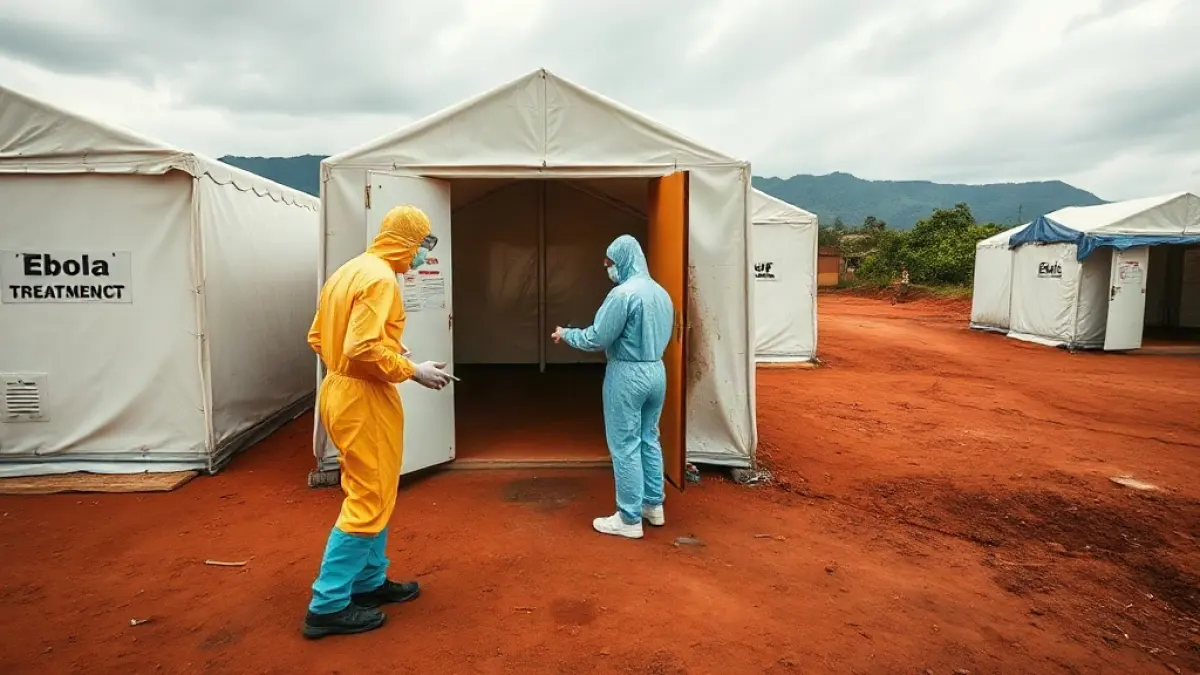
Africa's latest Ebola outbreak has passed 10,000 confirmed cases, with the vast majority recorded in the Democratic Republic of the Congo (DRC), Congolese health authorities said on Tuesday 28 October 2026. Nearly 5,000 people have died in what is already the country's deadliest outbreak of the disease.
Key facts
- 10,060 people infected and 4,887 dead in the DRC since the virus was first detected in May
- Cases also confirmed in Kenya, Nigeria and Uganda
- About 2,684 people have recovered in the DRC; the fatality rate is close to 50 percent
- The outbreak is caused by the rare Bundibugyo species of Ebola, for which no vaccines or treatments are approved
- The virus is now present in eight provinces and more than 66 health zones, up from three zones in one province
What has happened?
The virus was first detected in the northeastern province of Ituri, starting the DRC's 17th outbreak of Ebola, after circulating unnoticed for weeks. It has since spread across large parts of the country's north and east. Ituri and the eastern province of North Kivu, which is partly controlled by the Rwanda-backed M23 militia, account for the majority of reported cases.
According to the Congolese National Institute of Public Health, some 2,684 people have recovered, while the fatality rate appears to be close to 50 percent.
Where else has the virus been detected?
Kenya had not reported a single case until 6 October, and has since recorded nine cases and two deaths, most of them involving recent travellers to the DRC.
Nigeria's only confirmed case is a 42-year-old Swiss woman who is believed to have contracted the virus after a trip to Uganda with her husband. She was evacuated to a hospital in Geneva on Monday. The World Health Organization (WHO) said she is the wife of an employee of the Swiss embassy in Abuja, developed symptoms on 7 October, sought care in Abuja on 11 October and tested positive for Bundibugyo on 20 October. The couple landed back in Nigeria on 3 October, and some experts are concerned the virus may have spread after their arrival. Nigerian health authorities have identified 53 of the patient's contacts. A Ugandan government spokesperson rejected the suggestion that she contracted the disease in Uganda.
Why is the outbreak so hard to contain?
Jean Kaseya, Director-General of the Africa Centres for Disease Control and Prevention (Africa CDC), said the organisation was still tracing how the Nigerian patient came into contact with the virus. Genomic sequencing showed the Kenyan case was similar to the Nigerian one, a link also found with cases in Beni. "Today it's an outbreak in three regions," he said, noting that when the outbreak was declared only three zones of one province were affected, compared with eight provinces and more than 66 health zones now — an area he described as roughly twice the size of the UK.
The response has also been hampered by distrust. The WHO said a nurse was killed and a health worker seriously wounded in the northeastern province of Tshopo on Saturday. Doctor Marcel Likolo, chief medical officer of the Bafwasende health district, said young people accused the victims of trying to infect locals with tablets before attacking them, and that the Ebola treatment centre involved has since closed.
Is there a vaccine or treatment?
There are no approved vaccines or treatments for the Bundibugyo species behind this epidemic. Testing of the Ervebo vaccine, already proven effective against the more common Zaire strain, has begun in recent weeks to establish whether it also protects against Bundibugyo.
What this means for travellers
Cases outside the DRC have so far been linked to recent travel to the DRC or to Uganda, so anyone planning a trip to the region should check the latest health information for their destination and route before travelling. Ebola is caught through contact with bodily fluids. Since it emerged half a century ago, the disease has killed more than 15,000 people across Africa.
No timeline has been announced for results from the Ervebo vaccine testing.
Also about:  Kenya
 Nigeria
 Uganda
 Switzerland