
 CanadaPassports
Travellers: Ancestry Route to Canadian Passport Survives 2026 Immigration Review
Canada's 2026 immigration report, tabled on 5 November 2026, contains no target or cap for citizenship by descent. Americans with a Canadian ancestor can still claim citizenship and apply for a Canadian passport.
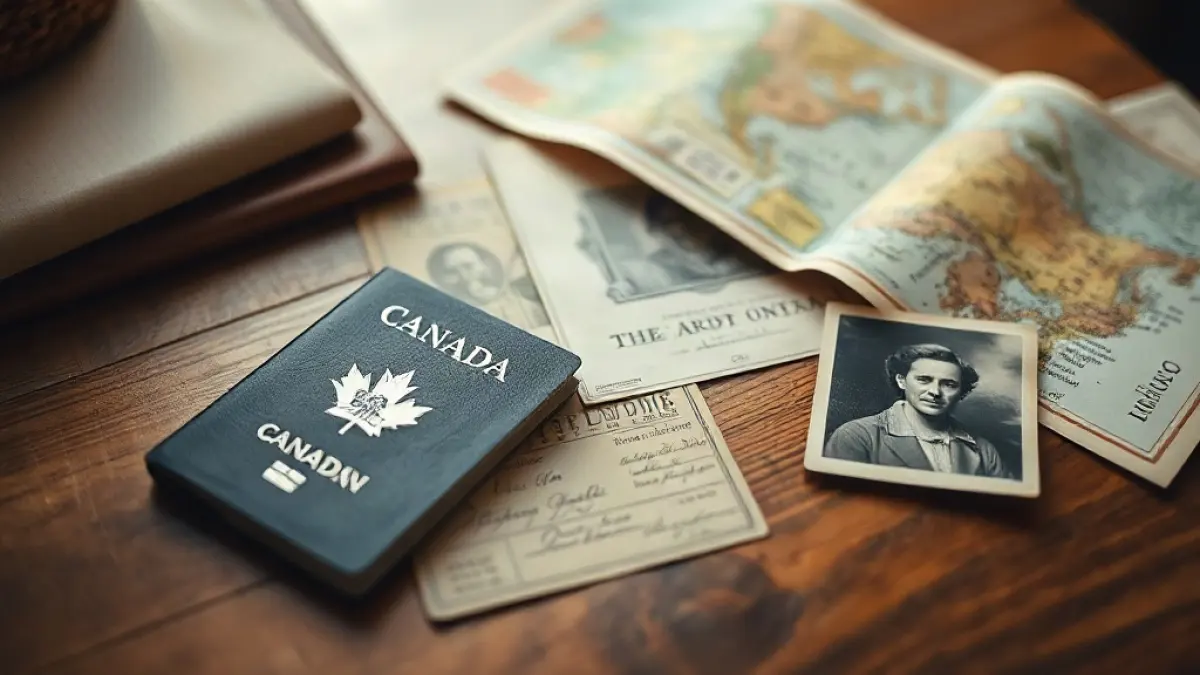
Canada tabled its 2026 Annual Report to Parliament on Immigration on 5 November 2026, alongside the federal budget, setting out the programs it has ended, paused or capped as it tightens control of its immigration system. The report, which runs to more than 60 pages, contains no target or quota for people claiming citizenship by descent — meaning Americans with a Canadian ancestor still have a direct route to a Canadian passport.
Key facts
- Bill C-3 took effect on 15 December 2025, removing the first-generation limit on citizenship by descent
- No job offer, Canadian residence, language test or citizenship test is required
- Applicants apply for a citizenship certificate, then a Canadian passport
- As of 9 October 2026, Immigration, Refugees and Citizenship Canada (IRCC) estimated 34 months to process a citizenship certificate
- About 130,700 people were waiting for a decision at that time
- Both Canada and the United States allow dual citizenship
What is changing?
The annual report lists the immigration programs Canada has ended, paused or capped across study permits, work permits, visitor visas and permanent residency. It sets no line or target for Americans proving citizenship by descent, which the report says Canadian law already treats as citizenship.
Who can claim citizenship by descent?
Citizenship by descent means inheriting Canadian citizenship through a parent or earlier ancestor, and there is no generational limit along a direct family line. Bill C-3 removed the first-generation limit, a rule that had stopped citizenship passing to a second generation born outside Canada. IRCC says most people born outside Canada to a Canadian parent before 15 December 2025 are now citizens automatically, including through a grandparent or great-grandparent.
Two conditions apply: the applicant's birth date must fall before 15 December 2025, and the ancestor at the top of the line must have been a Canadian citizen, usually through birth in Canada or naturalization. Relatives outside the direct line — a great-aunt, uncle or cousin — cannot pass citizenship on, and marrying a Canadian does not confer it. Adopted people follow a separate process called a direct grant.
What documents do I need?
Documents must prove the ancestor was a Canadian citizen under the current Citizenship Act and link every generation between that ancestor and the applicant. IRCC officers require records issued by the original authority, such as a civil registry or vital statistics office, generally including birth certificates naming the parents, proof the ancestor was Canadian, marriage or name-change certificates, and sworn translations of any record not in English or French.
IRCC will not accept translations made by family members, and will not approve a claim supported only by third-party records. Where a record no longer exists, the applicant must explain why in writing and show they tried to obtain it, for example with letters or emails from archives. Missing records, name changes and claims running back three or more generations add complexity.
How long does it take?
IRCC's 34-month estimate applies from the date it receives a complete application, and applicants may first need to wait for archives in Canada and the United States to send records. As of November 2026, the Canadian passport ranks 7th on the Henley Passport Index, which measures destinations reachable without a prior visa; the U.S. passport ranks 10th. Citizens may also qualify for travel and work options in 36 countries and territories through International Experience Canada, subject to age limits set by Canada's youth mobility agreements, typically 30 or 35.
What this means for travellers
Anyone with a Canadian parent, grandparent or earlier ancestor in a direct line and a birth date before 15 December 2025 may already be a Canadian citizen and can apply for a citizenship certificate. Because processing is running at about 34 months and archives may be slow to supply records, applicants should begin gathering official documents for each generation early.
Also about:  United States