
 AustraliaVisas
Australia to shrink working holiday visas as farms warn of harvest gaps
Australia plans to cut second and third-year working holiday visa numbers, leaving about 38,000 fewer backpackers than in 2026, with a ballot deciding who can stay beyond a year. Farmers warn of unharvested crops.
Australia is preparing to reduce the number of working holiday makers able to stay beyond a first year, with Home Affairs Minister Tony Burke announcing changes to be rolled out over the next year. The federal agriculture department was consulted but did not model how the reforms would affect harvest volumes, a Senate estimates hearing in Canberra was told on Tuesday.
Key facts
- Second-year visa cap cut from 57,000 to 45,000; third-year cap cut from 31,000 to 5,000.
- Changes will be rolled out over the next year; no individual start dates were given.
- Backpackers wanting to stay more than a year will enter a ballot.
- There will be about 38,000 fewer second and third-year backpackers than in 2026.
- No modelling was done on the effect on harvest volumes.
What is changing?
Home Affairs Minister Tony Burke has announced changes to working holiday maker visas that will be introduced over the coming year. The cap on second-year visas falls from 57,000 to 45,000, and the number of third-year visas drops from 31,000 to 5,000.
Backpackers who want to remain in Australia for more than a year will have to enter a ballot for the chance to do so. In total, the shift means about 38,000 fewer second and third-year backpackers than in 2026.
What has not been assessed?
The federal agriculture department was consulted on the changes, but no modelling has been done on how the reforms will affect harvest volumes. Deputy secretary Matt Lowe told the Senate estimates hearing that the department would not ordinarily model a matter led by another agency, and said limited workforce data from the horticulture sector was a central challenge.
Who is affected?
Greens Senator Vanessa Bleyer asked at the hearing whether the cuts could be compared to workforce shortages at the height of the COVID-19 pandemic, when produce was left rotting in the ground.
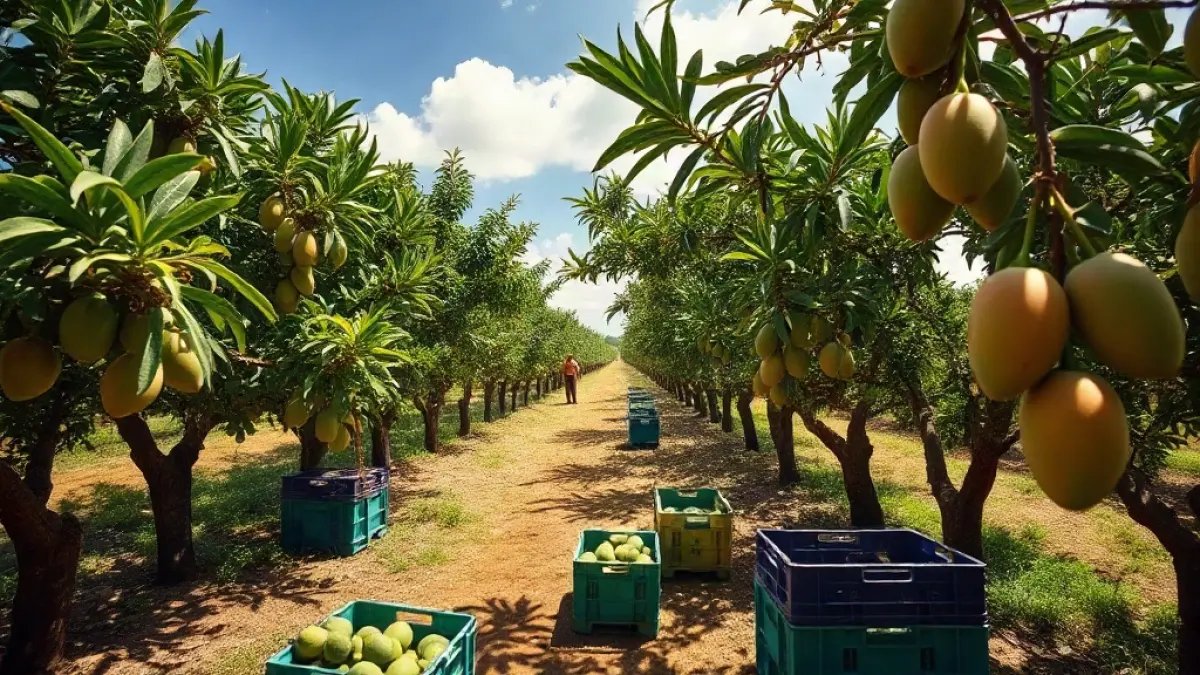
The NT government has said the changes would leave the Top End mango harvest 1,000 workers short, with 70 per cent of the crop left to rot on trees. The WA premier has written to the federal government raising concern about the effect on the state's remote communities and its tourism and hospitality sectors.
Labor Senator Anthony Chisholm said the COVID-19 comparison was not fair because government projections still sit above pre-pandemic levels. He said the Pacific Australia Labour Mobility (PALM) scheme, which lets businesses hire workers from Pacific countries and Timor-Leste, had successfully boosted the sector, and that discussions with Minister Burke's office and industry about implementation were continuing.
What are others proposing?
The National Farmers Federation has called for a return to regular visa processing, arguing the PALM scheme does not suit every business. President Hamish McIntyre said in early October that "Backpackers provide a mobile workforce for short and intensive seasonal windows", and that farmers cannot simply be told to switch to programs with different purposes, requirements and operating models.
The coalition has promised to abolish the caps on working holiday maker visas, but to increase fees for people wanting to stay in Australia longer than one year, with exemptions for those who carry out work in regional areas.
What this means for travellers
Backpackers planning a second or third year in Australia face fewer places and a ballot system rather than a certain extension. Anyone considering staying beyond 12 months should check the current caps and how the ballot will operate before making plans, while the coalition's competing proposal on caps and fees remains undecided.
The rollout is set to unfold over the next year. Implementation details are still being discussed between the Home Affairs Minister's office, industry and government, and no further dates were given.
Also about:  Timor-Leste