
 AfghanistanEntry rules
No China crossing yet for travellers on Afghanistan's new Wakhan route
Afghanistan's Taliban-led government opened a road through the Wakhan Corridor to the Chinese frontier on 4 October 2026, but there is still no official border crossing and China has not said when it will open one.
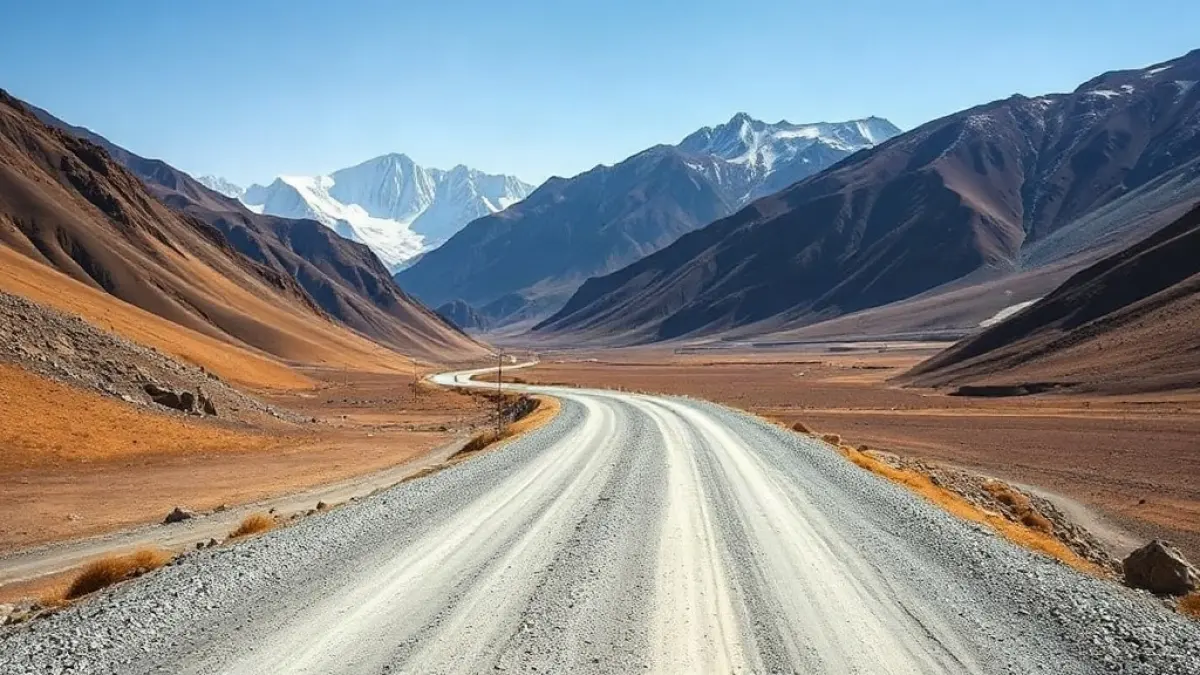
Afghanistan's Taliban-led government has opened a road through the remote Wakhan Corridor to the country's frontier with China, but travellers hoping to cross between the two countries will find the route stops short. The road ends at the Wakhjir Pass, where there is no official border crossing and no sign of when Beijing might open one.
Key facts
- The road was celebrated as open on 4 October 2026, but it does not cross into China.
- Afghanistan's Ministry of Rural Rehabilitation and Development said it was built in two phases for 365 million afghanis ($5.5m).
- The surface is a basic unpaved track covered with gravel.
- The Wakhjir Pass sits at nearly 4,900 metres; snow closes it for at least five months of the year.
- The Wakhan Corridor runs for about 350 kilometres (220 miles) and lies entirely within Afghan territory.
Can travellers cross between Afghanistan and China here?
No. There is no official border crossing at the Wakhjir Pass, and people cross it only sporadically in the months when snow allows. On the Chinese side there is no customs facility, and China's Ministry of Foreign Affairs has not commented on the road's opening. China has not indicated when, or whether, it will open the border to commercial traffic.
What has been built?
The Ministry of Rural Rehabilitation and Development said the road through the Wakhan Corridor in Badakhshan province was completed in two phases. Construction resumed in September 2023, according to former Afghan ambassador to China Javid Qaem, and the Taliban announced in January 2024 that the road had reached the Chinese border. In March 2025 the ministry signed a contract with local companies for a second, 71-kilometre (44-mile) phase.
The authorities say the project was funded from Afghan government resources, and the available information does not indicate any Chinese funding. An earlier attempt began in 2019, with 60 kilometres (37 miles) completed before the change of government in August 2021 postponed the plan, Qaem said.
Why is the border still closed?
Qaem said China has not agreed to open its border because of security threats. An Afghan government source, speaking on condition of anonymity, said China does not oppose opening the crossing but links it to "the availability of effective security guarantees".
Chinese Foreign Minister Wang Yi, visiting Kabul in August 2025, said China supports the early resumption of bilateral patrols in the Wakhan Corridor and called on Kabul to act against the East Turkestan Islamic Movement, a Uighur separatist group. Afghanistan and Bhutan remain the only countries bordering China without a direct overland trade crossing.
Why does Afghanistan want the road?
Mohammad Ismail Ghaznawi, deputy minister of public works for road maintenance and former governor of Badakhshan, said the project is part of plans to diversify trade outlets and reduce dependence on Pakistani border crossings. Afghanistan is landlocked and its routes to the sea run through Pakistan and Iran, and over the past year both have been all but closed at the same time.
What this means for travellers
Anyone planning overland travel between Afghanistan and China should note that no crossing exists at the Wakhan Corridor, and no opening date has been announced. The pass is also snowbound for at least five months of the year.
No timetable for opening the border has been made public. The Afghan government has described the road as the start of a trade corridor, and perhaps a future railway, connecting the country to China's Belt and Road Initiative.
Also about:  China
 Pakistan
 Tajikistan