
 TurkmenistanTravel
Turkmenistan's Darvaza Gas Crater Flames Are Shrinking, Visitors Find a Dimmer Sight
The Darvaza gas crater in Turkmenistan's Karakum Desert is fading as state gas wells capture gas before it feeds the fire. Officials say the flames have shrunk nearly threefold, so travellers will see a far dimmer version of the famous burning pit.
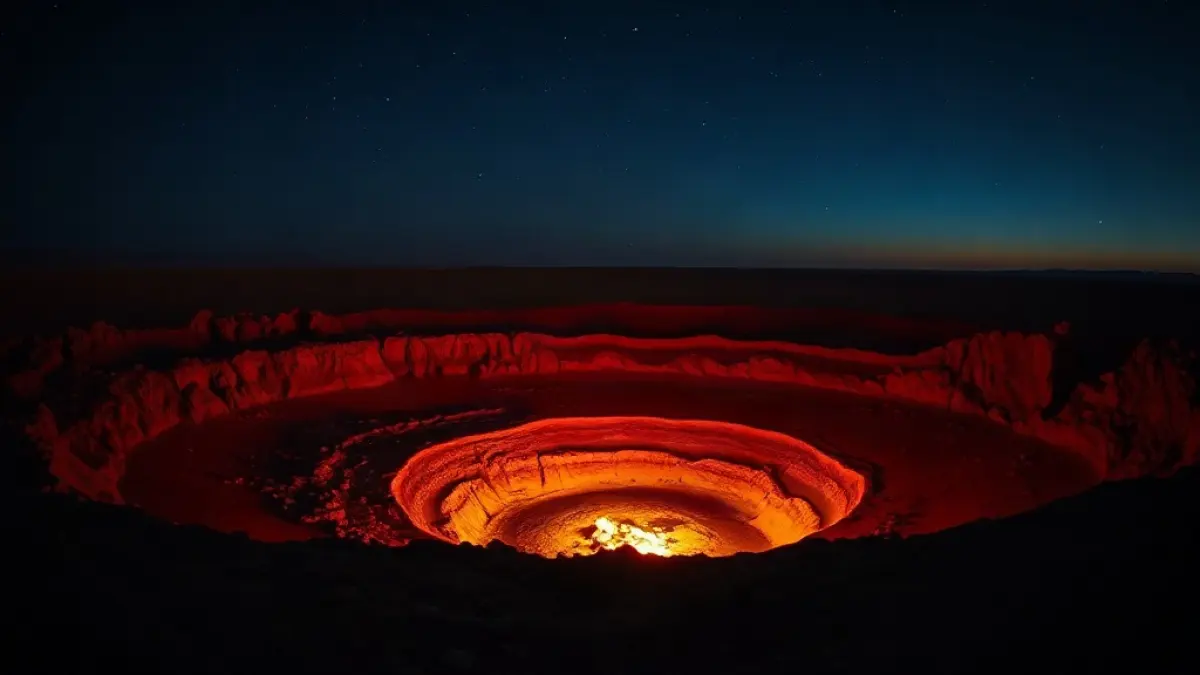
The glow of Turkmenistan's famous Darvaza gas crater is fading. The pit in the Karakum Desert, about 260 kilometers north of the capital Ashgabat, has burned for decades on natural gas seeping up from below, but new wells now draw that gas away and officials say the flames have shrunk by nearly three times. Travellers who visit today will find a far dimmer version of the fire seen in the famous photographs.
Key facts
- Location: Darvaza, Karakum Desert, about 260 km north of Ashgabat
- Size: roughly 60 to 70 meters across and about 30 meters deep
- Change: officials say the fire has shrunk by nearly three times; satellite analysis found flame heat dropped by more than 75 percent over three years
- Official name: Shining of Karakum, known locally as the Door to Hell
- Status: still burning, but declining; no date has been given for when it might go out
What is happening at the crater?
For years, hundreds of small fires burned across the crater floor and up its sheer walls, and temperatures inside have been reported at close to 1,000°C. By one account the fire reached its recorded peak intensity around 2013 before the decline began. The area was declared a nature reserve in 2013, and in 2018 the crater was an overnight stop on a desert car rally.
Why are the flames fading?
State gas company Turkmengaz reopened old wells around the crater and drilled new ones, with two wells in operation by December 2024 and another finished in February 2025. Those wells pull gas out of the ground before it can feed the fire.
At a conference in Ashgabat in June 2025, Turkmengaz scientist Irina Luryeva said the fire had shrunk by nearly three times. Turkmenistan's oil and gas ministry reported that the intensity of the crater's burning had fallen by more than three times over the period analyzed. Capterio, a company that monitors gas flares by satellite, found that the heat intensity of the flames fell by more than 75 percent over three years, according to reporting in May 2026. Repeat visitors say the flames are much smaller than they used to be.
Why is the fire being put out?
In 2010, President Gurbanguly Berdimuhamedow called for measures to limit the crater's effect on nearby gas fields. In January 2022, he announced plans to extinguish it, citing health, environmental and economic harm, and a commission was set up to find a method.
The crater burns methane, the main part of natural gas and a powerful greenhouse gas. Carbon Mapper satellite data show an average release of about 1,300 kilograms of methane an hour from 2022 to 2025. Capturing the gas and selling it, rather than burning it in the open, helps both the climate and the national budget, and officials who once promoted the fire as a tourist draw now celebrate its decline.
What you will see if you go
The version of the crater visitors find today is far dimmer than the classic images, and it may not be burning much longer. The pit sits near the old village of Darvaza, with rubble on its floor and sheer walls dropping about 30 meters. No date has been announced for when the fire might stop completely.
Where did the crater come from?
The most repeated story says the crater formed in 1971, when Soviet engineers' drilling rig collapsed into a gas cavern and the gas was lit to burn off. That account may not be right: relevant Soviet records are missing, classified or out of reach, and some Turkmen geologists say the ground collapsed in the 1960s and the gas was lit only in the 1980s. Explorer George Kourounis has said two government geologists told him exactly that. The origin remains disputed.
No timeline has been given for the crater's final extinguishing. Travellers planning to see it should be aware that the fire is already well past its peak.