
 Sri LankaTravel
Travellers on Tourist Visas Risk Arrest for Running Businesses in Sri Lanka
Sri Lanka is enforcing a ban on foreigners running businesses on tourist visas, with 75 arrests and 15 deportations recorded last year, while tensions over Israeli tourism grow in Arugam Bay.
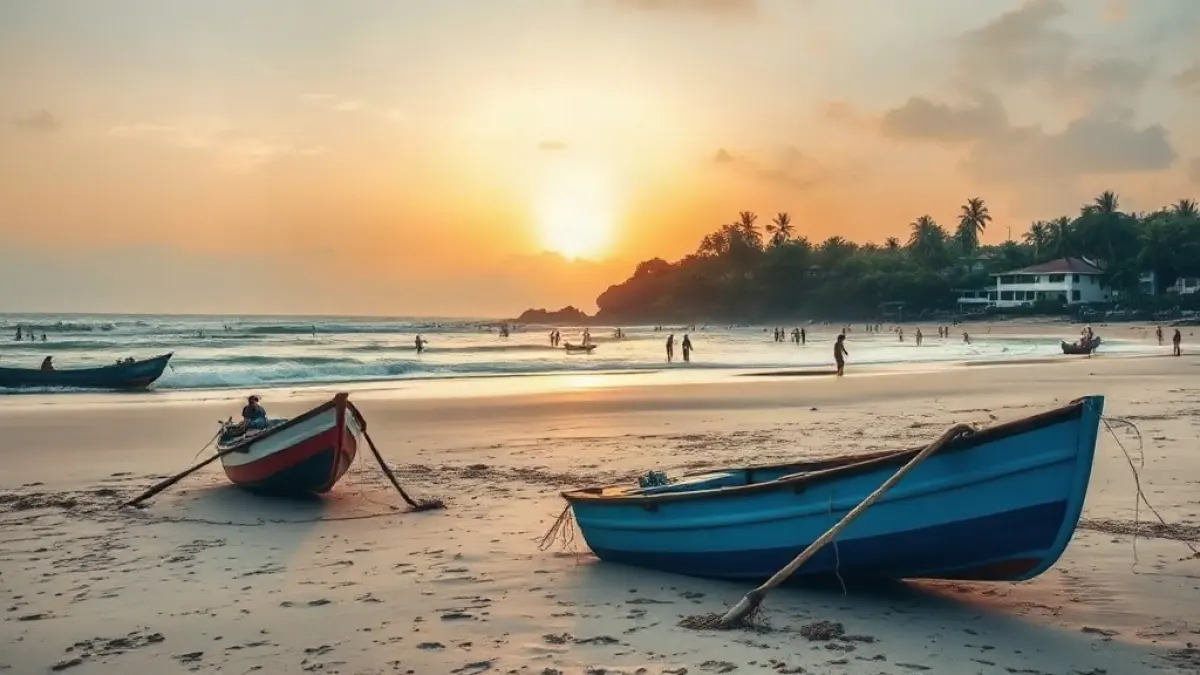
Arugam Bay, the fishing village turned surf town on Sri Lanka's east coast, has become a major destination for young Israeli travellers over the past decade. The influx has split the local community, prompted closures and protests over foreign-run religious centres, and sharpened scrutiny of how Sri Lanka enforces its visa and business rules.
Key facts
- Sri Lankan law does not allow foreigners to run businesses on tourist visas.
- Last year, 75 foreign nationals were arrested and 15 deported for running illegal tourism businesses, including hostels, wellness retreats and surf schools.
- Authorities have pledged more than 80 new or restructured tourism police units.
- The Arugam Bay Chabad House, a Jewish centre for travellers, was shut down by authorities earlier this year.
- Sri Lanka welcomed a record 2.36 million visitors last year; tourism was worth $3.2 billion in 2025.
- The five-month surf season in Arugam Bay runs from May to September.
What is happening in Arugam Bay?
Israeli-owned hotels and restaurants have opened at an increasing rate in the area, catering to large groups of young Israeli travellers who arrive after completing mandatory military service and stay for weeks or months, often on a budget. One local food-stall worker said around 99% of his customers are Israeli.
Working-class locals in Arugam Bay and nearby Pottuvil, a town of roughly 43,000 people that is about 80% Muslim, say they depend on the income from the surf season and report little friction. Middle-class business owners who moved to the area from Colombo are more likely to refuse Israeli customers, citing the war in Gaza and visitors' behaviour. Complaints raised with the reporter included noise from late-night raves, fireworks on the beach, aggressive bargaining over fixed prices, unpaid bills and pressure on surf-lesson prices.
What has the government done?
In January 2025, Prime Minister Harini Amarasuriya told Parliament that the government would crack down on illegal activities by Israeli tourists, and said no authority had granted permission to build religious establishments or places of worship in the country. Later that year, two Israeli men were arrested for attacking a local surfer and his girlfriend.
Earlier this year, authorities shut down the Chabad House in Arugam Bay, which hosted Shabbat meals and prayers. In August, residents of Hiriketiya on the south coast protested against a recently established Chabad House there, which they said had been set up without the necessary government permits or local consent. Earlier this month, a video showing Israeli tourists pushing their Sri Lankan boat operator into the sea went viral; the tourists said it was a joke and that the operator was in on it.
Why is this a delicate issue for Sri Lanka?
Remittances are Sri Lanka's largest foreign-exchange earner, reaching a record $8.07 billion last year — more than double tourism earnings — and Israel is among the main sources, with Sri Lankan workers sent there through a bilateral programme. President Anura Kumara Dissanayake reaffirmed support for Palestinian statehood and a two-state solution at the U.N. General Assembly last year, while his government continued that programme.
Tourism is the country's third-largest source of foreign exchange. Visitor numbers hit a record 2.36 million last year, but tourism earnings grew by only 1.6% and spending per tourist fell by 12%.
What this means for travellers
Anyone planning to work, teach surfing, run a retreat or open a business in Sri Lanka needs permission beyond a tourist visa: the law does not allow foreigners to run businesses on tourist visas, and enforcement is active, with arrests and deportations already recorded. Travellers should check the conditions of their own visa before taking paid work.
Visitors to Arugam Bay should also be aware that community attitudes are mixed and that some businesses decline Israeli customers. Travellers seeking a Chabad House or similar facility should confirm its current status, as the Arugam Bay centre has been shut down.
Authorities have pledged more than 80 new or restructured tourism police units to maintain vigilance over illegal tourism businesses. No start date for those units has been announced.
Also about:  Israel
 Thailand
 Philippines