
 SpainTravel
Travellers to southern Spain face rail suspensions after fatal train crash
Two high-speed trains collided near Urda, about 130 km south of Madrid, on 28 October 2026, killing at least 30 people. Renfe has suspended the main high-speed line from Madrid to southern Spain.
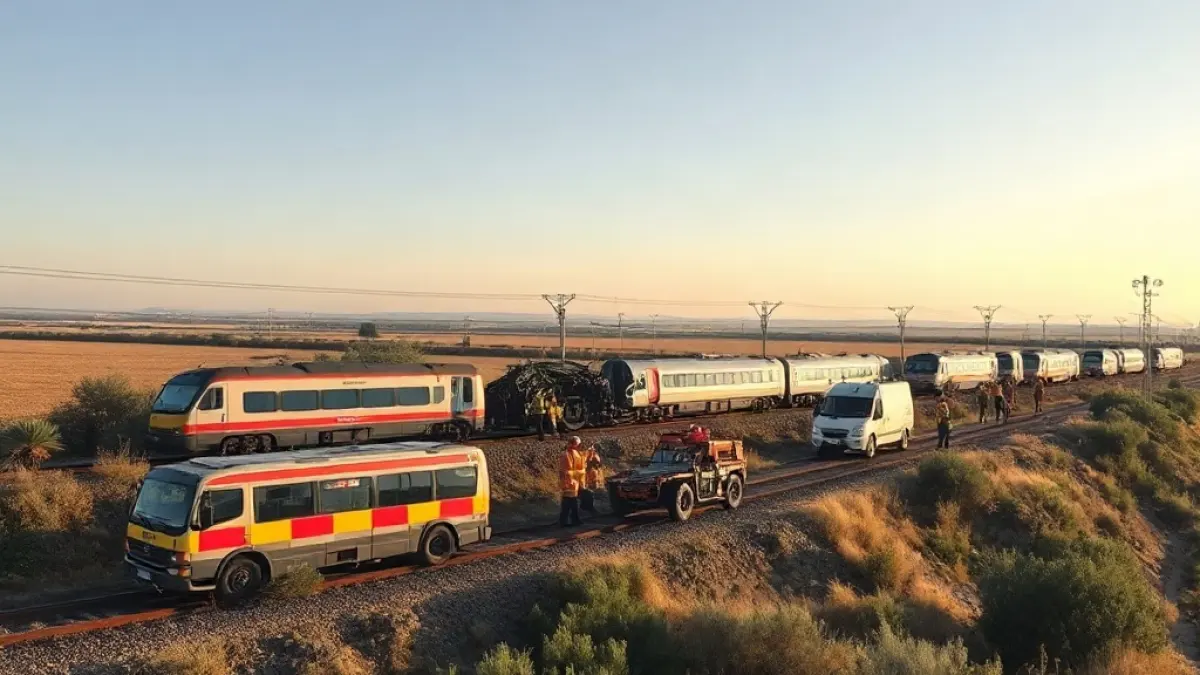
At least 30 people were killed when two high-speed trains collided south of Madrid on 28 October 2026, and regional authorities warned the death toll could rise further. State railway operator Renfe said the main high-speed line from Madrid to southern Spain has been suspended, disrupting travel on one of the country's busiest rail corridors.
Key facts
- At least 30 people killed; no figure for the wounded has been given
- Crash happened just before 9 a.m. (0800 GMT) on 28 October 2026
- Location: municipality of Urda, in Castilla-La Mancha, about 130 kilometres (80 miles) south of Madrid
- Renfe has suspended the main high-speed line from Madrid to southern Spain
- The trains involved were a Renfe service and a train operated by private Spanish company Iryo
What happened?
Two high-speed trains collided in Urda, in the central region of Castilla-La Mancha. Sources from authorities in Castilla-La Mancha told AFP that at least 30 people had died, raising an earlier toll of 10. Authorities have not yet released a figure for the wounded.
Esther Padilla, spokeswoman for the government of Castilla-La Mancha, told local media CMM that "it is possible that the number will increase." Images from local media showed wreckage strewn across the tracks and an embankment, with travellers carrying their suitcases away from the scene.
What is happening to train services?
Renfe confirmed in a statement that the main high-speed line from Madrid to southern Spain was suspended after one of its services was involved in an accident with a train from Iryo. Both of Spain's high-speed collisions this year occurred on the line linking Madrid to Seville.
What have officials said?
A Spanish emergency services spokesperson told AFP that several fire crews, three helicopters and two mobile intensive care units were being deployed to the scene. Prime Minister Pedro Sanchez said he was shocked by the accident and expressed his support for the victims and their families. He cancelled his participation in a summit in Madrid, and his Socialist party suspended all campaign activities ahead of the 29 November general election.
The Spanish royal household said it was shocked and concerned, while European Commission President Ursula von der Leyen said Europe mourns with the victims. French President Emmanuel Macron expressed his country's solidarity.
What this means for travellers
Anyone planning to travel by high-speed train between Madrid and southern Spain, including Seville, should expect the route to be disrupted while the line is suspended. Check the status of your service before heading to the station.
Why is this being watched closely?
Spain's high-speed rail network has received heavy investment and is the world's second-largest after China. The 28 October crash follows another collision between two high-speed trains outside the village of Adamuz in January that killed 46 people, Spain's deadliest train accident since 80 people died near Santiago de Compostela in 2013.
No timeline has been given for restoring services on the Madrid–southern Spain high-speed line.