
 South AfricaEntry rules
Namibia travellers: South Africa asylum biometrics start 10 Nov, SIM passport check proposed
South Africa's Home Affairs department plans to launch biometric asylum registration on 10 November 2026, collecting fingerprints and facial scans. The Justice Minister has separately proposed requiring passports from all foreign nationals registering SIM cards.
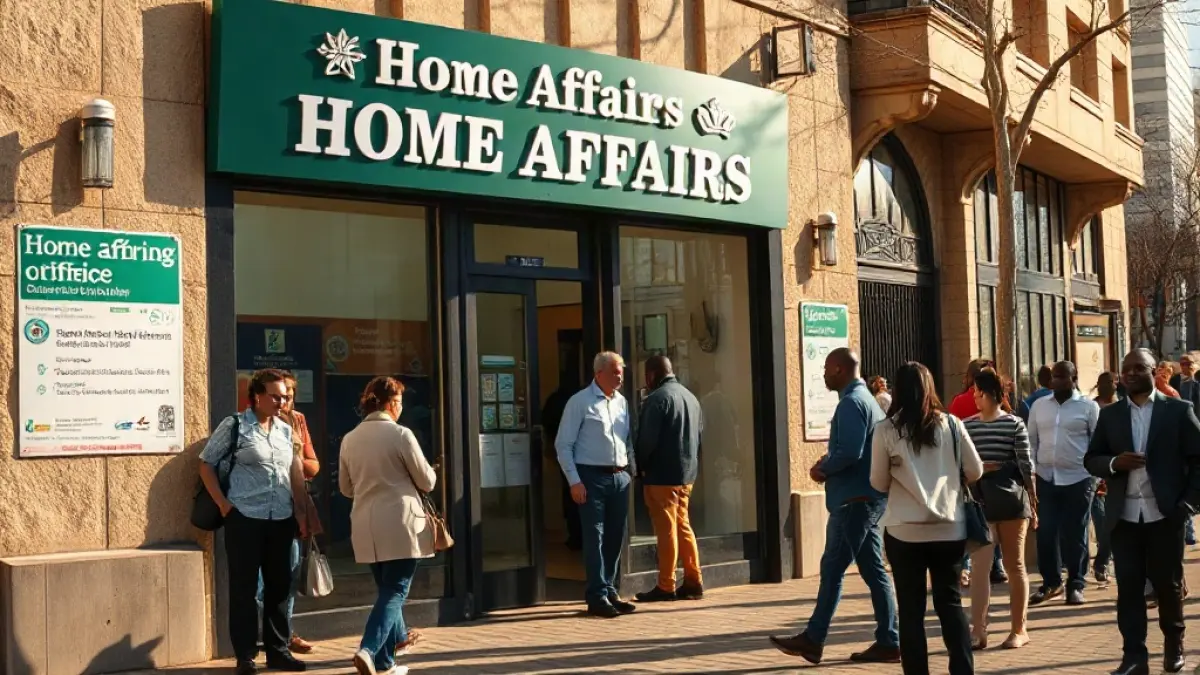
South Africa's Department of Home Affairs is scheduled to launch a biometric asylum registration platform on 10 November 2026, collecting fingerprints, facial scans and biographic data from applicants. The department has not publicly confirmed whether the system's data architecture has undergone a Privacy Impact Assessment before that date, and the Justice Minister has separately proposed requiring all foreign nationals to present passports when registering SIM cards.
Key facts
- Launch date: 10 November 2026, described by the Inter-Ministerial Committee on Migration (IMC) as a "phased" launch
- Data collected at registration: fingerprints, facial scans and biographic information
- Registered refugees and asylum seekers in the country: more than 167,000, according to UNHCR; government estimates of the broader affected population, including undocumented people, reach 250,000
- Trigger: a Constitutional Court ruling of 7 July 2026 striking down four Refugees Act provisions
- Home Affairs Minister: Leon Schreiber; Justice Minister: Mmamoloko Kubayi
What is changing?
Asylum applicants will provide biometric and identity information at the point of registration. Home Affairs says the platform will verify identities, spot duplicate or previously rejected claims and track cases through a digital appointment system.
Registration receipts will carry applicants' biometric data and appointment details, but they do not constitute any recognition of refugee status. Every application still undergoes individual merit assessment.
The platform is built on the Home Affairs National Identification System (HANIS), a central biometric database built by NEC Corporation using its Automated Fingerprint Identification System (AFIS). HANIS holds more than 30 million fingerprint records and handles roughly 70,000 identity searches a day. Schreiber has cited the Electronic Travel Authorisation (ETA) system — more than 203,000 applications processed, more than 5,700 fraudulent ones rejected — as evidence the department can run biometric infrastructure at scale.
Why is this happening now?
On 7 July 2026 the Constitutional Court ruled unanimously in Scalabrini Centre of Cape Town and Another v Minister of Home Affairs and Others (CCT 126/25), striking down four Refugees Act provisions. Those sections had blocked asylum applications from people who entered without transit visas or who could not show "good cause" for irregular entry. Justice Steven Majiedt described the requirements as an arbitrary exercise of state power.
Removing those barriers expands the pool of people able to present themselves at Refugee Reception Offices, which already carry a backlog the Home Affairs Minister estimates at around 120,000 appeals. The government has asked the High Court for guidance on implementing the ruling; that hearing was scheduled for 29 October 2026.
What is proposed for SIM cards?
Justice Minister Mmamoloko Kubayi is considering a requirement that all foreign nationals present passports when registering SIM cards, with mechanisms to keep identities traceable when a number is transferred. SIM cards improperly registered and linked to criminal activity could be deactivated under the plan.
South African mobile operators began stricter SIM registration under RICA (the Regulation of Interception of Communications and Provision of Communication-Related Information Act) in July 2026 under a voluntary framework involving Vodacom, MTN, Telkom, Cell C, Rain and Liquid. In 2021 the Constitutional Court found parts of RICA unconstitutional, and an amendment bill remains in progress.
What privacy safeguards are in place?
Home Affairs has not publicly confirmed a Privacy Impact Assessment for the asylum platform. South Africa's Protection of Personal Information Act (POPIA) does not explicitly require such assessments, though the Information Regulator's guidelines recommend them for high-risk processing. The Information Regulator can levy fines of up to R10 million ($601,000 USD) for POPIA violations.
A 2021 investigation found that a draft Home Affairs identity management policy appeared to breach four POPIA conditions for biometric processing. That draft proposed sharing biometric data with police without requiring a court order.
What this means for travellers
Foreign nationals in South Africa should be aware that the proposed SIM registration change would tie mobile access to passport documentation. Anyone lodging an asylum claim should expect to provide biometric data at registration from 10 November 2026, and should note that a registration receipt confers no immigration status.
The department has not publicly described how the system will serve applicants without reliable internet access. Researcher Dr. Dale McKinley told broadcaster 702/CapeTalk that digitising registration may reduce queues but does not resolve underlying capacity problems.
The IMC has described the launch as phased, and the government's court engagement on implementing the ruling is ongoing. A revised immigration and citizenship White Paper approved by Cabinet in April 2026 sets out a unified digital population registry and an ETA framework extended to all foreign nationals entering the country.