
 SloveniaEntry rules
Travellers to Slovenia: carry ID, allow extra time for Schengen checks until 2027
Seven Schengen countries have notified the European Commission that temporary internal border checks will continue into 2027. Travellers crossing between these states should carry identity documents and allow extra time.
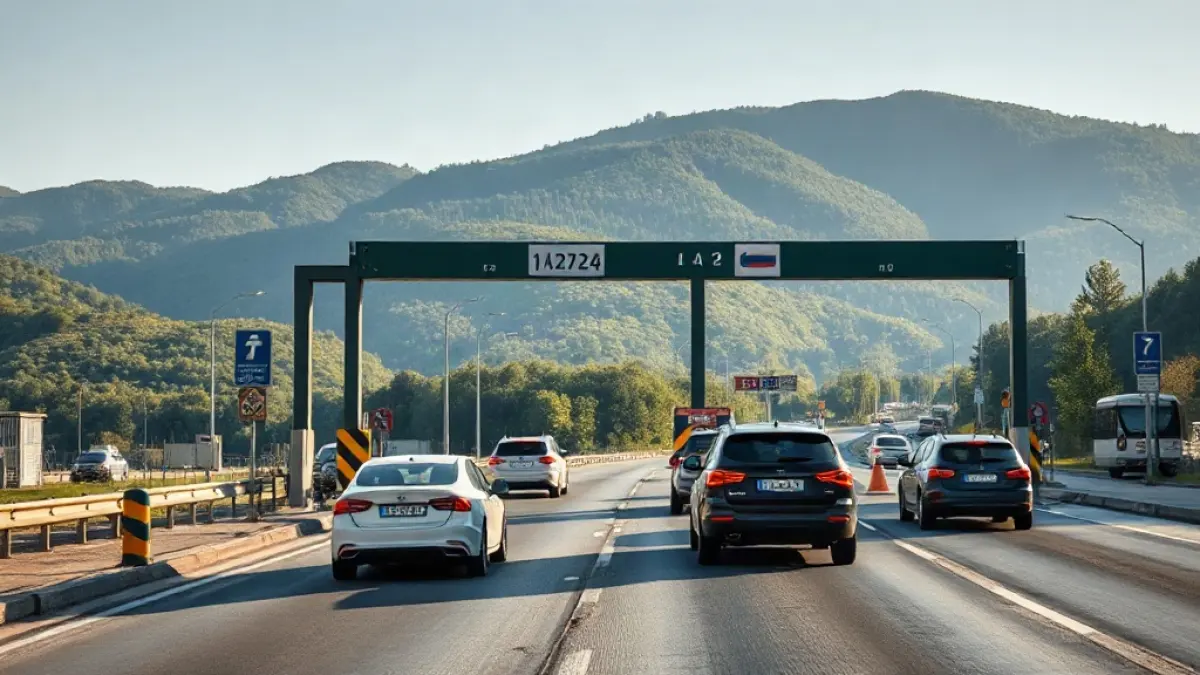
Seven countries in the Schengen Area plan to keep temporary checks at their internal borders running into 2027, according to notifications made to the European Commission. Travellers moving between these states should carry their documents and expect possible delays, even on short trips.
Key facts
- Seven countries extending checks: Denmark, Norway, Sweden, Austria, Germany, Poland and France.
- Controls expire on different dates, from 15 March 2027 to 11 May 2027.
- Italy's checks at its border with Slovenia are due to end 18 December 2026.
- Checks do not mean full passport control at every crossing, but anyone crossing may be inspected.
- Identity documents and, where applicable, visas or residence permits must be carried.
Which borders are being checked?
The scope of the checks differs in each country, and each measure has its own end date:
- France — all internal borders, including land, air and sea, until 30 April 2027.
- Sweden — all internal borders, including air and sea borders and the land border with Denmark, until 11 May 2027.
- Germany — all nine land borders, including those with Poland, Czechia, Austria, France and the Netherlands, until 15 March 2027.
- Austria — the land and river border with Slovakia and the land borders with Czechia, Hungary and Slovenia, until 15 March 2027.
- Poland — the borders with Germany and Lithuania, until 30 March 2027.
- Denmark — land and sea borders with Germany, for a new period running 12 November 2026 to 11 May 2027.
- Norway — ports with ferry connections to other Schengen countries, also 12 November 2026 to 11 May 2027.
Italy is the eighth country listed by the European Commission as of 5 November 2026: its border checks with Slovenia are due to end on 18 December 2026, and no extension has been announced on the Commission's list.
Why are countries keeping checks?
Denmark cites sabotage risks, terrorist threats and organised crime; Norway points to sabotage and threats to the energy sector. Sweden refers to cross-border organised crime, hybrid threats linked to Russia, migration being used as a tool of pressure and the situation in Ceuta, Spain.
Germany and Austria justify the measures with irregular migration and pressure on asylum reception systems. Poland points to migration pressure at its borders with Germany and Lithuania, while France cites terrorist threats, criminal networks, migrant smuggling and a general deterioration of the security situation.
At the same time, the number of countries applying checks is gradually falling. The Netherlands ended its temporary controls on 30 September 2026, and Italy and Spain have dropped reciprocal checks on air and ferry routes introduced after the events in Ceuta.
Does this mean passport checks everywhere?
No. Restored controls do not guarantee a full passport check for every traveller. In practice, checks may be random document checks, vehicle inspections or extra questions from border guards, but anyone crossing the relevant stretch of border may be stopped.
Ukrainian citizens travelling visa-free on a biometric passport must carry a valid foreign passport, and must present a visa or residence permit if one is required for their situation. A driving licence is not a valid document for crossing a state border.
What this means for travellers
Carry documents confirming your identity and right to stay whenever you cross between the countries listed, even on short journeys. Drivers, bus passengers and ferry passengers should allow extra time at checkpoints and check route information before travelling.
The next date to watch is 18 December 2026, when Italy's checks at the Slovenian border are scheduled to lapse. Measures in other countries expire in spring 2027 — 15 March in Austria and Germany, 30 March in Poland, 30 April in France, and 11 May in Denmark, Norway and Sweden — though these dates do not guarantee controls will be lifted automatically.
Also about:  Italy
 Austria
 Germany
 Denmark
 Norway
 Sweden
 Poland