
 NigeriaVisas
Guinea-Bissau among visa-free options as Nigerians spend N75bn a year on visa fees
A Nigerian Ministry of Foreign Affairs analysis says Nigerians spend at least N75bn a year on visa applications, with rejected Schengen applications alone costing about €11.5m in 2025. It flags high refusal rates and lists cheaper or visa-free alternatives.
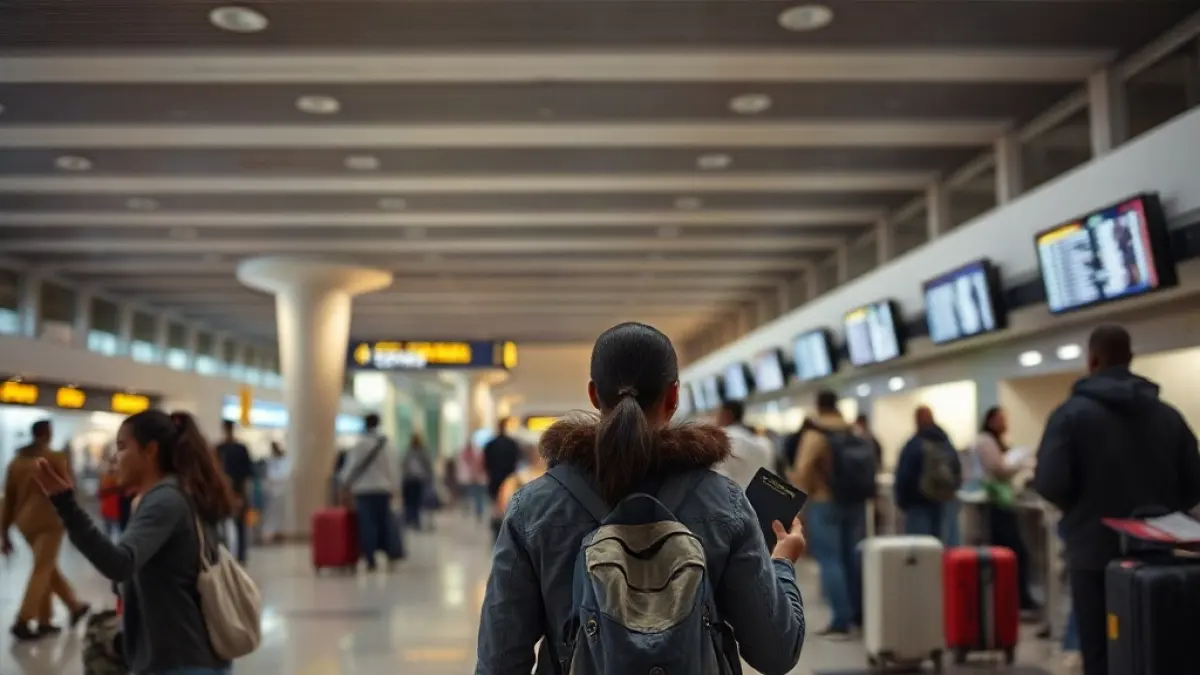
Nigerians spend at least N75bn every year on visa applications at foreign missions, and unsuccessful Schengen applications alone cost an estimated €11.5m (about N19bn) in 2025, according to a visa-cost analysis from Nigeria's Ministry of Foreign Affairs. Because most fees are not refunded when an application is refused, travellers can lose large sums before they ever board a plane.
Key facts
- Annual visa application spending by Nigerians: at least N75bn
- Cost of one unsuccessful application: N350,000 to N1.2m, depending on destination and services
- Schengen refusal rate for Nigerians: 46.9% in 2025, up from 45.9% in 2024
- Japan's new visa fees for Nigerians took effect on 1 July 2026
- Cheaper entry options cited: Seychelles about $12, Zambia $25, Kenya $32
What did the report find on costs?
The analysis points to much more than the visa fee itself. Applicants often pay visa application centre charges, medical insurance, hotel reservations, flight bookings and other documentation costs before a decision is made. The report put the total cost of a failed application at between N350,000 and N1.2m.
"All major embassies collect fees before approval and it is non-refundable," the report stated. Among the charges it listed: the United Kingdom's 10-year visitor visa at £1,128 (about N2.09m) and its six-month visitor visa at £127 (about N203,000); the United States B1/B2 visitor visa at $185 (about N299,700); and Canada's visitor visa plus biometrics at CAD185 (about N205,000). A standard Schengen visa costs €90, plus an estimated €35 application centre charge, bringing the total to about N144,000 at the exchange rates used in the analysis. India was listed as the most expensive destination in the comparison at $588 (about N819,200), though its electronic visa (e-Visa) system offers options from $25 to $80 for eligible categories.
Where are refusal rates highest?
Canada, Belgium, Spain, the United Kingdom and the United States were identified as particularly difficult for Nigerian applicants. Canada's study permit system showed an estimated refusal rate of 75% between January and April 2026, with many refusals linked to doubts about applicants' intention to leave Canada after their studies, a requirement under Section 216(1)(b) of Canada's Immigration and Refugee Protection Regulations.
Within the Schengen Area, Belgium recorded the highest refusal rate for Nigerians at 60.3%, followed by Spain at 52.7% and France at 47.4%. The overall Schengen refusal rate of 46.9% in 2025 translated into roughly 250,000 unsuccessful applications. The United Kingdom refused 33.1% of Nigerian applications in 2025, rising to 35.4% in the first quarter of 2026, with visitor visa refusals at about 38.6%; Nigerians made up 44.4% of all African visa refusals by the UK, a cumulative 1.34 million over 21 years. For the United States, the report cited a 64% refusal rate for African applicants seeking F-1 student visas, against a global average of 35%. Weak bank statements were listed as one possible reason for unsuccessful applications.
What changed in Japan's fees?
Japan raised its visa charges for Nigerians with effect from 1 July 2026. A single-entry visa now costs ¥15,000 (about $93, or roughly N126,000) and a multiple-entry visa ¥30,000 (about $188, or roughly N252,000) — a fivefold increase from the previous ¥3,000 and ¥6,000. Japan reportedly keeps a comparatively low refusal rate of 12% to 15% for Nigerian applicants.
Which cheaper or visa-free options are there?
The report advised Nigerian travellers to weigh destinations offering visa-free entry, visa-on-arrival or electronic travel authorisation where they are eligible. Several West African states — including Ghana, Benin Republic, Togo, Senegal, The Gambia, Liberia, Niger, Burkina Faso, Côte d'Ivoire, Mali, Guinea, Guinea-Bissau and Sierra Leone — give Nigerian passport holders visa-free access under regional arrangements. Rwanda, Barbados, Dominica, Fiji, Mauritius and Vanuatu were named as other possible destinations, subject to their entry requirements and permitted length of stay.
Malaysia was described as a relatively affordable option through its e-Visa, at about RM126 (N40,000 to N45,000), with processing in two to three days and a valid passport, return ticket, hotel reservation and compliant passport photograph generally required; its refusal rate was put at 20% to 30%, a figure the report said needs confirming against official statistics. Indonesia, by contrast, was flagged as difficult: Nigerians are not eligible for visa-on-arrival and generally need sponsorship and approval, with charges of $50 to $110, a requirement to show access to $2,000, and an estimated 40% refusal rate for calling visas involving Nigerian applicants.
What this means for travellers
Because fees are generally not refunded after a refusal, the report urged travellers to check destination-specific requirements and weigh the likelihood of approval before paying. It cautioned that visa-free access, visa-on-arrival eligibility and electronic entry requirements must be verified through official government channels before bookings or other financial commitments are made.
No changes to the fees or refusal figures cited in the analysis have been announced beyond Japan's revised charges, which are already in force.
Also about:  Japan
 Canada
 Belgium
 Spain
 France
 United Kingdom
 United States