
 NigerEntry rules
Niger–Algeria border: 15,675 deported to Assamaka since June 2026
At least 15,675 people were deported from Algeria to Niger between June and early November 2026, many abandoned in the desert 15 km from Assamaka, a monitoring team reports. More than 30,277 have been affected since January.
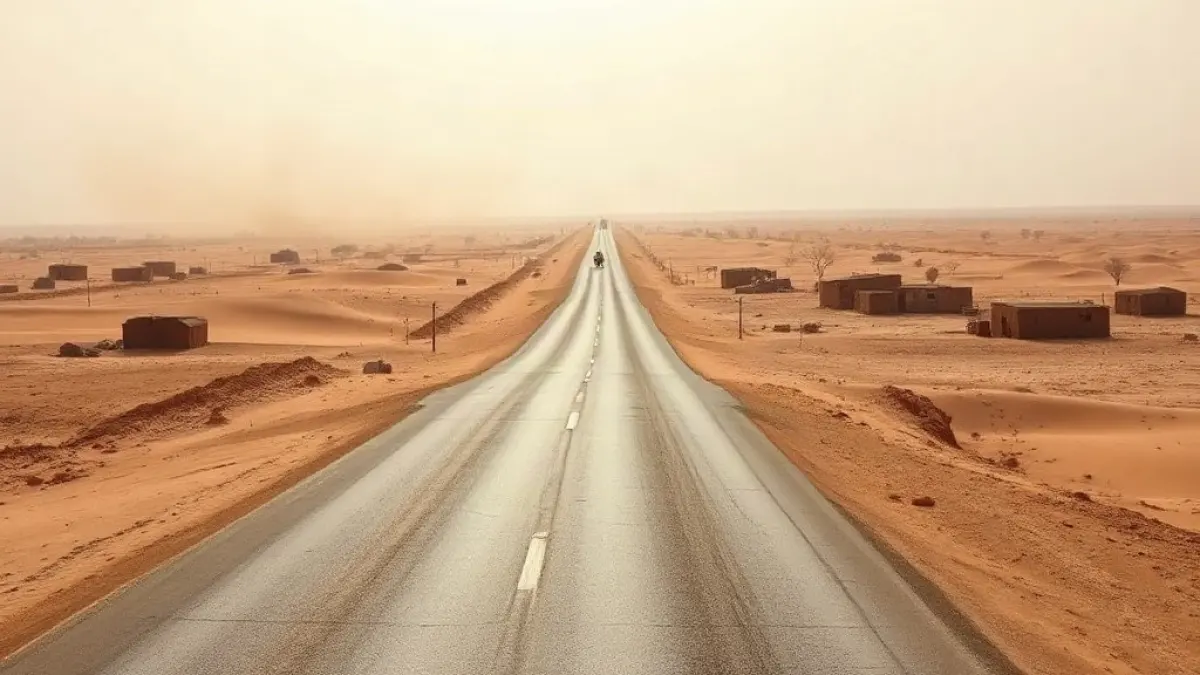
At least 15,675 people, plus an unknown number, were deported from Algeria to Niger between June and early November 2026, according to a monitoring team observing the border at Assamaka. Many were dropped in the desert at a location known as "Point Zero", 15 km from the village, and had to walk or be collected by volunteers.
Since the start of 2026, 30,277 people, plus an undetermined number, have been affected by these mass deportations, the team's records show.
Key facts
- At least 15,675 people deported from Algeria to Niger between June and early November 2026
- 30,277 people affected since the start of the year
- More than 5,000 deportees recorded in September and October alone
- "Point Zero", where unofficial convoys leave people, lies 15 km from Assamaka
- Nationalities recorded include Niger, Nigeria, Mali, Guinea-Conakry, Sudan, Chad, Cameroon, Benin and Côte d'Ivoire, among others
- Children and teenagers are among those deported
What is happening at the Niger–Algeria border?
Two kinds of convoys operate. "Official" convoys carry mostly Nigerien nationals and are taken as far as the town of Agadez, while "unofficial" convoys unload people at "Point Zero" and leave them there. Some Nigeriens are also among the victims of unofficial convoys.
On 19 June 2026, an official convoy of 15 lorries and 2 vans brought 1,129 people, including 1,038 Nigeriens, and continued from Assamaka towards Arlit. On 6 November 2026, 372 people were abandoned at "Point Zero" in an unofficial convoy, while 569 people arrived in an official convoy of 9 lorries and 2 vans.
Who is being deported?
Large numbers of Nigerien nationals are affected, including children and teenagers, alongside citizens of many other countries. Refugees from the wars in Sudan and Chad are regularly found among those deported, and nationals of these countries — sometimes from others too — have on several occasions been sent back to Algeria.
Nigerien police have immediately turned back Sudanese and Chadian nationals at the Algerian border on multiple occasions, including after the convoys of 26 June and 27 July 2026. The UN refugee agency, UNHCR, does not appear to have solutions giving these war victims access to international protection and a safe haven.
Are the numbers falling?
The monitoring team has observed a slight decline in so-called unofficial deportations towards the Nigerien border, as Algeria is reportedly beginning to deport more people by plane directly to their countries of origin. Whether this trend will last, and what it means for those affected, remains to be seen.
A growing rapprochement between Algeria and Niger, and with the other members of the AES (Alliance of Sahel States), on military and security cooperation is another development, but its impact on mass deportations is not yet clear. For now, deportations remain high: more than 5,000 people were recorded between September and October alone.
What conditions do deportees face?
Systematic violence accompanies the deportations, and leaving people with injuries of varying severity at "Point Zero" is described as the norm rather than an isolated practice.
The case of Ousmane Mansour, a Togo national, drew widespread consternation in his country of origin: on 12 July 2026 he was deported to the Nigerien border while suffering severe burns all over his body, and he died a few days later in a clinic in Agadez.
What help is available at Assamaka?
The team in Assamaka travels to "Point Zero" to hand out water and food parcels and to collect people who can no longer walk the 15 km to the village — often those who are ill, injured or disoriented after trauma.
These operations are hampered by weather and limited resources: in extreme heat the engines of the small three-wheelers overheat, while heavy downpours risk getting them stuck in the mud. There are currently insufficient funds to buy larger off-road vehicles. François Ibrahim, who leads the team in Assamaka, said that "because of the heat, both tricycles are overheating".
The organisation calls for an end to pushbacks from Algeria, Tunisia and Libya to Niger, an end to all deportations, freedom of movement across the Sahel and the Sahara under dignified and safe conditions, and rejects agreements on the externalisation of European borders in Africa.
Two questions remain open: whether the shift towards flights directly to countries of origin will continue, and what effect closer Algeria–Niger security cooperation will have on deportations at the border.
 Algeria
 Togo
 Sudan
 Chad