
 MozambiqueTravel
Mozambique runs Ebola readiness drills at Maputo airport and border post
Mozambique tested its public health emergency response at Maputo International Airport and the Ressano Garcia border crossing with South Africa in September 2026. No new entry rules or traveller requirements were announced.
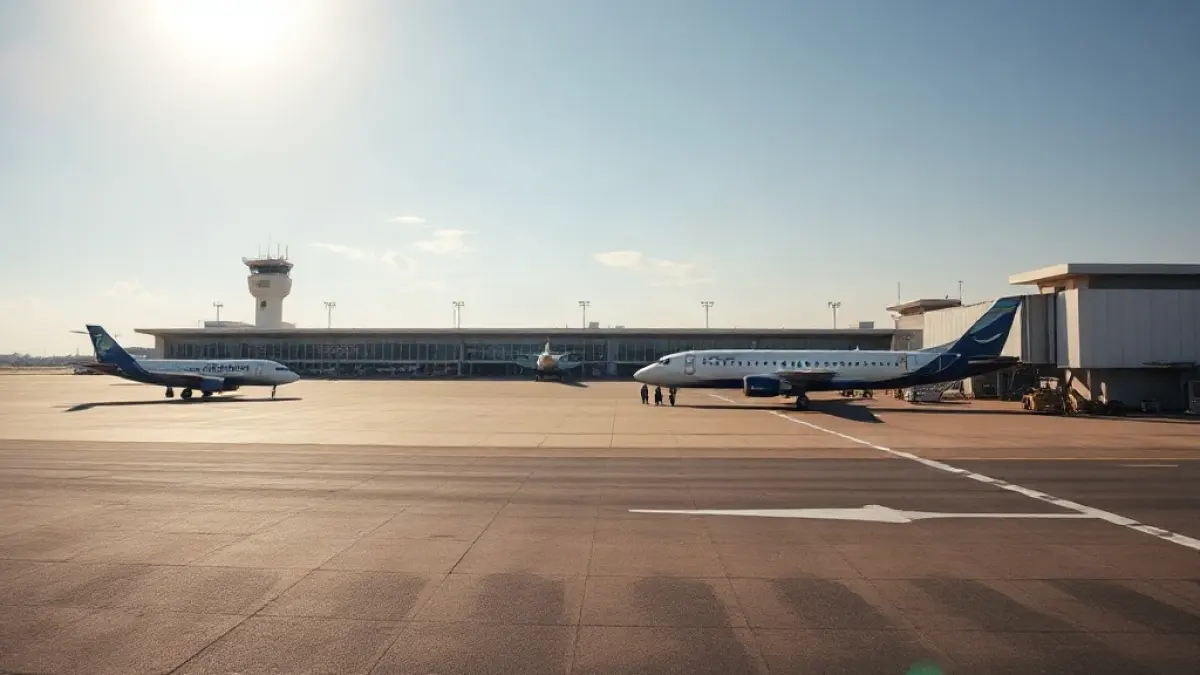
Mozambican officials ran simulation exercises at Maputo International Airport and the Ressano Garcia Border Crossing on the border with South Africa in September 2026, testing how they would handle a public health emergency at the country's main points of entry. The World Health Organization (WHO), working with national authorities, provided technical and financial support for the drills. No changes to visa, entry or screening rules for travellers were announced.
Key facts
- September 2026: two simulation exercises (SIMEX) held in Maputo City and at Ressano Garcia
- 99 participants took part — 46 in Maputo City and 53 in Ressano Garcia
- Locations: Maputo International Airport and the Ressano Garcia land crossing into South Africa
- Format: three days of technical training plus a functional field simulation
- No new entry rules for travellers were published alongside the exercises
What was tested?
Participants rehearsed detecting and reporting a potential Ebola event, assessing risks, activating response mechanisms, carrying out screening and isolation, sharing information and coordinating across sectors in an emergency scenario.
The training covered the International Health Regulations (IHR 2005), surveillance, risk assessment, detection of suspected cases, screening, infection prevention and control, risk communication and multisectoral coordination. Taking part were representatives of the health sector, Migration Services, the Tax Authority, Border Police, transport, agriculture and other institutions involved in preparing for public health emergencies.
Where did the exercises take place?
At Maputo International Airport, the exercise tested preparedness at an air entry point. At Ressano Garcia, one of Mozambique's main land entry points, the simulation was run on the border with South Africa. The aim was to see whether procedures, information flows and coordination mechanisms would work when actually needed.
Why are these drills being held now?
In May 2026, the Democratic Republic of the Congo (DRC) declared an Ebola outbreak caused by the Bundibugyo variant of the virus, with cases also recorded in Uganda. As of 20 October, WHO reported 9424 confirmed cases and 4530 deaths in the DRC alone, a case fatality rate of more than 48%.
Imported cases linked to travel outside the DRC have also been reported in France and Nigeria and, more recently, Kenya, which the WHO says underlines the importance of surveillance, early detection and cross-border coordination at points of entry.
What do travellers need to do?
The source describes preparedness drills only and does not announce any new documents, fees, health checks or entry restrictions for people arriving in Mozambique. Travellers passing through Maputo International Airport or the Ressano Garcia crossing should simply be aware that these are the points where Mozambique's screening and response procedures are in place.
After the simulation, participants held an After Action Review to identify good practices, gaps and challenges, document lessons learned and define recommendations to improve preparedness at entry points. A WHO team leader in Mozambique, Dr Raquel Medialdea Carrera, said simulation exercises "allow you to identify what works, where there are gaps" before a real emergency happens.
The two exercises form part of a wider national effort. With support from the Pandemic Fund through WHO, simulations in Maputo City, Maputo Province, Niassa, Cabo Delgado, Tete and Sofala reached 365 participants in total. The lessons learned are intended to strengthen plans, procedures and coordination mechanisms for future public health emergencies.
Also about:  South Africa
 DR Congo
 Uganda
 Kenya
 Nigeria
 France