
 MoldovaEntry rules
Travellers entering or leaving Moldova face biometric document checks at eight crossings
Moldovan Border Police have received biometric registration and document verification equipment for eight border crossing points under a US-funded project run with the International Organization for Migration (IOM).
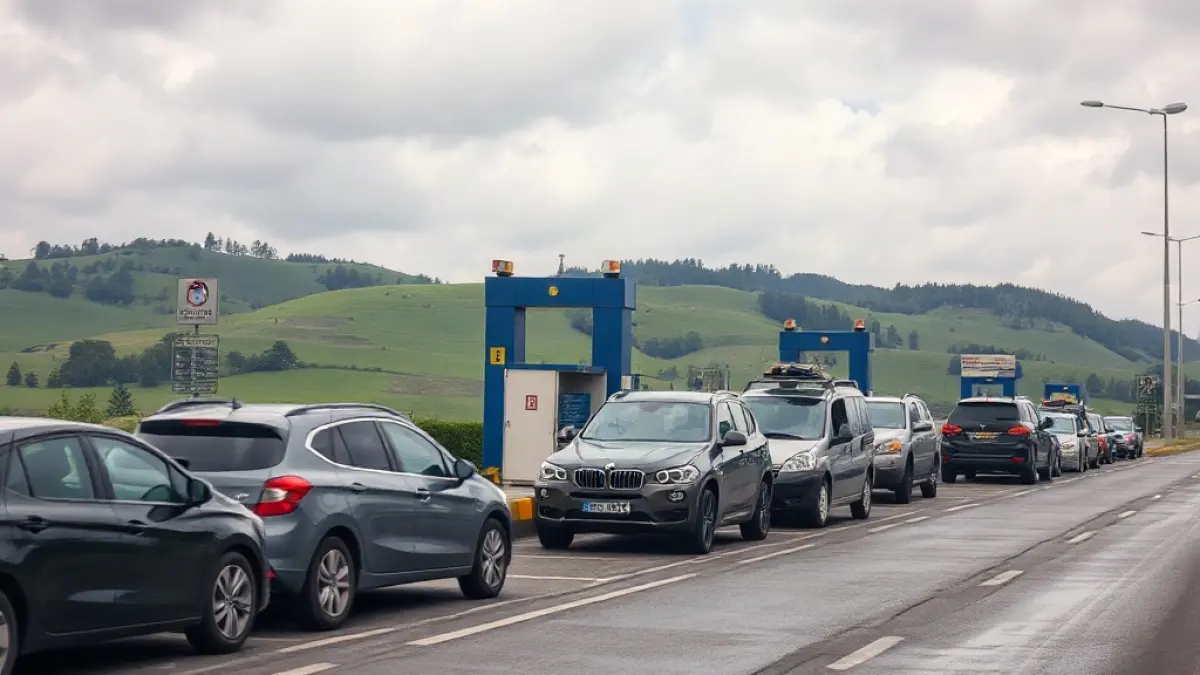
Moldovan Border Police have received new biometric registration and document verification equipment for use at eight border crossing points, under a project funded by the United States and implemented with the International Organization for Migration (IOM). The formal handover took place at the Tudora–Starokazacie crossing. For travellers, the change means identity and document checks at Moldova's borders are being carried out with new verification tools.
Key facts
- Equipment deployed at eight Moldovan border crossing points
- Handover held at the Tudora–Starokazacie crossing
- Funded by the United States and implemented with IOM
- Supports second-line document inspection, identity verification and biometric processing for asylum seekers
- Training and procedural improvements accompany the technology
What has been deployed?
The package includes document examination devices, biometric data registration workstations and equipment to support vehicle inspections and other advanced border control procedures, according to IOM. The systems support second-line document inspections, identity verification and biometric processing for asylum seekers.
IOM says the tools will help officers verify travellers' identities more accurately while supporting the legal movement of people across Moldova's borders. They are also intended to detect fraudulent or altered travel documents.
Which border crossings are affected?
The equipment is in place at eight border crossing points. Only one of them is named in the announcement: Tudora–Starokazacie, where the formal handover took place. The other seven crossings have not been identified.
Why is this happening?
The initiative is part of a US-funded project aimed at strengthening the operational and training capabilities of Moldova's General Inspectorate of Border Police. Alongside the technology, IOM is working with border authorities on specialised training and procedural improvements for day-to-day operations.
Officials say the investment is meant to improve Moldova's ability to respond to illegal migration, document fraud and other cross-border crime, while making border checks more efficient. Ester Ruiz de Azua, head of the IOM Moldova mission, said "solid border management ultimately means stronger institutions and increased resilience." Moldova is expanding its border security capabilities amid concerns about organised crime, terrorism and cross-border threats linked to the war in Ukraine and the wider region.
What else is Moldova doing on biometrics?
Interpol has worked with Moldova to expand its biometric border capacity around crossings in the area near Ukraine. Moldova uses mobile fingerprint scanners from Integrated Biometrics, and the country's General Inspectorate of Police holds 14 rugged biometric devices for collecting and verifying biometric data through Interpol's BIOHUB platform. Project Hotspot is intended to improve the identification of people crossing borders on irregular migration routes.
Moldova's Ministry of Internal Affairs has also proposed a national Facial Image Registry (RIF), a state-run system for receiving, storing and comparing facial images to help law enforcement identify suspects, investigate crimes, find missing people and identify human remains. The proposal includes separate collections of identified and unidentified facial images, each with a reference number.
What this means for travellers
Anyone crossing into or out of Moldova at the eight upgraded points may have documents checked with new examination devices, and identity checks are being handled with biometric registration workstations. Asylum seekers are processed through biometric registration as part of the systems. Travellers should carry valid, undamaged travel documents, since the equipment is specifically aimed at detecting fraudulent or altered documents.
No timeline has been announced for the proposed Facial Image Registry, and the seven border crossings other than Tudora–Starokazacie have not been named.
Also about:  United States
 Ukraine