
 MexicoEntry rules
Mexico stops 100-strong migrant caravan near Guatemala border in Chiapas
Mexican National Guard units, immigration agents and Chiapas state police blocked a highway after about 100 Central American migrants crossed the Suchiate River from Guatemala on 10 November 2026, taking around 40 into custody. A far larger group had entered days earlier.
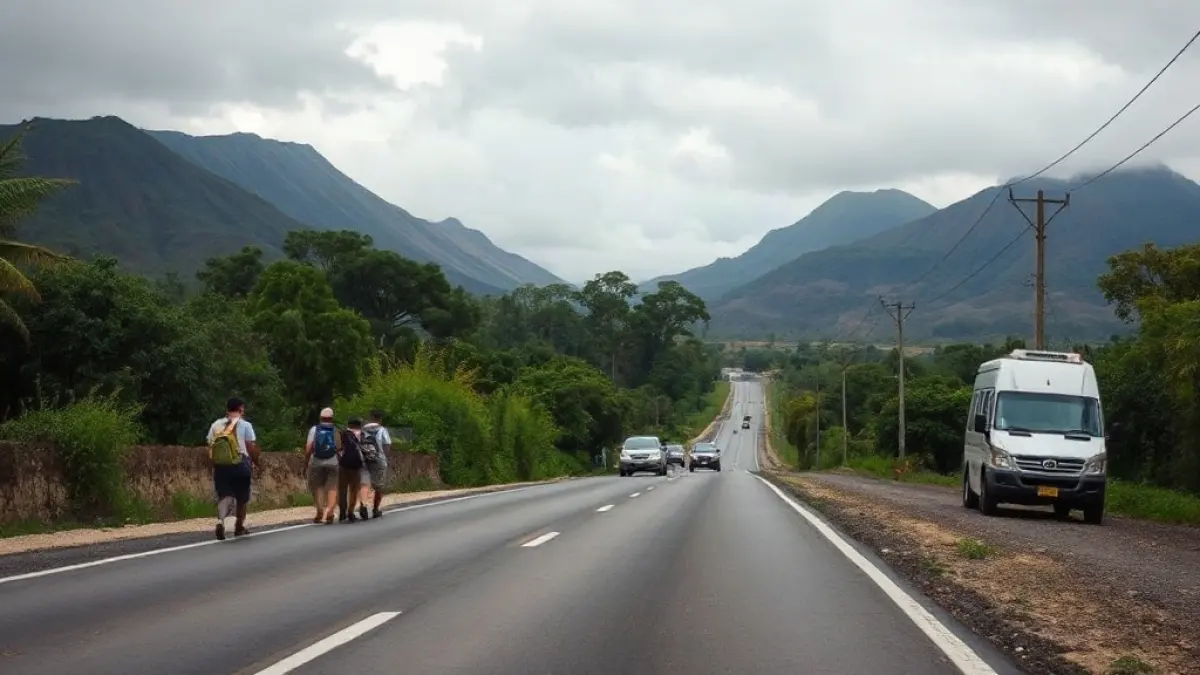
Mexican security forces stopped a column of roughly 100 Central American migrants on a highway in Chiapas on Tuesday, 10 November 2026, shortly after the group crossed the Suchiate River from Guatemala. Around 40 people were taken into custody, according to reports from Tapachula. The operation came just days after a much larger group entered Mexico through the same border point without facing any resistance.
Key facts
- 10 November 2026: National Guard units, federal immigration officials and Chiapas state police formed a vehicle blockade on a road near the Suchiate River.
- About 100 Central American migrants were in the caravan; around 40 were detained.
- A far larger group of about 1,000 migrants entered Mexico through Suchiate on 6 November and reached Tapachula on 8 November.
- Both caravans organised in the days after the United States midterm elections on 3 November 2026.
- No change to United States immigration requirements has taken effect.
What happened at the Suchiate River?
The Suchiate River forms the natural boundary between southern Mexico and Guatemala. After the caravan crossed it on Tuesday, National Guard units, federal immigration officials and Chiapas state police set up a vehicle blockade across a road to stop the group from continuing north.
As agents closed the perimeter, dozens of people scattered across the surrounding terrain in different directions. Reports from Tapachula confirmed that around 40 people were taken into custody by the end of the operation. Mexico's National Institute of Migration did not confirm the detentions when asked by media.
How does this compare with the earlier caravan?
The crackdown contrasted with events roughly 48 hours earlier. A far larger group of around 1,000 migrants — many carrying national flags of Honduras, El Salvador and Guatemala and travelling with children and belongings — crossed into Mexican territory without resistance and settled in Tapachula to rest before attempting the journey north.
Local reporting identified the group as more than 800 mostly Honduran migrants, the third Honduran caravan of the year, which entered Mexico on 6 November and reached Tapachula on 8 November. Two earlier groups were broken up before leaving Chiapas, and immigration authorities granted their members temporary stay permits.
Why are these caravans moving now?
Both caravans organised and departed in the days immediately after the United States midterm elections on 3 November 2026, in which Democrats flipped seven Senate seats, nearly 30 House districts and five governorships. Some migrants and advocacy groups in Central America read the result as a sign that United States immigration enforcement might ease.
Analysts and officials pushed back on that interpretation. A change in congressional control does not automatically open the border and does not alter immigration requirements on its own. No policy changes are in effect, and irregular crossings of the United States–Mexico border remain effectively blocked under the current enforcement posture.
What this means for travellers
Enforcement operations and road blockades are taking place on highways in Chiapas near the Guatemala border, and travellers in the area may encounter such activity. Tapachula continues to function as a waypoint where northbound groups pause and reorganise. Anyone crossing between Guatemala and Mexico should check current entry requirements before travelling, as the source reports no change to official immigration rules.
For the roughly 1,000 migrants now in Tapachula, the route ahead remains uncertain, with no sign of imminent policy change in Washington. Mexico's action on Tuesday signalled that mass unauthorised crossings at its southern border will be challenged regardless of which party controls the United States Congress.
Also about:  Guatemala
 United States
 Honduras
 El Salvador
 Nicaragua