
 LatviaTravel
Travellers to eastern Latvia will see new trenches and obstacles on Russia border
Latvia is fortifying its eastern border with Russia as part of the Baltic Defense Line, digging anti-tank trenches and installing concrete dragon's teeth. Four kilometres of trenches and five kilometres of obstacles are in place so far.
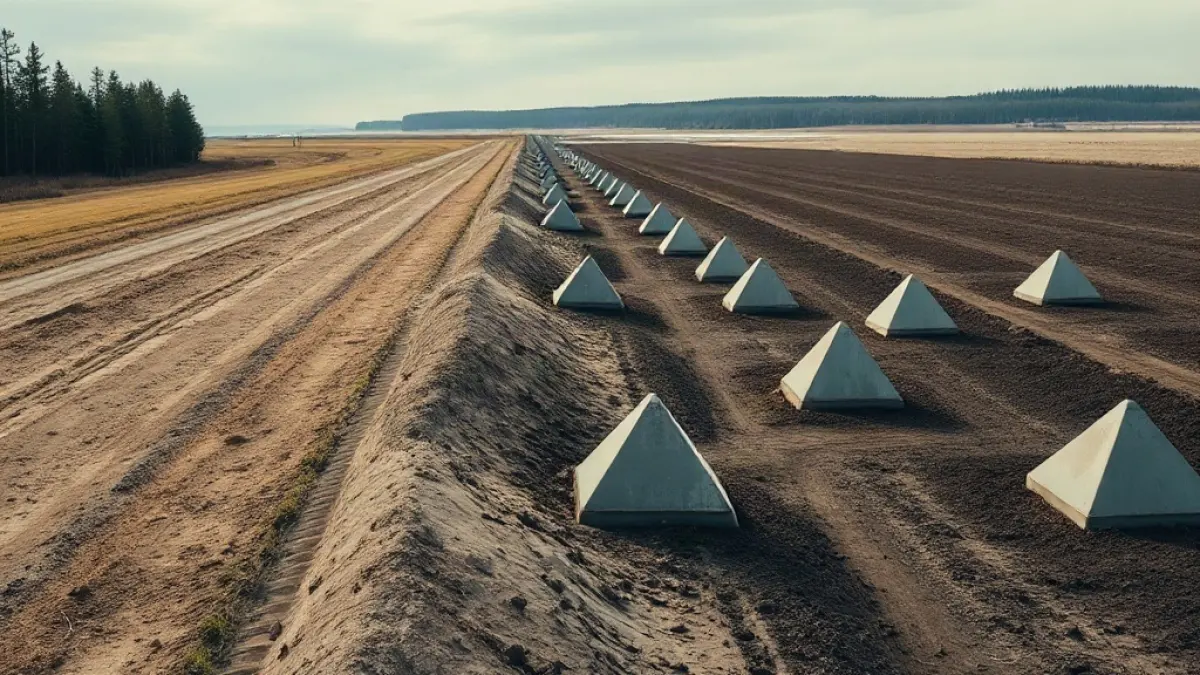
Latvia is pressing ahead with construction of the Baltic Defense Line along its eastern border with Russia, digging anti-tank trenches and setting out heavy concrete obstacles known as dragon's teeth. The fortifications are meant to slow the movement of enemy military equipment, and work crews are active in border areas including Balvi Municipality.
Key facts
- 89 kilometres of anti-tank trenches are planned in total; four kilometres have been dug so far.
- Five kilometres of dragon's teeth have been installed along the eastern border.
- The first 27 kilometres are expected to be finished by next spring.
- Each concrete obstacle weighs 1.5 tonnes and stands slightly more than one metre tall.
- €303 million has been allocated for border fortifications through 2029.
What is being built along the border?
The defensive works combine anti-tank trenches with concrete dragon's teeth, which are being laid in three rows along the border. An anti-tank trench is dug alongside the obstacles afterwards.
In Balvi Municipality, National Guard troops are completing the deployment of defensive infrastructure. Trenches more than five metres wide have already been dug there, and the dragon's teeth are to be added later.
Edgar Briedis, a staff sergeant with the engineering company of the 2nd Vidzeme Brigade of the National Guard, said the obstacles are spaced so that vehicles cannot drive across them, and that holes link several dragon's teeth together so they cannot be removed one by one. Mixing obstacle types, he said, forces an opponent to bring different equipment: a trench must be filled in or crossed with combat bridges, while the concrete blocks require other systems to clear.
How much has been finished, and when does the work end?
Four kilometres of anti-tank trenches and five kilometres of dragon's teeth are complete along the eastern border. Latvian Television reported that the first 27 kilometres are expected to be completed by next spring.
The National Guard says weather will not stop the project and that construction will continue through the winter. Most of the work still lies ahead, and funding of €303 million has been allocated for border fortifications through 2029, covering trenches, dragon's teeth and other defensive systems.
Where are the fortifications going?
Fortifications will not run along the entire length of Latvia's borders with Russia and Belarus, which together stretch for more than 450 kilometres. In some places, swamps, lakes and dense forests already act as natural obstacles. Artificial defences are being built where heavy military equipment would find it easiest to advance.
In early October, the Latvian parliament adopted a law establishing counter-mobility infrastructure to facilitate construction of the Baltic Defense Line along the eastern border.
What this means for travellers
Construction is under way in Latvian border areas, including Balvi Municipality, and the National Guard says the work will continue even during winter. The source does not state whether any border crossings, roads, entry rules or travel documents are affected by the project.
Work on the Baltic Defense Line is set to continue, with the first 27 kilometres due by next spring and funding committed through 2029.
 Russia
 Belarus