
 IndiaEntry rules
Sri Lankans in India gain easier passport, visa rules for Nepal, Bhutan trips
India's Union Home Ministry has issued the Immigration and Foreigners (Exemption) (Amendment) Order, 2026, relaxing passport and visa requirements for several groups of foreign nationals living in India and for travel between India, Nepal and Bhutan.
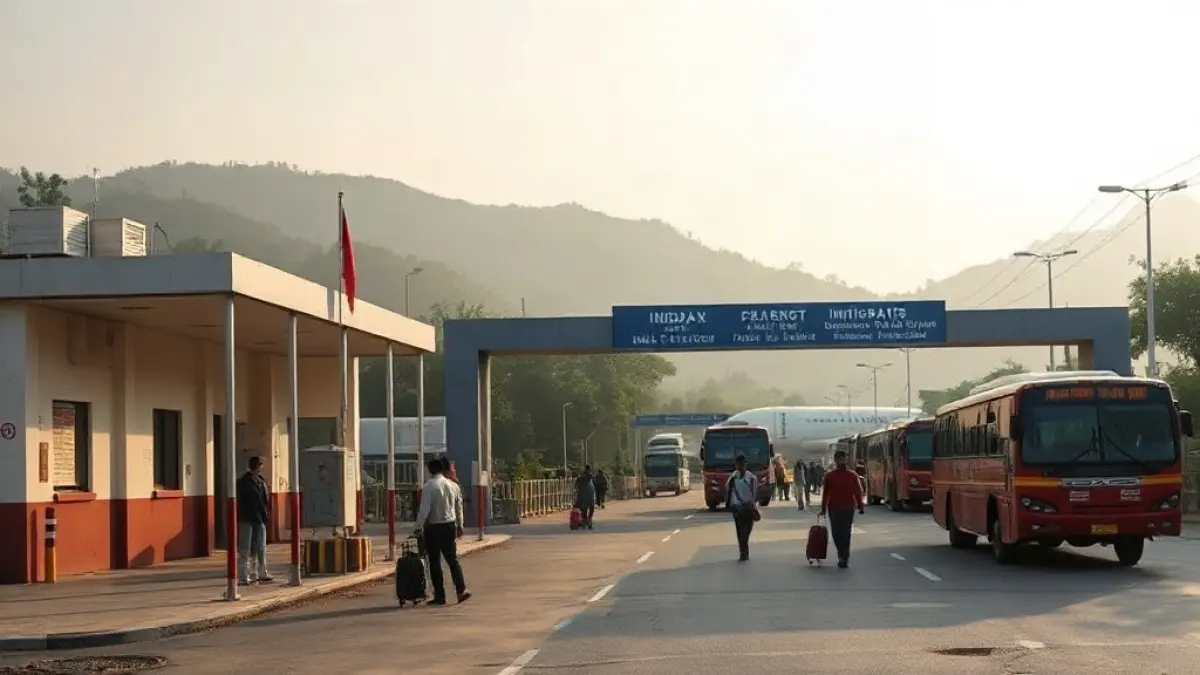
India's Union Home Ministry has relaxed passport and visa requirements for several categories of foreign nationals residing in the country, and for people travelling between India, Nepal and Bhutan. The changes are set out in the Immigration and Foreigners (Exemption) (Amendment) Order, 2026, published in the official gazette on Thursday.
Key facts
- The Immigration and Foreigners (Exemption) (Amendment) Order, 2026, was issued by the Union Home Ministry and published in the gazette on Thursday.
- Pakistani nationals who entered India on or before 31 December 2009 to settle permanently may be exempt from standard passport renewal requirements in defined cases.
- Minority refugees from Afghanistan, Bangladesh and Pakistan who entered on or before 31 December 2024 are covered, as are registered Sri Lankan Tamils who took shelter in India on or before 9 January 2015.
- Indian, Nepalese and Bhutanese citizens travelling directly between those countries by land or air may use identification specified in the government's Visa Manual instead of a passport.
- Several of the exempted groups must still obtain an appropriate visa to continue staying in India.
What is changing?
The order creates passport and visa exemptions for named groups of foreign nationals already in India, and it streamlines travel and identification rules for citizens of Nepal, Bhutan and India moving between those neighbouring countries. The notification also sets out exemptions for Indian naval, military and air force personnel, and for certain foreign military crews.
Who qualifies for passport exemptions?
Pakistani nationals who entered India on or before 31 December 2009 with the intention of residing permanently are exempt from standard passport renewal requirements if they cannot renew their travel documents because they do not hold a Computerised National Identity Card (CNIC) issued by Pakistan.
A second category covers people of Indian origin who took Malaysian or Singaporean citizenship and returned to India on or before 31 December 2009 on passports issued by those countries. Their passports must have expired and gone unrenewed because they do not meet the renewal requirements of Malaysia or Singapore.
The notification defines a "person of Indian origin" as a foreign citizen — other than a citizen of Pakistan, Bangladesh, Sri Lanka, Afghanistan, Bhutan, Nepal or China — who either held an Indian passport at some time, or whose parent, grandparent or great-grandparent was born in and permanently resided in India as defined by the Government of India Act, 1935, and territories that became part of India afterwards, provided none of them was ever a citizen of those listed countries.
What about refugees and Sri Lankan Tamils?
Members of the Hindu, Sikh, Buddhist, Jain, Parsi and Christian communities from Afghanistan, Bangladesh and Pakistan who entered India on or before 31 December 2024 after being compelled to seek shelter because of religious persecution, or fear of it, are exempt. The exemption covers those who entered without valid passports or travel documents and those whose documents have expired, but they must obtain an appropriate visa after entering India to remain.
Registered Sri Lankan Tamil nationals who took shelter in India on or before 9 January 2015 are exempt from the general passport and visa requirements under the revised provisions.
Certain Tibetans are also covered: those who entered India on permits issued by the Indian Embassy in Kathmandu between 1959 and 30 May 2003, or on special entry permits issued after that date through designated immigration posts on the Indo-Nepal border. They must register with the relevant authorities and obtain a certificate of registration.
What are the conditions?
For the Pakistani national category, applicants must not have married while in Pakistan or acquired immovable property there, must have left behind family members who are Indian citizens when going to Pakistan, and must undertake not to return to Pakistan. They must also have no adverse reports from police or security agencies.
The notification states that all three of the categories described above must obtain an appropriate visa category to continue their stay in India.
What ID is accepted between India, Nepal and Bhutan?
Indian, Nepalese and Bhutanese citizens travelling directly between these neighbouring countries by land or air may present identification specified in the government's official Visa Manual instead of a standard passport. The exemption does not apply to Indian citizens departing to or returning from countries other than Nepal or Bhutan through the Indo-Nepal or Indo-Bhutan border by land or air; in those cases a valid passport is required and entry or exit must be through designated immigration posts.
Nepalese and Bhutanese citizens entering or leaving India who embark from or transit through China, Macau, Hong Kong or Pakistan must hold both a valid passport and a valid visa. Standard passport rules remain in force for regional border crossings to or from third countries.
What about military personnel and crews?
Indian naval, military and air force personnel entering or leaving India on duty are exempt from passport and visa requirements, as are family members accompanying them on government transport. Foreign crew of foreign military vessels coming to India for repairs and granted Military Ship Repair Permits by the Immigration Officer at the immigration post are exempt from passport requirements if they carry their Military Identification Documents. The notification defines foreign military vessels as warships and other government ships operated for non-commercial purposes by the armed forces of another state.
What this means for travellers
Travellers in the named groups should check whether they fall within the relevant entry dates — 31 December 2009 for the Pakistani and Malaysian/Singaporean categories, 31 December 2024 for minority refugees, and 9 January 2015 for registered Sri Lankan Tamils — before relying on an exemption. Several exempted groups still need to secure an appropriate visa to remain in India, and Tibetans must register and obtain a certificate of registration.
Anyone crossing between India, Nepal or Bhutan should confirm which identification is accepted for their route, since the passport exemption applies only to direct travel between those three countries.
The notification does not state a separate date on which the amended rules take effect.
Also about:  Pakistan
 Sri Lanka
 Nepal
 Bhutan
 Afghanistan
 Bangladesh
 Malaysia