
 IcelandTravel
Iceland Straddles Two Continents: What That Means for Your Trip
Iceland is a European and Nordic country sitting on the Mid-Atlantic Ridge between the North American and Eurasian plates. Beginning in 2026, visa-exempt travellers need ETIAS authorisation before visiting.
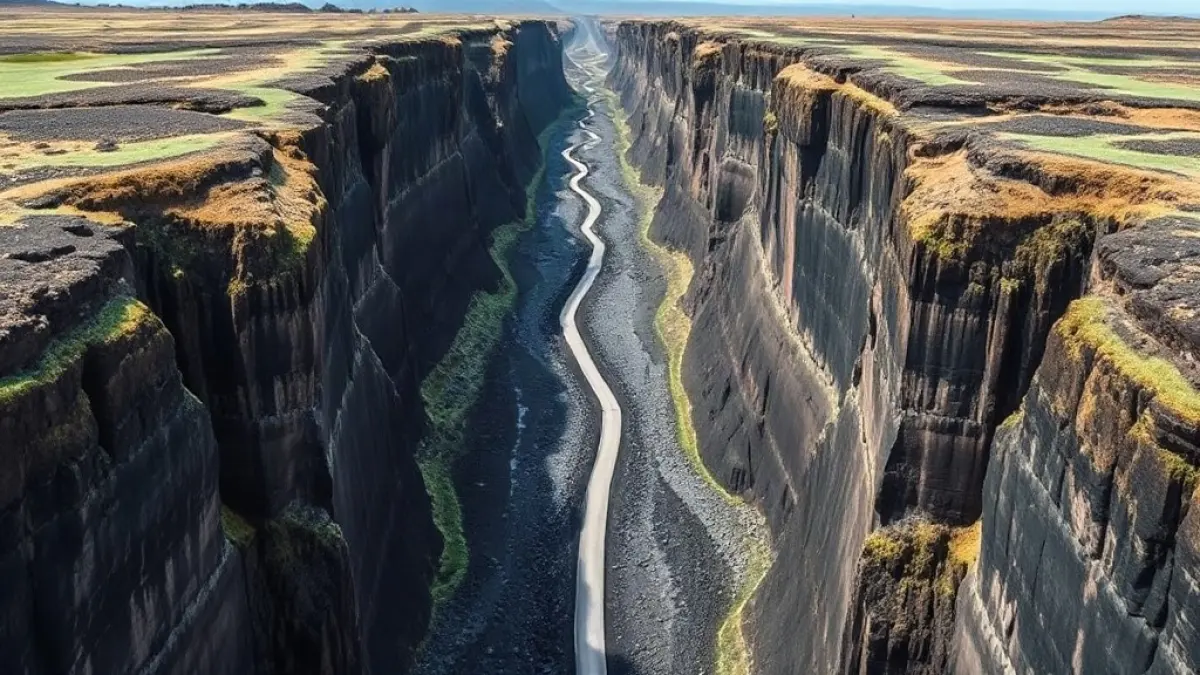
Iceland is a European country, but the island itself is split in two by geology: it sits directly on the Mid-Atlantic Ridge, the boundary between the North American and Eurasian tectonic plates. For travellers, the practical paperwork side is unchanged — Iceland is treated the same way as any other Nordic country for flights, visas and travel insurance — while the landscape offers the rare chance to stand on two continents at once.
Key facts
- Iceland is European and Nordic, and is a member of the European Economic Area, the Schengen Area and NATO — but not the European Union.
- The country lies on the Mid-Atlantic Ridge, where the North American and Eurasian plates meet, and is the largest landmass on Earth where the ridge rises above sea level.
- The two plates pull apart by about 0.8 inches (2 centimeters) every year, which helps explain why Iceland is one of the most volcanically active countries on Earth.
- Beginning in 2026, travellers from visa-exempt countries such as the US, Canada, the UK and Australia need ETIAS authorisation before visiting Iceland.
- The clearest places to see the plate boundary are Thingvellir National Park, the Silfra Fissure, the Bridge Between Continents on the Reykjanes Peninsula and the Krafla area near Lake Myvatn.
Which continent is Iceland in?
Politically, culturally and historically, Iceland is firmly European and firmly Nordic, alongside Norway, Sweden, Denmark and Finland. It is a member of the Council of Europe, the European Economic Area, the Schengen Area and NATO. The country applied to join the European Union in 2009, suspended its membership talks in 2013, and has not joined; the question remains an active debate in Icelandic politics.
Geologically, the story is different. The Mid-Atlantic Ridge runs down the middle of the Atlantic Ocean, marking the boundary between the North American and Eurasian plates. Western Iceland sits on the North American plate, the eastern third on the Eurasian plate, and the middle is an active volcanic rift. The country runs on Greenwich Mean Time year-round.
Where can travellers see the two plates?
Thingvellir National Park, a UNESCO World Heritage Site about 28 miles (45 kilometers) east of Reykjavik and a stop on the Golden Circle, is the best-known place to see the boundary. Visitors can walk through Almannagja, a deep rift canyon, with the edge of the North American plate beside the path and the Eurasian plate across the valley. Thingvellir is also where the Althingi first met at Logberg in 930 AD, and where Iceland declared its independence on 17 June 1944.
The park runs free ranger-led tours in English every day in June, July and August: the morning tour starts at 10:00 from Thingvallakirkja Church and the afternoon tour at 14:00 from the Visitor Center, each lasting about an hour.
At the Bridge Between Continents on the Reykjanes Peninsula, a 49-foot (15-metre) steel footbridge crosses a visible rift at Sandvik, about 12 miles (20 kilometers) from Keflavik International Airport and 31 miles (50 kilometers) from Reykjavik. Visiting is free, parking is on site, and the stop usually takes 10 to 15 minutes. Travellers can collect a personalised certificate at the Reykjanes information center or the Reykjanes Geopark visitor center. Further north, the Krafla volcanic area near Lake Myvatn also sits on the plate boundary.
What are the rules for Silfra?
Silfra is a fissure at Thingvellir filled with glacial meltwater, with visibility reaching over 330 feet (100 meters) on a good day and water temperatures of 36 to 39 F (2 to 4 C) year-round. Snorkelling is open to most visitors aged 12 and up who can swim comfortably and meet basic height and weight minimums.
Scuba diving has stricter requirements: Open Water certification plus either a dry suit certification or proof of at least 10 logged dry suit dives in the past two years. Snorkelling tours run year-round with all gear and a guide included; tours with Reykjavik pickup run about 27,000 to 28,000 ISK (225 to 230 USD), compared with about 17,990 to 20,465 ISK (150 to 170 USD) when meeting the guide at Silfra.
What this means for travellers
Iceland's two-continent geography does not change entry paperwork: the country is handled like other Nordic destinations. However, travellers from visa-exempt countries, including the US, Canada, the UK and Australia, should factor in the ETIAS authorisation required beginning in 2026 before booking. Anyone planning to snorkel or dive at Silfra should check the age, swimming and certification requirements in advance.
The source gives no specific start date for the ETIAS requirement beyond 2026, and no further entry-rule changes are mentioned.
Also about:  United States
 Canada
 United Kingdom
 Australia
 Norway
 Sweden
 Denmark