
 GuyanaTravel
Travellers can pair Guyana's Dutch forts with river towns on a single Essequibo boat trip
A speedboat excursion from Parika took media and conference delegates along Guyana's Essequibo River to Fort Island, Fort Kyk-over-al, Bartica, Sloth Island and Baracara Falls, combining Dutch colonial ruins with river community life.
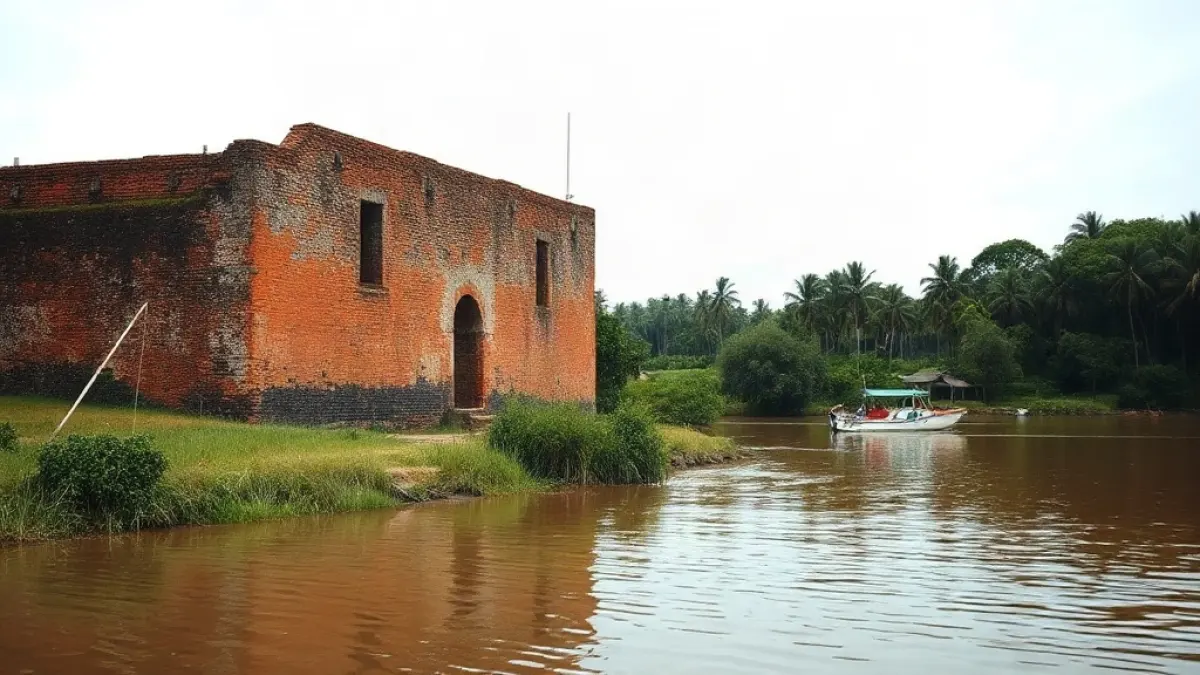
A speedboat trip along Guyana's Essequibo River gave media representatives and delegates a preview of the country's river heritage in early October 2026, ahead of the Caribbean Tourism Organization's (CTO) State of the Tourism Industry Conference (SOTIC) in Georgetown. The circuit linked colonial fortifications, river communities, forest islands and waterfalls between Parika and the interior.
Key facts
- The excursion ran from Parika, with the speedboat reaching Fort Island in about 20 minutes
- Stops included Fort Island, Fort Kyk-over-al, Bartica, Mazaruni Prison, Sloth Island and Baracara Falls
- Fort Island's population stood at 106 at the time of the visit
- The tour was led by Christopher Persaud, named Best Emerging Tour Guide at the 2025 Guyana Tourism Awards and Gala
- Accommodation options named along the route include Sloth Island Nature Resort and Aruwai White H2O Resort
What does the route cover?
Fort Island was the first stop. The island holds Fort Zeelandia, completed in 1744 in brick to replace an earlier timber fortification, and the former Court of Policy and Church Building, completed around 1752. By 1748 the Dutch colonial capital had moved downriver from Kyk-over-al to what was then called Flag Island.
The Court of Policy building combined administrative and religious roles, and one room was later used as an auction office, mainly for the sale of enslaved people. It now houses the Dutch Heritage Museum.
From Fort Island the group travelled roughly another hour by speedboat to Fort Kyk-over-al, a small islet at the confluence of the Mazaruni and Cuyuni rivers. The National Trust of Guyana dates the Dutch fort there to around 1616; only a brick archway survives. Overcrowding led to new buildings elsewhere by 1716, and Kyk-over-al was abandoned by 1748.
What else is on the way?
The route passed Bartica, described as a gateway to Guyana's interior serving gold and diamond mining communities, which held its inaugural township ceremony in May 2016, and Mazaruni Prison, a British colonial penal settlement that opened in 1842 and remains in use.
At Sloth Island the group spotted a sloth in the forest canopy. Sloth Island Nature Resort occupies a 160-acre island in the Essequibo near Bartica, where work began in the early 1990s with Indigenous builders from the Agatash area. The trip also took in Baracara Falls and passed Aruwai White H2O Resort on the Mazaruni River. On the return to Parika, the group passed the island home of Guyanese-born musician Eddy Grant.
What is Fort Island like today?
Administrator and health worker Pretty Debideen, who has lived on the island for 32 years, said residents rely on farming, fishing, family ties and heritage tourism. The island has historically had limited electricity and unreliable cellphone reception, although solar installations now power some facilities.
On the night of 25 May, Fort Island hosted the national flag-raising ceremony for Guyana's 60th independence anniversary; Guyana became independent from Britain on 26 May 1966. Debideen estimated that more than 6,000 people attended, and said the event passed without accidents or emergencies.
What this means for travellers
Travellers following this circuit should expect a full day on the water, with roughly 20 minutes from Parika to Fort Island and about another hour onward to Fort Kyk-over-al. Stops range from historic ruins and museums to forest islands and falls, and accommodation is available at Sloth Island Nature Resort and Aruwai White H2O Resort.
The excursion was staged for delegates attending the CTO's State of the Tourism Industry Conference in Georgetown, where the region's tourism industry was due to be discussed.