
 GuineaTravel
Guinea mining ban drives tens of thousands over Mali border
Guinea's ban on illegal artisanal mining has displaced tens of thousands of people into Mali and elsewhere in the Sahel, sparked deadly violence near Siguiri and drawn a formal protest from the Alliance of Sahel States.
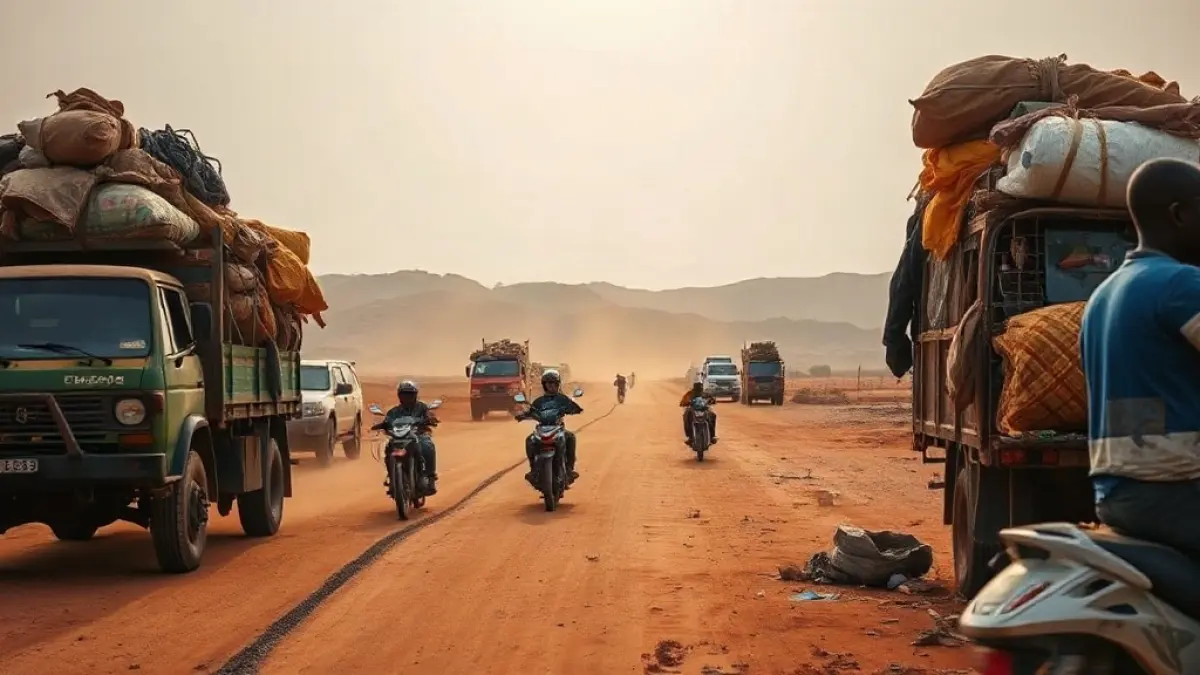
Guinean authorities have enforced a ban on illegal artisanal mining and sent security forces into mining areas, setting off a wave of displacement across west Africa this month and a diplomatic dispute with neighbouring Sahel states. Security agents have raided sites, seized equipment and arrested 1,263 people, while thousands more have been expelled from the country.
Key facts
- The ban targets illegal artisanal mining across Guinea, especially in the Siguiri area in the north-east.
- Security agents arrested 1,263 people, confiscated equipment and expelled thousands more, according to the account given.
- Mali says up to 160,000 miners crossed into the Malian part of Kourémalé and as far as Bamako.
- At least 10 people were killed and 13 wounded in violence at Balato, near Siguiri, on 11 November.
- The UN Environment Programme puts the number of people working as illegal miners in Guinea at more than 300,000.
- The ban was announced the day after Guinea's first gold refinery, the Nimba Gold Refinery, was launched.
What is happening at the border?
In Kourémalé, a border town split between Guinea and Mali, thousands of families have crossed the frontier over the past week. Guinean authorities say the ban is needed to curb river pollution and deforestation linked to large-scale illegal mining.
Miners say they were ordered out at short notice. One Burkinabè miner in his 30s told Agence France-Presse he was forced out "without even enough time to collect our tools or savings" before trekking 78 miles from Kourémalé to Ouezzindougou. At least six women have given birth in Mali since the displacement began.
What happened in Siguiri?
On 11 November, deadly violence erupted in the Balato community in Siguiri between security agents and miners who had erected barricades. At least 10 people were killed and 13 wounded, and three military vehicles were set alight.
Why was the ban introduced?
The decree came a day after the launch of the Nimba Gold Refinery, which has a declared annual processing capacity of 733 tonnes — far above Guinea's annual gold output of 72 tonnes. Tiffany Wognaih, a senior analyst for Francophone west and central Africa at geopolitical risk advisory JS Held, said that a refinery needs official gold supplies to flow through formal channels.
Guinea's administration has ambitions to make the country a dominant regional mining force and to increase state revenues by tracking more of the value chain for resources such as gold. A year ago the vast Simandou mine came on stream after nearly three decades of delay; the $20bn project is ramping up shipments towards an annual target of 120m tonnes.
How have neighbouring countries reacted?
The Alliance of Sahel States said in a statement on 12 November, after meeting in Ouagadougou, that it recognised countries' authority to enforce their laws but voiced concern about the decree and the expulsions. Sahel states worry the influx will deepen a humanitarian crisis the military juntas are already struggling with amid insecurity and soaring living costs. A Malian security ministry official said the authorities were looking at ways to stop the new arrivals being approached by terrorist networks.
What this means for travellers
People travelling in Guinea's north-east or crossing between Guinea and Mali should be aware that security operations and large-scale movement of displaced people have been reported around Siguiri and at the Kourémalé crossing, along routes towards Bamako. Checking local conditions before travelling in those areas is sensible while operations continue.
No end date for the ban or the enforcement operations has been announced, and the diplomatic disagreement between Guinea and its Sahel neighbours remains open.
Also about:  Mali
 Burkina Faso