
 FranceTravel
France Unrest Hits Tourism as Louvre Shuts and Hotel Bookings Fall
Days of clashes in Paris, Lyon and Nice have weakened hotel bookings, closed the Louvre and prompted travel advisories from the United States, China and Germany. Tourism figures say the longer-term impact depends on whether violence continues.
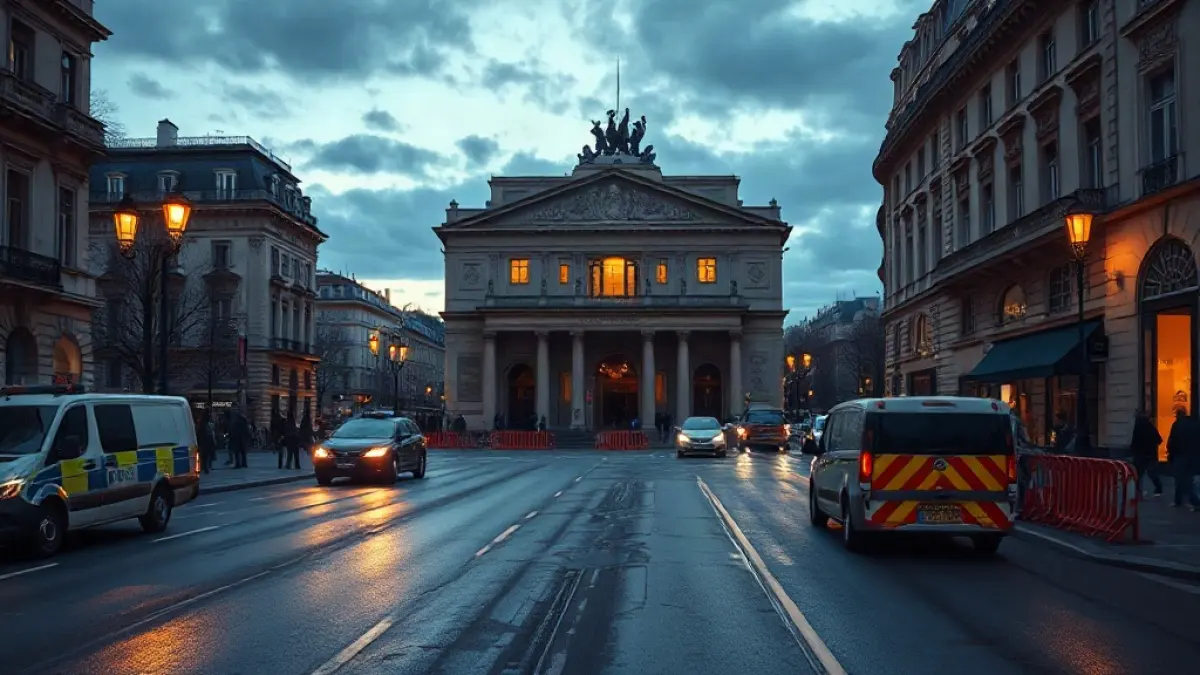
Images of clashes in French city centres have dented demand for travel to France, with hotel reservations slipping in Paris, Lyon and Marseille and the Louvre closing its doors for part of Monday. Tourism industry figures say the scale of the damage will depend on whether unrest continues in the coming weeks.
Key facts
- Violence has been concentrated in the centres of Nice, Paris and Lyon since the weekend before 21 October 2026.
- The Louvre in Paris closed on Monday after a small group of student protesters gathered at the entrance.
- The United States, China and Germany are among the countries that have issued travel advisories for their citizens in France.
- France normally welcomes 100 million visitors a year, spending more than 70 billion euros ($80 billion).
- Consulting firm Protourisme estimates a day of rioting in central Paris triggers roughly a one-percent cancellation rate for the monthly total.
- 42 million hotel nights are forecast for 2026.
What has happened?
Since the weekend, broadcasts and social media posts have shown clashes with police, public buildings on fire, shops being looted and masked young men in the streets, according to the report. Christelle Cassagne, who heads the ADN Tourisme body covering France's tourism institutions, described the situation in Nice, Paris and Lyon as catastrophic, noting that visitors who book a week in a hotel do not expect to remain stuck inside it.
The Louvre's closure on Monday, triggered by a small group of student protesters at the entrance, disappointed visitors who had planned to see the museum. One Indian business traveller staying at a Paris hotel said he had been unsure whether to keep the trip at all.
Which travellers are most affected?
Didier Arino, head of the consulting and research firm Protourisme, said travellers from farther-away markets are the most sensitive to safety concerns, and the impact on bookings is strongest there. Visitors from countries such as the United States and some Asian nations often spend more during their stay than European travellers do.
What do the booking figures show?
MKG Consulting reported that Paris hotels have lost potential bookings for the next six weeks since the weekend, with reservations weakening sharply within a single day. Between 19 and 20 October, the share of rooms booked for stays from 20 to 29 October fell from 1.0 percentage point above the equivalent 2025 level to just 0.2 points higher.
For stays between 20 and 25 October, the lead over 2025 narrowed from 3.5 percentage points to 1.9 points. MKG Consulting said the slowdown was especially visible in near-term and high-end stays, and drew a parallel with street protests in the capital in December 2018.
What have other governments told travellers?
Several countries, including the United States, China and Germany, have issued travel advisories for their citizens in France. The report does not give the content of those advisories.
What this means for travellers
Travellers already in France or with near-term bookings have seen attractions such as the Louvre affected, and should check whether specific sites or areas are open before setting out. Anyone planning a trip can review the latest travel advisories issued by their own government and confirm booking and cancellation terms directly, since industry figures say demand and availability are shifting quickly.
Industry representatives quoted in the report said the outlook depends on what happens next: Laurent Abitbol, head of the executive board of travel agency group Selectour, suggested a short disruption would be manageable, while a prolonged one would be far more damaging. Protourisme cautioned that repeated incidents would carry heavier consequences than a single day of unrest.
Also about:  United States
 China
 Germany