
 EcuadorTravel
Guayaquil floods sink tourist ship as El Niño red alert grips Ecuador
Record October rains sank the Morgan, a 120-ton tourist ship on Guayaquil's waterfront, on 26 October 2026 and flooded at least 89 city sectors. Ecuador's El Niño red alert has been active since 29 August 2026.
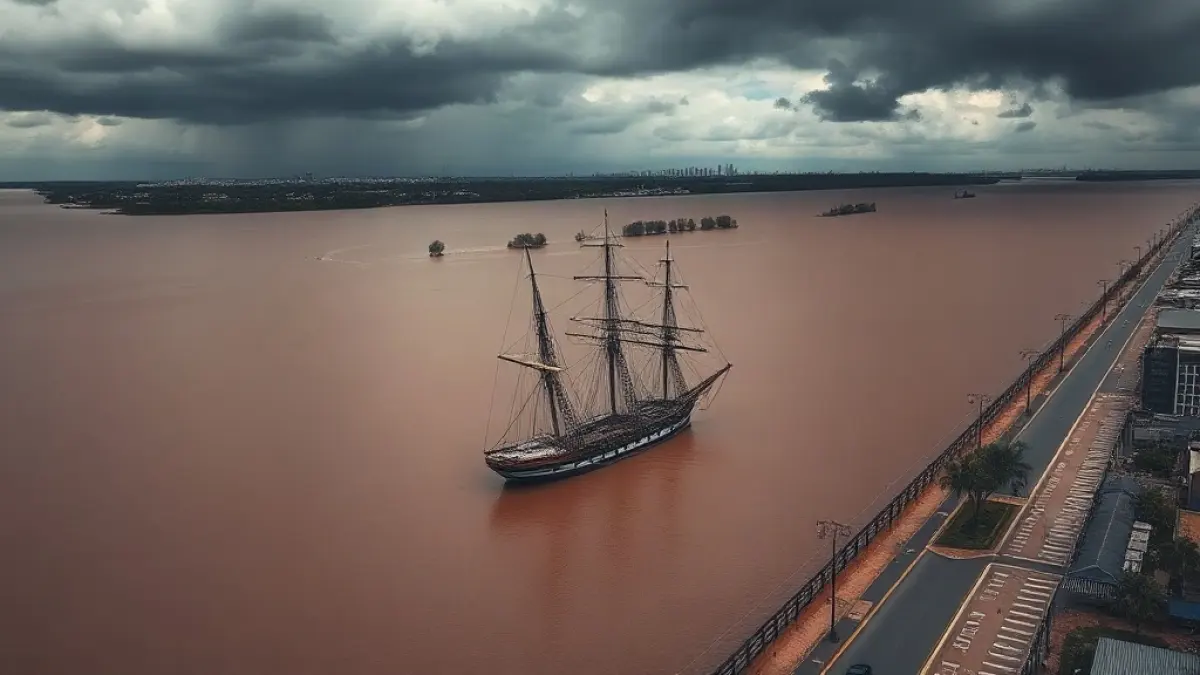
Guayaquil's best-known tourist vessel, the 120-ton replica pirate ship Morgan, sank at the Malecón 2000 waterfront at about 11:00 PM on 26 October 2026 after a storm that flooded large parts of Ecuador's largest city. The Ecuadorian Navy evacuated the only person on board, a security guard, without injury.
The same night brought the city's heaviest October rainfall since meteorological records began in 1898, with traffic paralysed on major avenues and public transport disrupted across Guayaquil.
Key facts
- 26 October 2026: the Morgan sank in the Guayas River at the Malecón 2000 dock; only three masts remained above water
- At least 89 city sectors were flooded by 3:00 AM, with some media counts closer to 100 by daybreak
- The storm toppled 13 trees, damaged 7 buildings and triggered 3 landslides in the metropolitan area
- Ecuador's national El Niño red alert has been active since 29 August 2026
- 15 rivers were confirmed overflowing across five provinces: El Oro, Guayas, Santa Elena, Esmeraldas and Los Ríos
- Scientists project strong-to-very-strong El Niño conditions through the first quarter of 2027
What happened to the Morgan?
The Morgan was a two-masted sailing vessel built by Ecuadorian shipwrights in Guayaquil and inaugurated on 2 October 2003. According to its Argentine owner, Claudio Llanas, it was modelled on an antique English illustration of the ships privateers sailed three centuries ago, and cost approximately $800,000 to build.
For two decades the ship was moored alongside the Malecón 2000, a 2.5-kilometre riverside promenade, running evening cruises past the Las Peñas district and Cerro Santa Ana. It logged more than 30,000 voyages on the Guayas River. Its last service suspension began on 11 July 2026 over problems at Muelle Sucre, the boarding dock at the southern end of the Malecón 2000, and it only returned to operation in September.
Was anyone hurt, and what caused the sinking?
No. The Armada del Ecuador responded to the dock after the sinking was reported and evacuated the ship's single occupant, a security guard, without injury. Naval technicians also disconnected the electrical lines feeding the ship's junction boxes to remove the risk of submerged short circuits and electrocution in the surrounding water.
The cause had not been determined as of Tuesday morning. Investigators had not officially established whether the storm's force, the river's surge, the vessel's structural condition after years of intermittent operation, or a combination of these was responsible. A formal investigation is under way.
How bad is the flooding across Ecuador?
Ecuador's Secretariat of Risk Management declared a national red alert on 29 August 2026, triggering mandatory activation of emergency operations committees at provincial and cantonal level. Since then the agency has recorded 629 adverse weather events across 23 of Ecuador's 24 provinces, affecting 120 cantons and 309 parishes. Three people have died nationally since the alert took effect, and more than 30,500 have been directly affected.
In Guayaquil, ESPOL oceanographer Jonathan Cedeño measured 63 millimetres of rain in a single hour on the afternoon of 26 October — roughly double a full day's rainfall at the peak of the city's winter season. Guayaquil's September and October 2026 totals have far exceeded the opening months of the 1997-1998 El Niño, and October's accumulation through the 20th alone was more than double the whole of October 1997.
What this means for travellers
Visitors in or heading to Guayaquil should expect continued disruption: the storm halted traffic on major avenues and interrupted public transit citywide, and the national weather institute INAMHI warned that storms will continue across at least 10 provinces in the days ahead. With 15 rivers overflowing across five provinces, travellers should check local conditions and transport status before moving around the coast.
Scientists project the 2026-2027 El Niño will sustain strong-to-very-strong intensity through the first quarter of 2027, leaving Ecuador's coast exposed to further events of this scale for several more months.