
 Côte d'IvoireVisas
Schengen Visa Refusals Run Far Above Global Rate for West African Travellers
2025 statistics published by the European Commission on 28 May 2026 show West African Schengen visa refusal rates well above the 14.6% global level, with France's Abidjan consulate turning down 33.5% of Côte d'Ivoire applications.
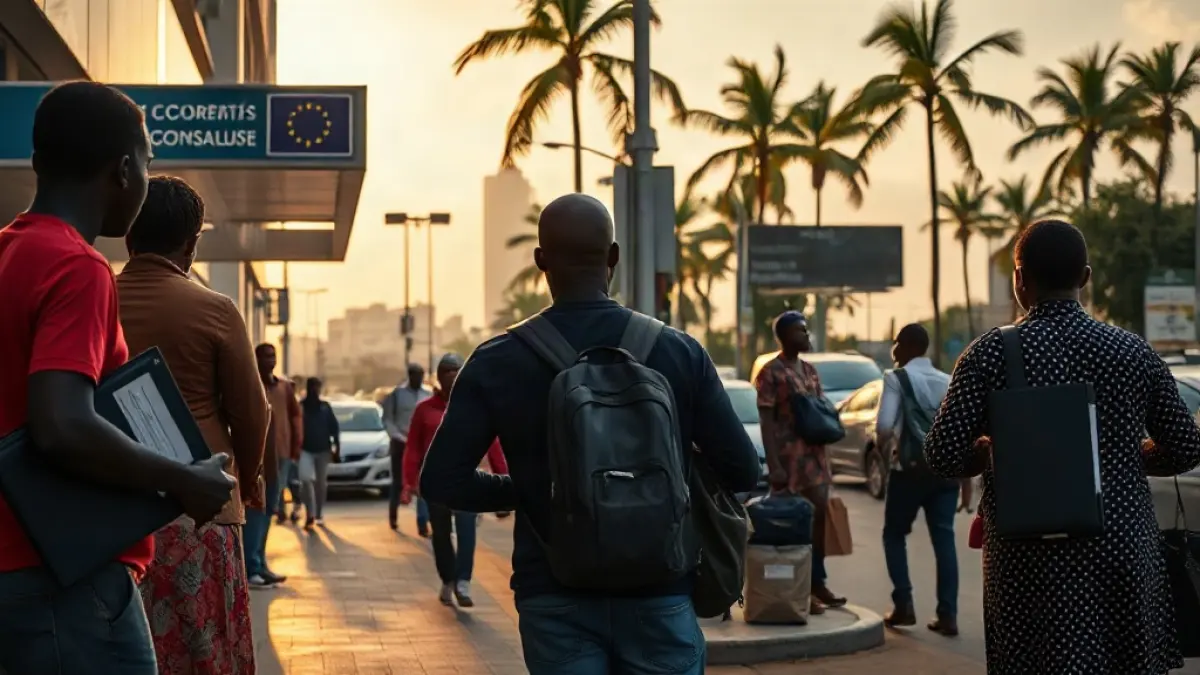
Travellers from West Africa face much tougher odds than the global average when applying for a Schengen visa, according to 2025 figures published by the European Commission on 28 May 2026. Around one in two applications from several countries in the region is refused, and the application fee is not returned when a visa is denied.
Key facts
- Global refusal rate in 2025: 14.6%, about one in seven applications, down slightly from 14.8% in 2024
- Senegal: 51.9%, up from 46.8% — about 3.5 times the global level
- Nigeria: 47.9%; Ghana: 46.5% — both among the seven nationalities with the highest refusal rates in 2025
- Côte d'Ivoire: France's consulate in Abidjan refused 33.5% of 62,786 applications
- Standard fee: €90 per adult, not refunded if the application is refused
What do the 2025 figures show?
More than half of Senegalese applicants were turned down in 2025, at a refusal rate of 51.9% compared with 14.6% worldwide. Nigeria and Ghana were close behind, at 47.9% and 46.5%.
For Côte d'Ivoire, the figures published in the analysis of the Commission data show France's consulate in Abidjan refused 33.5% of 62,786 applications — more than double the global rate, at a single consulate handling a very large volume.
How big is the gap between nationalities?
The difference is large for the same visa. A Chinese applicant faces a refusal rate of about 4%, while a Senegalese applicant faces 51.9% — roughly a 13-fold gap. African applicants overall are rejected at roughly two to three times the global rate.
Why are applications refused?
The figures alone do not prove discrimination, the analysis notes. Consulates commonly cite insufficient proof of funds, doubts about the purpose of travel or the applicant's intention to return, and incomplete documents. However, refusal rates that stay far above the global average year after year — and are still rising, as in Senegal — raise questions about how fairly criteria are applied and whether decisions can be challenged effectively.
What does a refusal cost?
Each application costs €90 per adult, and that fee is not refunded if the visa is refused. An analysis of the 2025 data estimated that rejected files cost applicants around €329 million last year, averaging €185 per refused file in non-refundable expenses.
What this means for travellers
Applicants from the region should budget for the possibility of losing the fee, prepare a complete file with clear evidence of funds, travel purpose and intention to return, and avoid unofficial agents, who target applicants in difficult situations. The analysis calls on West African governments to press for clearer refusal reasons, accessible appeals and partial fee refunds, and to raise the issue with the European Union through diplomatic channels, including ECOWAS.
No rule change has been announced; the figures describe decisions already made in 2025. The main thing to watch is whether the European Union responds to calls for more transparent refusal reasoning and appeals.
 Senegal
 Nigeria
 Ghana
 France
 China