
 Costa RicaTravel
Lake Arenal, Costa Rica: 60 Miles From Liberia Airport, 2.5 Hours From SJO
Costa Rica's largest lake lies at the foot of Arenal Volcano, with hot springs, wildlife trails and water sports. It sits 60 miles from Liberia Guanacaste Airport and about two-and-a-half hours from Juan Santamaría International Airport.
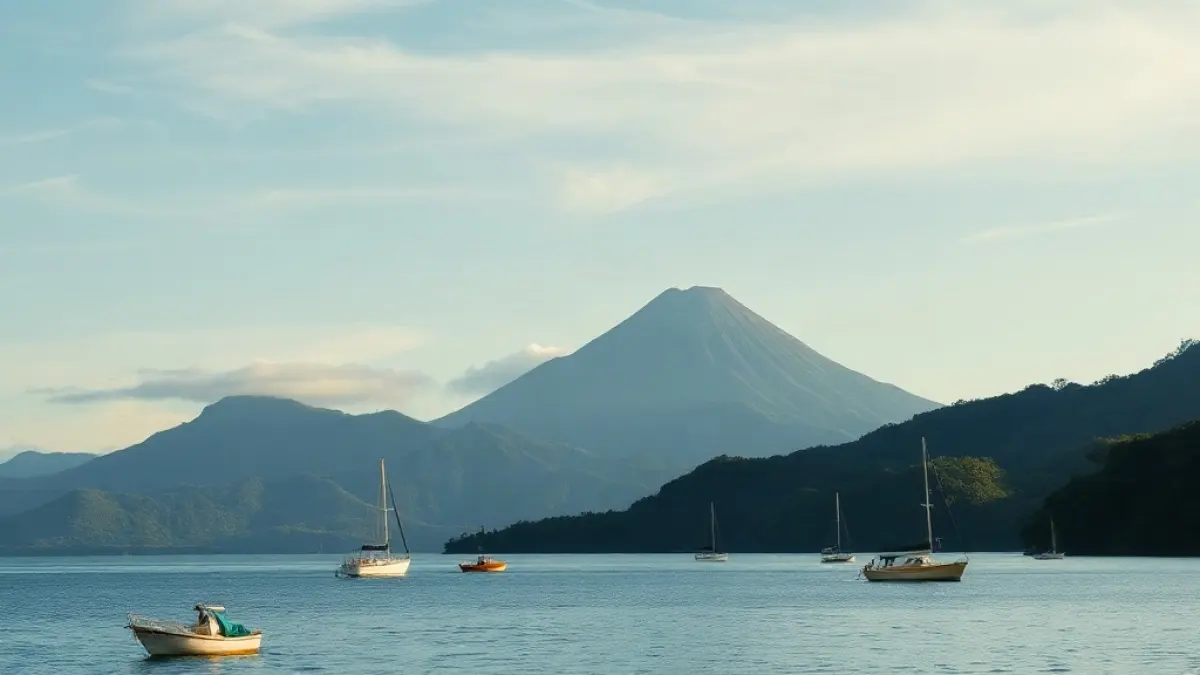
Costa Rica's largest lake lies in the country's northern highlands at the foot of a massive volcano, offering natural hot springs, wildlife-filled trails and a long list of water-based activities. Lake Arenal is long and thin and covers 33 square miles, drawing everyone from windsurfers to travellers looking for a quiet sunset cruise.
Key facts
- Lake Arenal covers 33 square miles and is Costa Rica's largest lake
- It lies 60 miles from Liberia Guanacaste Airport and roughly 120 miles from Juan Santamaría International Airport in San José
- The dry season runs from December to March, when winds are strongest and most reliable
- Arenal Volcano rises 5,358 feet above the lake inside a 30,000-acre national park
- There are no designated swimming areas and no lifeguards on duty
- Stays in nearby La Fortuna range from around $100 to around $700 per night
How do you get to Lake Arenal?
The lake is 60 miles from Liberia Guanacaste Airport and roughly 120 miles from Juan Santamaría International Airport in the capital, San José — a journey of about two-and-a-half hours. Costa Rica's roads can be challenging, with rain washouts and potholes a common occurrence, and public buses are described as somewhat unreliable.
For that reason, travellers heading from San José are advised to book a shuttle, a ride-share service or a guided tour rather than relying on public transport.
What can you do on the lake?
Swimming is popular, but there are no designated swimming areas and no lifeguards on duty. Windsurfers gather here from around the world during the dry season, from December to March, when reliable strong winds sweep across the water; the western side of the lake has the strongest winds for windsurfing and kitesurfing.
The eastern side offers calmer conditions suited to paddle boarding and sunset dinner cruises. The lake is also full of tilapia and rainbow bass, and lakeside outfitters help fishing visitors land a catch, while kayaking, jet skiing and boat tours are popular — boat trips offer distant views of boa constrictors, caimans and iguanas.
What is there to see around the volcano?
Arenal Volcano rises 5,358 feet above the lake and is surrounded by the 30,000-acre Arenal Volcano National Park. The volcano last erupted in 2010 and has a 460-foot-wide crater, miles of trails, cascading waterfalls and a series of footbridges.
From the hanging bridges at Mistico Park, visitors can look out over the treetops with a chance of spotting three-toed sloths, howler monkeys, coatis and tropical birds. More than 350 bird species have been recorded in the national park. The area forms part of the Monteverde–Arenal Bioregion, a protected wildlife route linking the Monteverde Cloud Forest Reserve with Arenal Volcano National Park.
Other ways to explore include zip lining over the canopy, horseback riding, river rafting and mountain biking, plus a soak in a hot spring heated geothermally from a subterranean reservoir.
Why is the lake so large?
Until construction finished on a nearby hydroelectric dam built in the 1970s, the lake was three times smaller than it is today. Two abandoned cities now sit beneath the water, their inhabitants having moved before the area was flooded.
Where do you stay, and what should you bring?
The town of La Fortuna, east of the lake, also offers a secret swimming hole with a rope swing and a rainforest waterfall pool. Two top-rated places to stay there are the Nayara Springs Resort and Spa and Amor Arenal, both around $700 per night, while the Arenal Observatory Lodge and Trails charges around $100 per night.
Suggested items to pack for the area are binoculars, a camera, a bathing suit, bug spray, sunscreen, a light rain jacket and hiking boots.