
 ColombiaTravel
Colombia puts border city Cúcuta under temporary military control
Colombian President Abelardo de la Espriella has ordered an immediate, temporary military intervention in Cúcuta, the border city opposite Venezuela, after a surge in violence including a fatal shooting and a bombing near the international bridge.
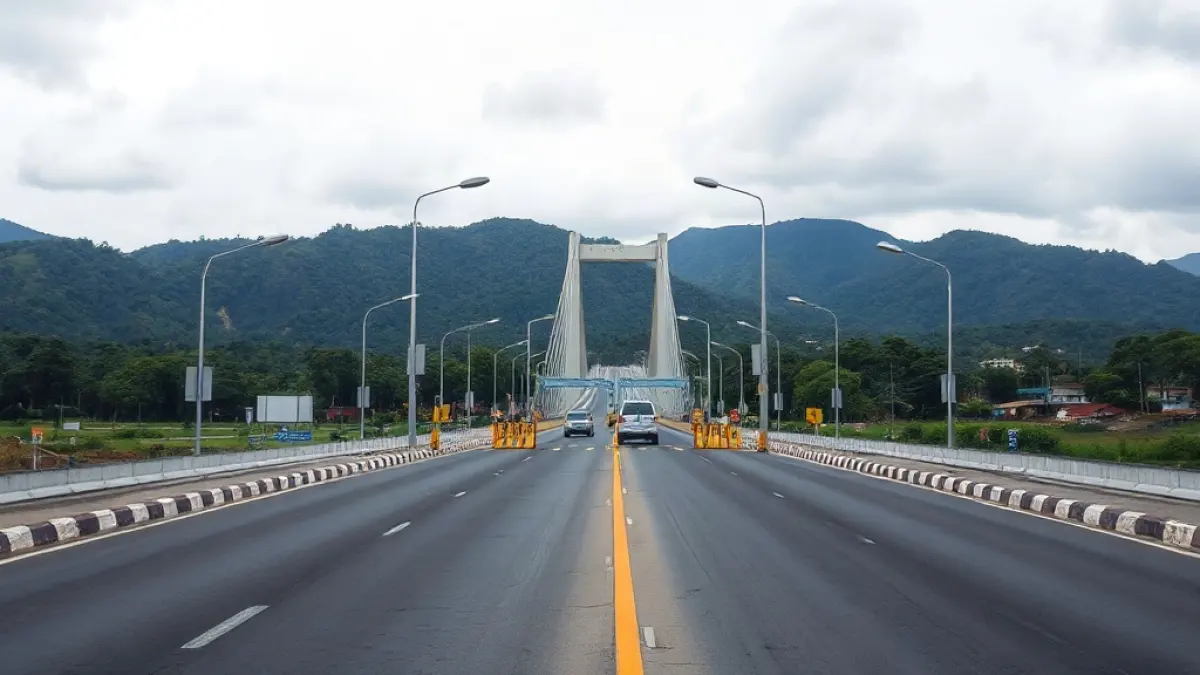
Colombian President Abelardo de la Espriella has ordered an immediate, temporary military intervention in Cúcuta, the capital of Norte de Santander department in northeastern Colombia on the Venezuelan border. The decision, announced on the night of 29 October 2026, follows a week of violence in the city and surrounding region, including the killing of a mayoral candidate and a bombing beside the bridge linking Cúcuta to Venezuela.
Key facts
- Ordered: 29 October 2026, by President Abelardo de la Espriella
- Where: Cúcuta, capital of Norte de Santander, on the border with Venezuela
- Reinforced from 3 November: Operation Sparta and the Urban Security Operational Block (BOSUR)
- Forces involved: Colombian army troops, National Police and local authorities
- Stated aims: restore territorial control, dismantle criminal organisations, disrupt their finances and prosecute those responsible
What is changing?
De la Espriella instructed the defence minister and the leadership of the military and National Police to deploy security forces to Cúcuta immediately. From 3 November, the deployment will be backed by Operation Sparta and BOSUR, a coordinated security initiative that targets criminal organisations operating along the Venezuelan border.
The security plan calls for immediate coordination between army troops and the National Police to restore control over high-risk areas of Cúcuta, according to Colombian broadcaster Noticias RCN. The president said he will travel to Cúcuta next week to assess the operation, review progress and check coordination between the military, police and local authorities.
Why was it ordered?
The measure follows a week of violent incidents in Cúcuta and the surrounding border region. On Monday, Miguel Castellanos Serrano — a retired Colombian National Police major who was seeking his party's nomination for mayor of Cúcuta in the 2027 elections — was shot and killed by gunmen while campaigning. His career included work in local public security, and his name had surfaced in judicial investigations into alleged cross-border smuggling networks, allegations he consistently denied.
On Tuesday, an explosive device went off near the Francisco de Paula Santander International Bridge, which connects Cúcuta with Venezuela, injuring at least four civilians and two police officers. Authorities also linked the heightened response to recent explosive-laden drone attacks in the Catatumbo region, attributed to the National Liberation Army, a Colombian guerrilla group. Illegal armed groups have also been fighting over smuggling and drug trafficking routes into Venezuela.
What this means for travellers
The intervention covers Cúcuta and the wider border region, including the international bridge area where the explosion injured civilians and police officers. Travellers in or moving through the area can expect a reinforced army and police presence and security operations in areas the authorities describe as high risk.
What happens next
De la Espriella said the deployment is temporary and that he will visit Cúcuta next week to verify that his orders are being carried out. Cúcuta becomes the second major Colombian city to adopt this temporary military security model in the past six months, after a similar operation in Santa Marta. No end date for the intervention has been announced.
Also about:  Venezuela