
 BulgariaTravel
Sofia Travellers Face Delays as Six Bomb Hoaxes Disrupt Flights This Week
At least 34 European flights were disrupted by bomb threats this week, all later confirmed as false alarms. Sofia and Milan airports recorded six incidents each, with Ryanair the worst-affected airline.
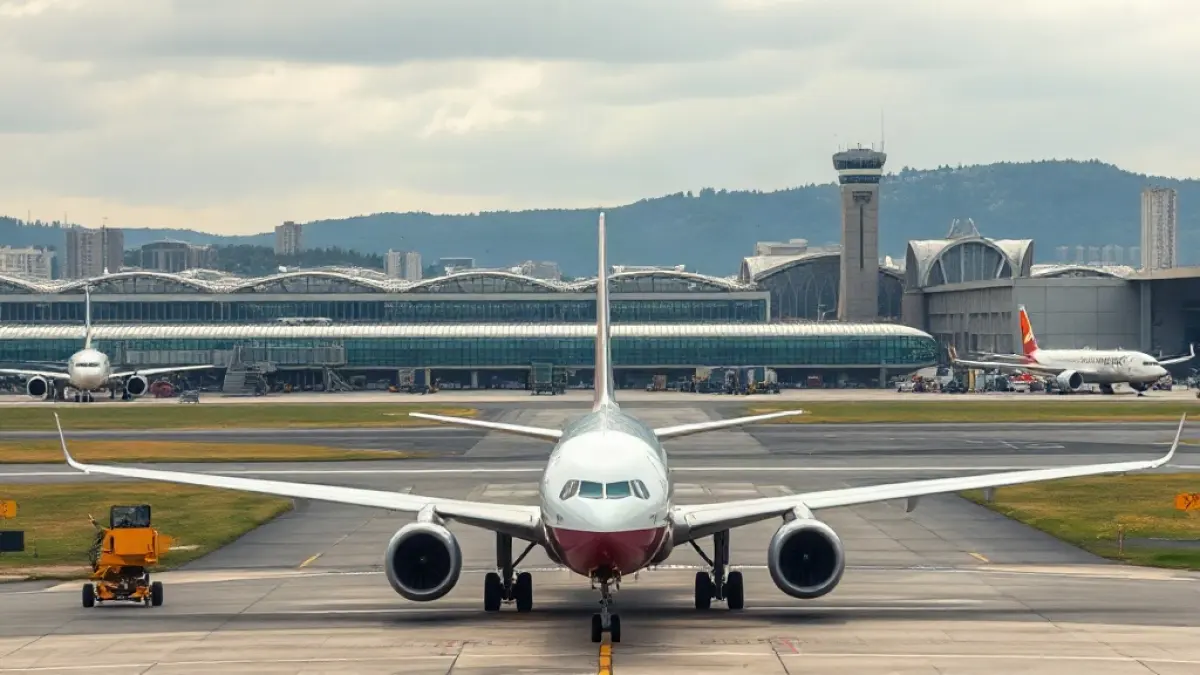
More than 30 European flights have been hit by security alerts and diversions this week, with at least 25 further bomb threats on Thursday causing disruption at airports across the continent. Every incident checked so far has been a false alarm, with security authorities finding nothing suspicious on any aircraft.
Key facts
- At least 34 flights disrupted since Monday, plus at least 25 more threats on Thursday
- First incident: a Wizz Air flight from London Luton to Sofia diverted to Budapest
- Sofia and Milan recorded six incidents each; Rome five and Prague four
- Ryanair was the hardest-hit airline, with eight reported cases
- All incidents so far confirmed as false alarms
What happened?
The wave of alerts began on Monday, when a Wizz Air service from London Luton to Sofia in Bulgaria was diverted to Budapest. Thursday's threats affected airports in London, Birmingham, Brussels, Bucharest, Madrid, Milan, Prague, Rome, Sofia and Warsaw, among others.
Seven of this week's flights were to or from the United Kingdom, and four were to or from Ireland. A significant number of incidents involved Italian airports as an origin or destination.
Which airports and airlines were most affected?
There is no clear pattern in the airports and airlines targeted. Sofia and Milan each recorded six incidents, followed by Rome with five and Prague with four. Ryanair reported eight cases, more than any other carrier. Finnair had two planes affected.
The EU transport commissioner, Apostolos Tzitzikostas, said it was too early to draw conclusions about whether the incidents were linked, and stressed that "Any threats against civilians are unacceptable."
Who is behind the threats?
No intelligence currently points to any particular group or state actor, despite growing concern about hybrid incidents targeting Europe. Aviation experts say fake threats happen daily, but the number of alerts this week is unusual.
Little is known about how the threats reached airlines and authorities, though cases involving Bulgaria, Italy, Poland and Spain were reportedly sent by email. The Italian news agency Ansa, citing police sources, said an anonymous email in Italian was sent early on Thursday to the Rome airport company ADR and affiliated firms about Helsinki–Rome and Dublin–Rome flights. Another anonymous Italian email to Milan Malpensa airport claimed explosive devices were on flights from Thessaloniki and Porto, listing flight numbers, airline names and landing times.
Most authorities issued carefully worded statements about security checks. Czech police, who investigated four planes landing at Václav Havel airport in Prague on Thursday, said they regarded the reports as being of low relevance.
How have airlines and authorities responded?
National authorities treat such incidents seriously under their safety procedures, and fighter jet escorts were reported in Bulgaria, France, Hungary and Italy. Diversions are costly and highly disruptive, but airlines say they have little choice when faced with a remotely credible threat.
Joji Waites, director of flight safety at the British Airline Pilots' Association (Balpa), said threats are graded by assessors as credible, partly credible or not credible. If an aircraft is already airborne, only a credible or non-credible rating is possible. A plane still on the tarmac will usually be evacuated, while one in the air will be landed as soon and as safely as possible.
What this means for travellers
Passengers flying to, from or within Europe this week should expect possible diversions, security checks and delays, particularly on routes involving the airports named above. Wizz Air acknowledged threats affecting several airlines across Europe, and Finnair said threats are almost always unfounded. Airlines are said to be concerned that copycat alerts could cause further disruption.
Travellers should check the status of their flight with their airline before leaving for the airport and follow instructions from airport and security staff if an alert affects their aircraft.
Also about:  United Kingdom
 Ireland
 Italy
 Belgium
 Romania
 Spain
 Czechia