
 BotswanaTravel
Botswana traveller flew Johannesburg-Moscow via WhatsApp job chat, died in Russia
Ukraine's Defence Intelligence has identified Pako Namogang as the first Botswana citizen killed fighting for Russia. He was recruited through a WhatsApp job chat and flew from Johannesburg to Moscow in July 2026.
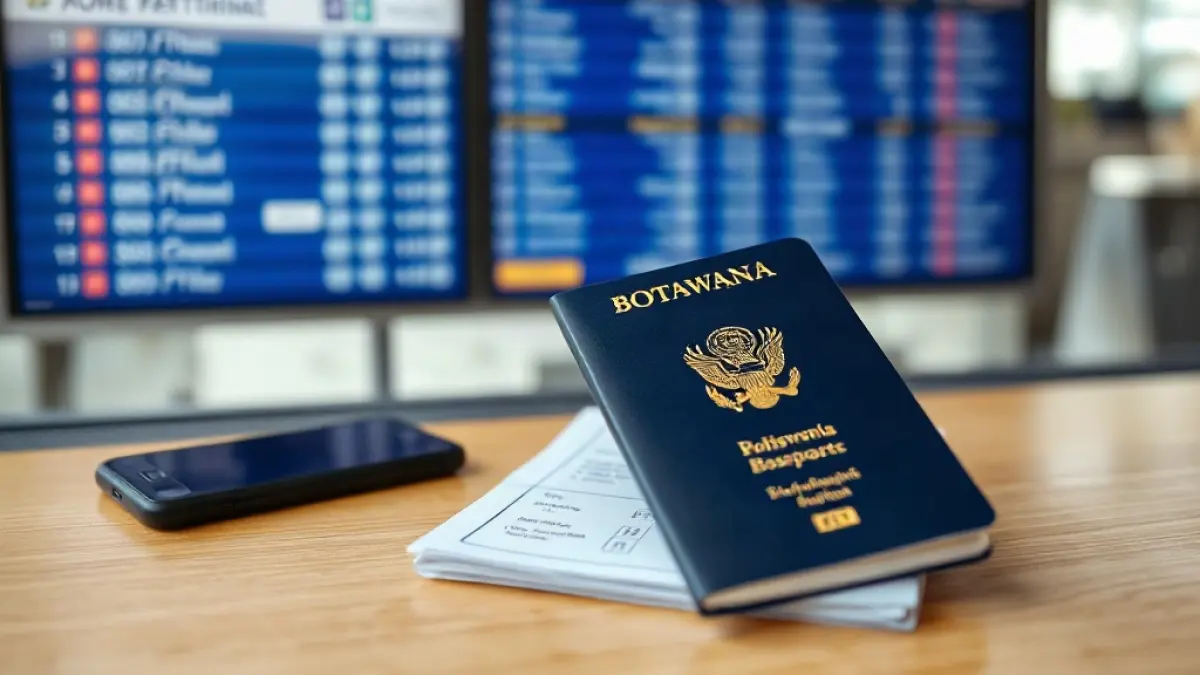
Ukraine's Defence Intelligence (DIU) has identified Pako Namogang, born 30 May 2001, as a citizen of Botswana who was killed while fighting for Russia. DIU describes him as the first identified citizen of Botswana to die in Russia's war against Ukraine. He was recruited through social media, flew from Johannesburg to Moscow in July 2026 and was killed in mid-August near Novoliubivka in Ukraine's Luhansk region.
Key facts
- Recruited via WhatsApp in a chat called "Work in Russia", where a Russian recruiter said he was seeking people to serve in the Russian army.
- Flew from Johannesburg airport on 6 July 2026 to Moscow; DIU says he was housed in a hotel after arriving on 7 July.
- Signed a one-year contract on 21 July 2026 with the Russian armed forces.
- Killed in mid-August 2026 during fighting near Novoliubivka in the Luhansk region.
- At least 25 Botswana citizens have signed contracts with Russian forces, according to DIU's "I Want to Live" project.
How did the recruitment happen?
DIU says Namogang's decision to join the Russian army was a conscious one. A Russian recruiter in a WhatsApp chat called "Work in Russia" stated directly that he was looking for people to serve in the Russian army. DIU also says Namogang passed on his friends' personal data, including passport details, to the Russian recruiters; their current status is unknown.
DIU names two so-called brokers it says were involved in recruiting Namogang and other foreigners: Yelizaveta Savinovskikh, born 23 May 2002, and Mikhail Sergeyevich Petrushenko, born 8 August 1992. DIU describes brokers as middlemen who organise the recruitment of foreigners and deliver them to the Russian army.
What happened after he arrived in Moscow?
In his correspondence with the recruiter, DIU says, Namogang was assured that a person in South Africa would help him with registration and boarding the plane — probably, DIU believes, an official of the Russian trade mission. DIU accuses Russia of deliberately violating South Africa's Regulation of Foreign Military Assistance Act 15 of 1998 by facilitating the transfer and paperwork of mercenaries on South African territory, which it says carries criminal liability.
After signing his contract, Namogang and other recruits were housed at "Avangard", a Russian centre for military-patriotic education of young people in Patriot park near Moscow. DIU says Avangard's instructors took part in training the foreign recruits, and accuses the Kremlin of using youth-education infrastructure as a military base, endangering civilians including children at the site. Namogang was later sent to a Russian army training centre for a week and a half before being taken to the temporarily occupied territories of Ukraine.
Which documents did DIU release?
DIU published a page of a Botswana national passport in the name Namogang Pako, born 30 May 2001 in Francistown, issued on 26 May 2026 and valid until 25 May 2036. It also released a Russian certificate dated 21 July 2026, recording that he was serving under contract in the Russian armed forces, noting the passport issued on 26 May 2026 and a one-year contract concluded on 21 July 2026. The certificate is signed by Senior Lieutenant A. Levykin, acting head of the contract military service selection point in Moscow, whom DIU names as the officer responsible.
What this means for travellers
DIU's account describes recruitment of foreign nationals through social media and messaging chats offering work in Russia, followed by a flight from Johannesburg to Moscow and a military contract. Anyone approached about work in Russia through such chats should be aware of what DIU says happened in this case, including the handing over of passport data belonging to others.
DIU says its "I Want to Live" project knows of at least 25 Botswana citizens who have signed contracts with Russian forces: one is a prisoner of war and at least one, Namogang, has been killed. The project also offers a way for foreign nationals recruited into Russia's armed forces to leave the battlefield safely.
Also about:  Russia
 Ukraine
 South Africa