
 BahamasTravel
What Travellers Should Know Before Visiting Dean's Blue Hole in the Bahamas
Dean's Blue Hole on Long Island in the Bahamas lets snorkellers swim over a 663-foot-deep sinkhole from a shallow cove. Entry is free, but there are no facilities and no lifeguard, as a warning sign installed in summer 2026 makes clear.
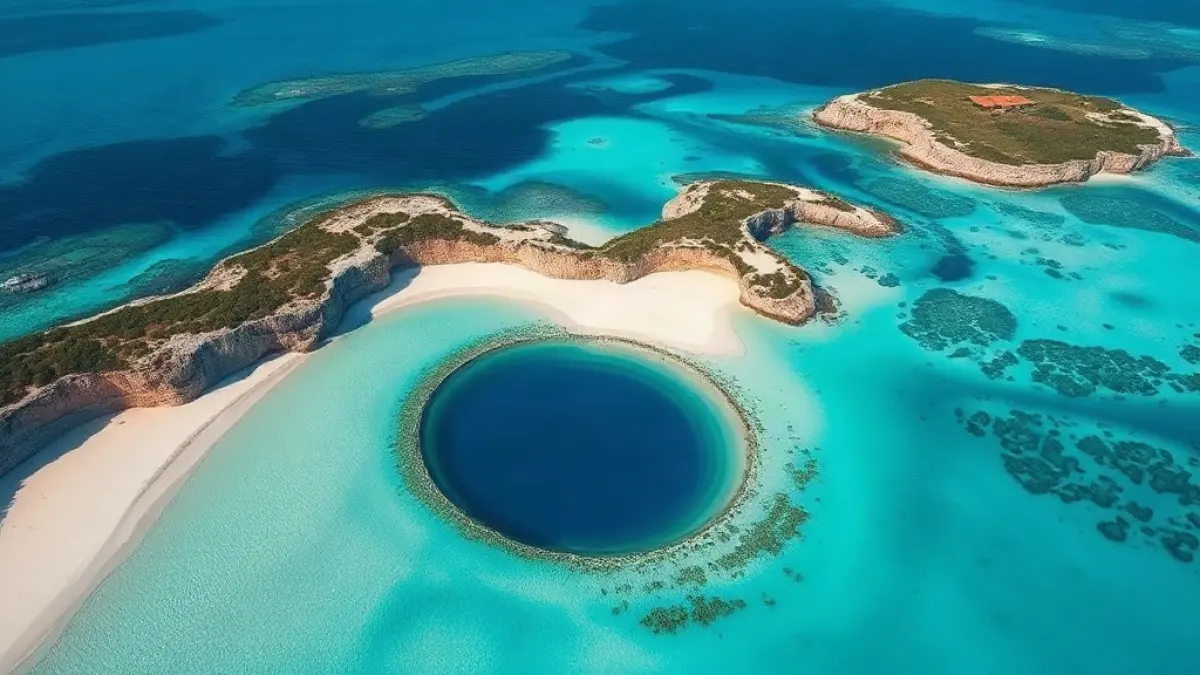
Snorkellers at Dean's Blue Hole on Long Island in the Bahamas can drift over a 663-foot-deep marine sinkhole while staying in water barely more than a foot deep at the edge. The site is free to visit and largely undeveloped, and a warning sign installed in summer 2026 reminds visitors that there is no lifeguard and that they enter the water at their own risk.
Key facts
- Depth: 663 feet, making it one of the deepest blue holes on Earth
- Surface opening: about 82 to 115 feet across
- Cost: no fees to visit
- Facilities: none — no bathrooms, vendors or buildings
- Safety: warning sign added in summer 2026 notes the depth, the absence of a lifeguard and that visitors enter at their own risk
- Access: sandy road off Long Island's main highway, manageable in a standard vehicle
Where is it and how do you get there?
Dean's Blue Hole sits on Long Island in the Bahamas. A sandy road branches off the island's main highway and winds over several dunes to a small parking area. The road is manageable in a standard vehicle and does not require four-wheel drive.
From the parking area, a short walk leads to a protected cove of white sand and clear turquoise water, with the circular opening of the blue hole at its centre. The Atlantic is much rougher just beyond the sheltered inlet.
What can visitors do there?
The rim can be reached by wading a short distance from shore, and the water is warm and crystal clear before the pale bottom abruptly disappears. Sand from the shallows spills over the underwater shelf in long white streams, cascading down the walls like waterfalls. Colourful fish gather along the walls, and larger marine life — including tarpon roughly 30 feet down and a sea turtle — has been spotted at the site.
A permanent freediving platform is anchored in the middle of the hole, with several ropes descending from it, including the vertical line freedivers follow into the depths. Professional freedivers visit the site to chase records; two Italian freedivers reached 40 meters, nearly 132 feet, on a recent visit.
Cliff jumping is also possible. There are no signs marking a designated jumping spot, but worn paths climb from the water over the limestone to a ledge roughly 15 feet high, with higher jumps nearing 40 feet visible. Trails above the cove give a view of the dark blue circle surrounded by calm shallows.
What should you bring?
Visitors should arrive with everything they need for a day at the beach, including their own snorkel gear. Sturdy footwear is advisable for anyone exploring the cliffs and trails around the cove. There are no fees, but there are also no bathrooms or any other facilities.
What this means for travellers
The site suits a self-sufficient day trip for all ages, but travellers should plan for a place with no services: pack supplies, bring snorkel equipment and wear suitable footwear for the rocky paths. The warning sign installed in summer 2026 states the hole's 663-foot depth, that no lifeguard is on duty and that people enter the water at their own risk.
Even when a dozen or so other visitors arrive, the cove has been described as quiet and uncrowded, retaining a remote, undeveloped feel.